
U.S. launches more Iran strikes after Trump declares Hormuz ceasefire over
Hours after Trump’s ceasefire call, the U.S. targets Iran to “degrade” its ability to threaten navigation.
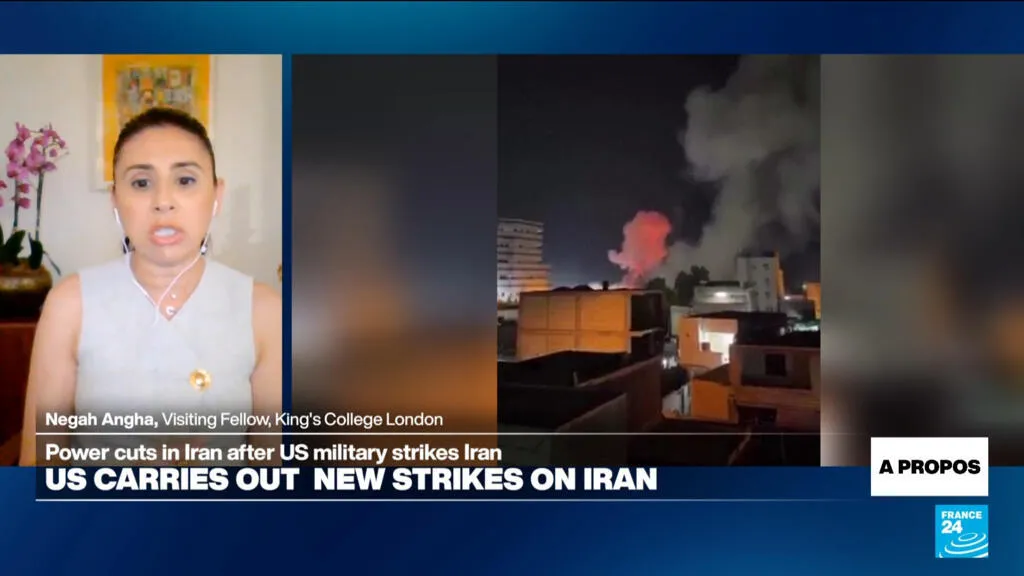
The U.S. carried out another round of strikes on Iran on Wednesday, hours after President Donald Trump said Iranian attacks in the Strait of Hormuz signaled the end of the ceasefire. Military officials said the strikes aimed to “further degrade” Iran’s ability to “threaten freedom of navigation” in the strait.
On Wednesday, the U.S. carried out another round of strikes on Iran hours after President Donald Trump said that recent Iranian attacks on ships in the Strait of Hormuz signaled the end of the ceasefire. That timing matters. It turns what might have looked like a pause into a clear break, with the ceasefire effectively declared over from the top.
In a social media post, military officials said the strikes were intended to “further degrade” Iran’s ability “to threaten freedom of navigation” in the strait. In plain English, the stated goal was not symbolic. It was operational: reduce Iran’s capability to interfere with ships moving through a chokepoint where global trade depends on steady passage.
The Strait of Hormuz is one of those places where geopolitics shows up in your day-to-day balance sheet, even if you do not track naval movements. When attacks target shipping lanes, markets do what they always do: they price risk before the news cycle catches up. For businesses with energy exposure, shipping contracts, or supply chains that touch the region, the immediate variable becomes not just conflict, but duration and escalation. When the U.S. signals that ceasefire constraints are no longer binding, uncertainty starts to compound.
There is also a regulatory and compliance angle that executives sometimes underestimate during crises. Military action and heightened tensions can affect sanctions risk, maritime insurance costs, and the compliance burden for firms that move goods through or near sanctioned jurisdictions. Even if a company is not directly operating in the region, counterparties and shipping insurers often react quickly, tightening terms and raising premiums. That can show up as higher operating costs, delays, or contract renegotiations, especially for firms that rely on predictable transit times.
The rhetoric in the source is doing real work here. The phrasing about “freedom of navigation” is a deliberate framing, aimed at justifying actions as protective rather than retaliatory. And “further degrade” signals continuation, not closure. From an executive perspective, that is the difference between a one-off incident and a campaign logic. If the objective is capability degradation, the market tends to assume follow-on actions, which affects risk models and hedging strategies.
Then comes the political layer. Trump’s statement that the ceasefire is over is an internal coordination signal as much as a public one. When a president declares an agreement effectively ended, it compresses the decision timeline for the rest of the U.S. government, including military planners and diplomats. It also changes the informational environment for other actors, because it raises the probability that subsequent military steps will not be treated as exceptions but as the new operating baseline.
Second-order implications spread outward from that baseline. For companies, it can mean faster changes to risk appetite among lenders and investors, particularly for sectors sensitive to energy and trade flows. For boards, it can mean revisiting stress tests that assume certain shipping lane stability. For anyone dealing with procurement and logistics, it can mean rechecking contingency plans: alternate routes, dual sourcing, and contractual protections around force majeure and rerouting costs.
What executives should watch next is not just whether strikes happen, but whether the stated purpose shifts. The officials’ message ties the action to degrading Iran’s ability to threaten navigation. If the operational focus narrows or broadens, it changes the risk profile for shipping and energy markets. If it remains steady, the most likely outcome is prolonged volatility, not a quick normalization. Either way, the strategic stake is clear: when ceasefire language flips to escalation logic, the global economy pays the difference through higher uncertainty, tighter terms, and faster-moving decisions by regulators, insurers, and capital providers.
This story's Key Insights and Take-aways are locked.
Create a free account to unlock Executive Actions for one credit.
Register to UnlockAlways free for Executives Club members. Join the Club
More in Politics

Glacial collapse, not rain, killed 180 in Nepal's Himalayan flood
The Himalaya's extreme geography hid the true cause of Nepal's catastrophic flood, a glacial collapse that turned a geological battleground into a mass-casualty zone.

Iran’s Esmail Baghaei says Oman talks start shipping via Hormuz, not US talks yet
Temporary route plans with Oman aim to restart commerce while Tehran says Washington dialogue is not on the table.

Standards watchdog opens probe into Reform UK deputy leader Richard Tice over interests
The parliamentary standards commissioner says it began an investigation on 28 July into a possible undeclared interest.