
U.S. tariff wall keeps Chinese EVs out as Canada and EU open doors in 2024
While EV sales climb globally, the U.S. chooses friction, and decision-makers must plan for a split market.
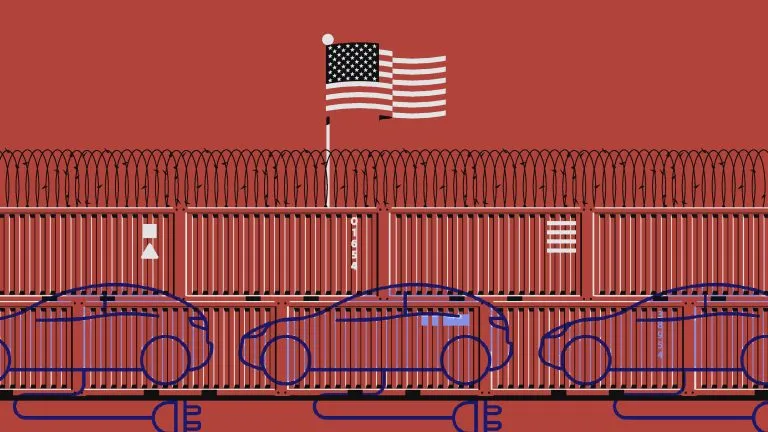
The U.S. is maintaining a tariff barrier as Canada and the EU open their doors to Chinese electric cars this year. For executives, that divergence changes where growth happens, how pricing power shifts, and what regulatory risk looks like.
Electric cars are spreading worldwide, but the U.S. is the odd one out. The world’s EV momentum is being met with open market access in Canada and the EU, while the U.S. watches from behind a tariff wall as this year unfolds.
That tariff wall matters because the global EV wave is not slowing. EV sales grew 20% in 2025, exceeding 20 million, with one in four new cars sold worldwide. When a market with this kind of demand is selectively harder to access, the companies and supply chains positioned to sell into “open doors” can move faster, capture volume, and reshape expectations for the next pricing cycle.
So what is the U.S. actually doing differently? In simple terms, the U.S. is using tariffs to restrict Chinese electric-car competition. Meanwhile, Canada and the EU are allowing Chinese electric cars in, which signals a more permissive posture toward sourcing and competition. This is a regulatory gap with commercial consequences. Even when demand is global, distribution is local, and tariffs can make one region feel like a different business than another.
The global market context is the key backdrop. The source points to broad EV adoption, and the numbers it gives are large enough to make policy a capital allocation decision, not just industrial policy. If one in four new cars sold worldwide is an EV, then nearly every automaker and supplier has to decide what “winning” looks like in the next few years. Where competition is easier to enter, customers get more choices, pricing can tighten, and product differentiation becomes more expensive. Where tariffs raise the cost of entry, incumbents often get breathing room, but that breathing room can also translate into being slower to respond when customer preferences and manufacturing scale shift.
For executives, especially those thinking about manufacturing footprint, inventory strategy, and partnership choices, this split is more than a headline. It changes the timing of competitive pressure. Canada and the EU can become test markets where pricing and adoption dynamics play out with Chinese models present. The U.S., meanwhile, can lag behind in selection and competitive intensity, which might delay certain market outcomes. But it also means U.S. players could be forced into faster reactions later, when competitive pressure eventually arrives under a different policy regime or through supply-chain workarounds.
There is also a board-level risk angle. When regulators draw lines between regions, companies can end up with misaligned plans: a factory built around one set of assumptions, sales forecasts that do not match realized demand, and margins that depend on tariffs staying stable. That is a bad combination for any leadership team trying to project earnings in a market that is already volatile due to rapid adoption.
Finally, the strategic stake for peers in the industry is clear: if you are allocating capital, you want to know where growth is accessible and where it is politically constrained. Canada and the EU signaling openness to Chinese EVs can attract attention, partnerships, and faster scaling. The U.S. choosing a tariff wall can protect against near-term competitive disruption, but it can also widen the gap between the U.S. and the rest of the EV world. In a global market where sales are already surging, that gap becomes a competitive variable, not a footnote.
This story's Key Insights and Take-aways are locked.
Create a free account to unlock Executive Actions for one credit.
Register to UnlockAlways free for Executives Club members. Join the Club
More in Business

Anthropic’s Levant Alpöge cracks the Jacobian conjecture after 87 years
A Harvard valedictorian used Claude to hit a 1939 breakthrough, but the missing “why” is the real problem.

Uber buys Delivery Hero for nearly $15B, vaulting to top food delivery outside China
The deal doubles Uber's dual-services footprint and pushes a ride-and-eats bundling play into 50 more markets.

Epic and Google drop settlement bid, forcing rival Android app stores by July 22
Google told the court it is ready to carry third-party app stores starting Wednesday, July 22.