
Uber product chief Sachin Kansal says it won’t be “everything for everyone”
In a TechCrunch walkthrough of Uber’s hotels, robotaxis, AV Labs data, and AI rollout, Sachin Kansal explains the product strategy.
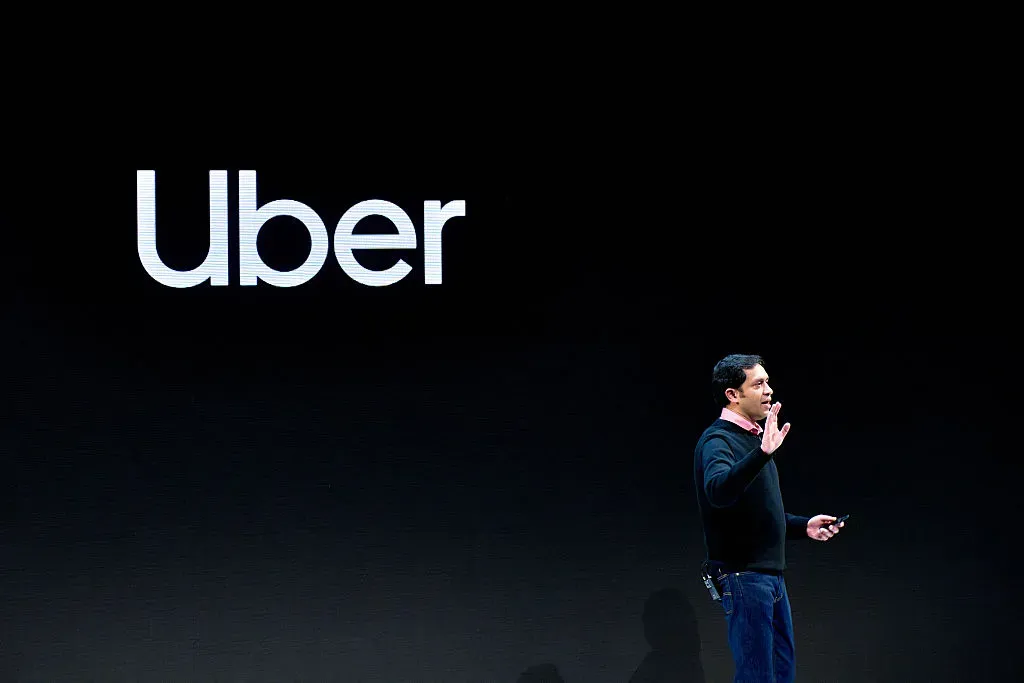
Uber Chief Product Officer Sachin Kansal discusses Uber’s financial-services ambitions, its relationship with Waymo, the new AV Labs data operation, and how AI is appearing for riders and drivers. For decision-makers, the message is about focus: expand into adjacent revenue while avoiding the sprawl that kills execution.
Uber Chief Product Officer Sachin Kansal used his TechCrunch stop to sketch a pretty clear through-line for the next phase of the company. In one conversation, he covered Uber’s push into financial services, its increasingly complicated relationship with Waymo, a new AV Labs data operation, and how AI is starting to show up in ways riders and drivers will notice, not just engineers will debate.
And threaded through all of it was a product philosophy Kansal explicitly ties to a single line: Uber does not want to be “everything for everyone.” That matters because the areas he named are the opposite of small bets. Financial services, autonomous vehicle programs, and data infrastructure are each big, regulatory-exposed, and operationally demanding. If Uber tried to brute-force all of those at once, you would expect it to dilute attention from the core rides business that still anchors its demand and its economics. Instead, Kansal is signaling that Uber wants adjacent growth with guardrails, the kind that lets the company move fast without turning into a bloated marketplace for every use case.
The financial-services ambition, for example, is the sort of expansion that can create sticky customer behavior, new revenue streams, and better unit economics. But it also drags in a different rulebook than typical ride-hailing products. Payments, lending, insurance, and related financial offerings tend to bring heavier compliance requirements, partner dynamics, and risk management. Even when the technology is already inside Uber’s stack, the go-to-market is not. You have to decide which customers to serve, what you promise, how you price risk, and how you prevent a product from becoming a liability during downturns. Kansal’s willingness to put financial services on the roadmap in the same breath as hotels and AI suggests Uber is thinking about bundling and cross-selling, not just launching a standalone feature.
Then there is the robotaxis angle, which is where “complicated relationship” stops sounding like corporate understatement and starts sounding like operational reality. Uber’s relationship with Waymo is increasingly complicated, according to the TechCrunch walkthrough. In practical terms, autonomy is not just a tech build. It is partnerships, data access, safety reporting, geographic constraints, and regulatory approvals that vary by jurisdiction. It also creates an internal strategic tension: if autonomous services are emerging, how do you coordinate incentives, dispatch logic, customer experience, and pricing with drivers and with the rest of your platform? The second-order problem for Uber is that robotaxis can force hard choices about brand positioning. Riders want convenience and reliability. Cities want safety and compliance. Regulators want accountability. And partners want clarity about who controls what.
That is where Uber’s new AV Labs data operation likely fits into the bigger picture Kansal is drawing. Building data operations for autonomous and advanced analytics is not glamorous, but it can be the difference between iteration and stagnation. Data pipelines, labeling workflows, model evaluation, and experimentation frameworks are what let autonomy programs improve over time and respond to real-world conditions. For Uber, an AV Labs function can also serve as an internal hub that helps connect AI research to operational needs. When the AI rollout is described as starting to show up in ways riders and drivers will notice, it implies Uber is pushing beyond “cool demos” and into the parts of the experience that influence daily behavior: wait times, matching quality, route efficiency, pricing and incentives, and driver tools.
And this is why the “everything for everyone” line is more than a vibe. Uber’s ambition spans hotels, financial services, autonomy, and AI. Those initiatives could easily become a product sprawl that confuses users and overwhelms execution teams. The focus message is a way to prevent that. In operator terms, focus is how you keep the product operating system coherent while you add new modules. In board terms, focus is how you defend capital allocation decisions when markets are volatile and regulatory risk is uneven. Investors tend to reward companies that can expand, but they punish companies that can only expand by sacrificing clarity.
For executives watching Uber, the takeaway is not that every one of Uber’s bets is the right bet. It is that Uber is treating product strategy as a portfolio problem with constraints: pursue adjacent revenue and new technology while drawing boundaries around what the company will not do. If you run a marketplace, a mobility platform, or any multi-sided consumer product, the same question will eventually land on your desk. Do you want to be a platform for one job, or a platform for every job? Kansal’s answer is not subtle: Uber wants expansion, but it wants it with a strategy sharp enough that the company does not lose itself in the process.
This story's Key Insights and Take-aways are locked.
Create a free account to unlock Executive Actions for one credit.
Register to UnlockAlways free for Executives Club members. Join the Club
More in Technology

Google quietly links your phone number to every Android account on your SIM
Adding a SIM now ties your phone number to all Google accounts - and future accounts inherit it. Here's the security and privacy stakes.

Hijacker AI 'Skynet mode' runs 100,000 attack steps against exposed models
Symantec caught a criminal AI agent that borrows other models, steals data, and mines crypto; the only relief is no confirmed victims yet.

Nvidia's AI-financier shift faces its first big test as neoclouds stumble
A rout in neocloud stocks is forcing investors to weigh Nvidia's hidden exposure as both supplier and lender to the AI buildout.