

UC San Diego will power a cloud with 2,000 Pixel Fold phones this fall
Google and UCSD are turning “thrown away” smartphones into a Linux Kubernetes cluster, sidestepping both waste and datacenter fire-risk.
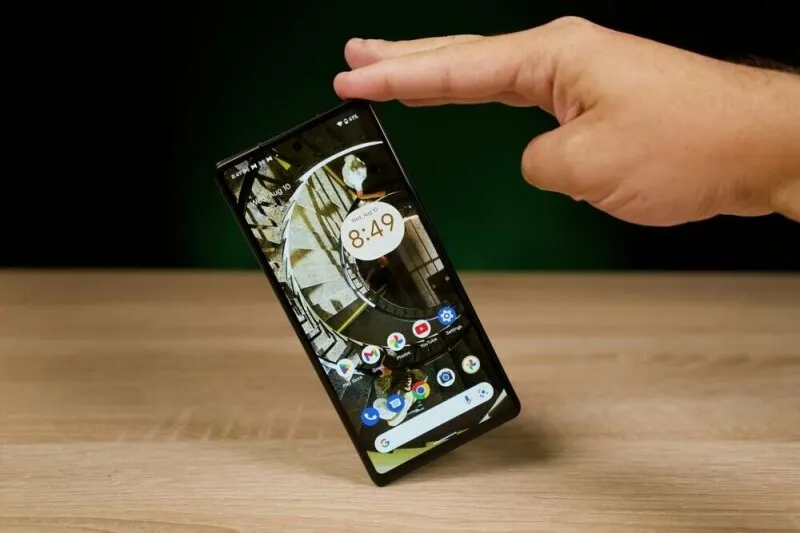
UC San Diego computer scientists, collaborating with Google, plan to deploy a compute cluster built from 2,000 retired Pixel Fold smartphones. The project, led by researchers including UCSD’s Ryan Kastner and former UCSD PhD student Jennifer Switzer now at Google, aims to launch this fall and replace some conventional server compute with low-cost, low-carbon devices.
Smartphones are usually treated like disposable electronics: drawer, second-hand market, recycle bin. UC San Diego is treating them like something else entirely, and the bet is getting real. In collaboration with Google, the university plans to deploy a cluster built from 2,000 retired Pixel Fold smartphones. The stated goal is to show that old handsets can continue to serve as a low-cost, low-carbon computing platform after their original owners have upgraded. That “old phones as infrastructure” idea sounds whimsical until you notice the number: 2,000 devices is no lab demo anymore.
The plan is specific. UCSD will be using 2,000 Pixel Fold smartphones courtesy of Google, and the researchers say the core computing functionalities remain intact even after years of service because the underlying compute is still there. Google estimates the average person upgrades their phone every four years or so. Kastner, an associate professor of computer science at UCSD, frames the motivation bluntly: “recycling is a terrible option for most of these smartphones,” because the devices are a “vast amount of thrown away compute.” In other words, the cluster is trying to keep embodied value from going up in smoke, while also making a dent in the carbon footprint of what the devices already represent.
But the route from “retired phones” to “datacenter-adjacent compute” has a catch, and it is not a small one: batteries and safety. Early testing used unmodified smartphones, and the team learned fast that it was neither practical nor safe for this kind of deployment. In meetings with Google, engineers reportedly warned that batteries are “no-go” if the devices are being put in a datacenter. Kastner says it comes down to fire hazards and other “no-go” concerns. This is why the full deployment, expected to launch this fall, involves a more invasive workflow: Google is working with a third party to extract the phones' motherboards from their cases.
Carbon and hardware design collide in the next layer of the story. The Register’s source cites a figure from “the Chocolate Factory” stating that the motherboard represents about 50 percent of the smartphone’s embodied carbon. Once the team pulls the motherboards out of the shells, the researchers argue the chips still deliver real usefulness. They say the single-threaded performance of these chips can be as good as, or even better than, what you would find in many-cored datacenter chips. The CPU and system specs matter because this is not magic, it is engineering: the Pixel Fold smartphones use a Google Tensor G2 processor with two 2.85 GHz Cortex-X1 cores, two 2.35 GHz Cortex-A78 cores, and four 1.80 GHz Cortex-A55 cores, plus a Mali-G710 MP7 GPU and 12 GB of system memory.
To sanity-check performance, UCSD researchers used early benchmarking with the SPEC suite, suggesting that 25-50 phones should deliver performance similar to that of a conventional server. That sounds promising on paper, but scaling compute on phones turns out to be the real challenge. Distributing workloads across multiple devices is hard when each device has a handful of cores of different varieties and limited memory, typically 8-12 GB per device (as the source notes). So the team is not trying to imitate a traditional supercomputer in every way. They are approaching the problem from two angles: first, targeting applications that fit within a single device. Second, using Kubernetes to orchestrate container deployments across clusters of 25-50 phones.
That Kubernetes plan has an equally important prerequisite: the phones need the right software environment. The devices must be flashed with a Linux operating system suitable for the job. Android, while great for handheld use, is not intended for server duty. The researchers note that Android includes memory and battery protection mechanisms designed to stop rogue apps from chewing through resources. In a server context, those safety mechanisms are no longer necessary. Kastner says getting Linux running smoothly on the devices is difficult but progressing, including support for the phone’s onboard GPUs. Access to some functions, like the chip’s integrated tensor processing unit, remains elusive, which is a reminder that “phone compute” can be more complicated than just swapping apps for containers.
Finally, clustering needs networking, and the source points out why normal phone networking does not scale cleanly. Normally the devices would connect over cellular or Wi-Fi, but at this scale that is not practical and also introduces security implications. Instead, the team will use PCBs that both supply power and break out wired Ethernet networking. For the kinds of workloads the project is targeting, this may be exactly the right trade-off. The researchers suggest many education tech, grading, and research workloads commonly run by universities in the cloud are small enough for the cluster. One cited example: early experiments show that even a moderately-sized cluster of 20 phones can support peak submission rates for a 75+ student class. The team also expects “function as a service” style workloads to make sense because they are sporadic and do not require heavy, constant high-performance compute.
For executive readers, the bigger signal is what this unlocks if it works: a reproducible architecture for turning surplus or retired consumer hardware into elastic infrastructure. UCSD also plans to support exploration into parallel computing and systems programming, which the source compares to the Beowulf clusters of the 1990s that cobbled together supercomputers from consumer PCs. UCSD’s relationship with the San Diego Supercomputing Center suggests the cluster could be used by teams there, potentially leading to High-Performance Linpack runs. And this does not live in isolation. UC Santa Barbara deployed what was once the largest Raspberry Pi cluster ever, in collaboration with Oracle, using 1,050 Raspberry Pi 3B+ devices. Elsewhere, a Gigabyte cluster packed 40 Intel Lunar Lake notebook processors, each with eight cores and 32 GB of memory, into a system the size of a pizza box. The trend is clear: researchers are pushing compute into strange, cheaper, and more sustainable form factors. The question for decision-makers is whether phone-based clusters become a credible path for real workloads at real scale this fall.
This story's Key Insights and Take-aways are locked.
Create a free account to unlock Executive Actions for one credit.
Register to UnlockAlways free for Executives Club members. Join the Club
More in Technology

Nvidia's $89B data center quarter: the 9 companies cashing in
The AI buildout is minting fortunes beyond GPUs, and memory, cloud, and cooling suppliers are riding the same wave.

Google quietly links your phone number to every Android account on your SIM
Adding a SIM now ties your phone number to all Google accounts - and future accounts inherit it. Here's the security and privacy stakes.

Hijacker AI 'Skynet mode' runs 100,000 attack steps against exposed models
Symantec caught a criminal AI agent that borrows other models, steals data, and mines crypto; the only relief is no confirmed victims yet.