

UK shoppers return to high street as warm weather lifts May footfall
British Retail Consortium and BDO data show a May bounce-back after April's sharp drop, giving retailers brief relief as war and spending pressure still hang over demand.
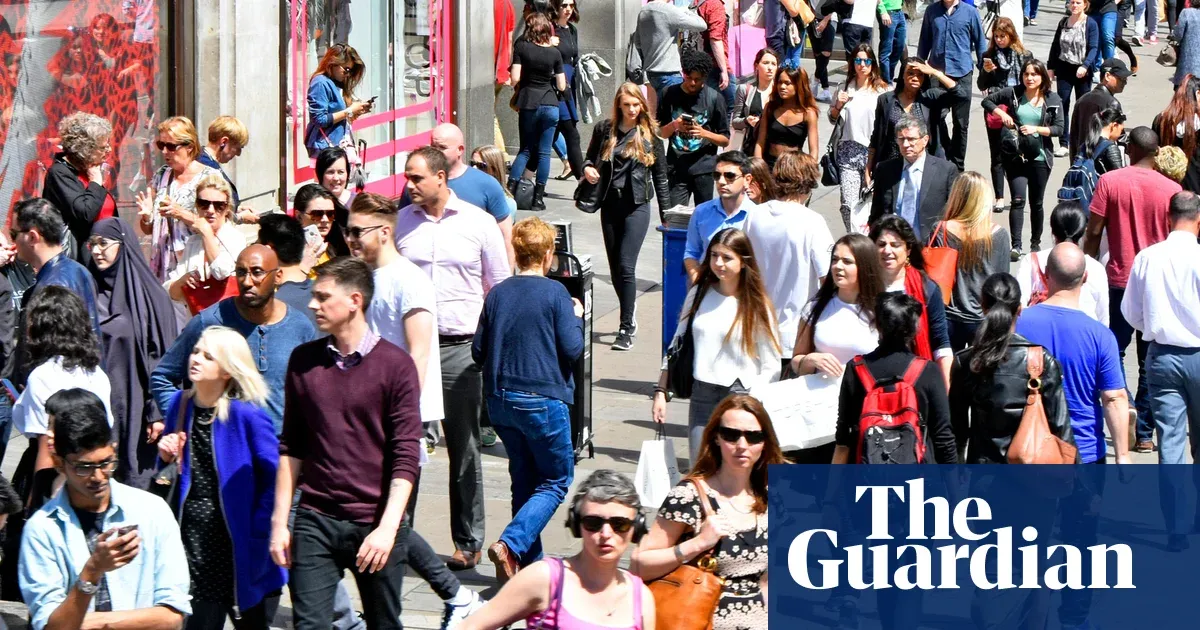
British Retail Consortium figures and a separate BDO survey showed UK footfall rose in May, reversing April's sharp decline as spring sunshine and warmer weather brought shoppers back to the high street. For retailers and executives, the rebound is welcome but fragile: consumer confidence is improving, yet spending remains under pressure from the wider economic shock linked to the US-Israel war on Iran.
UK shoppers did come back in May, and retailers badly needed it. British Retail Consortium figures showed footfall rose last month, while a separate survey from accountancy firm BDO pointed to the same bounce-back. That is a clean reversal from April, when footfall fell sharply. The immediate driver was simple enough: spring sunshine and warmer weather gave consumers a reason to head back out, bringing some welcome respite to high street retailers after a bruising stretch of weak demand.
The timing matters because this was not just a random weather-driven blip. The retail sector has been operating under a squeeze on spending since the US-Israel war on Iran, which has weighed on consumer confidence and made shoppers more cautious. In plain English, people have been less willing to spend freely, and retailers have been living with the knock-on effects in stores, malls, and town centres. May's footfall improvement does not erase that pressure, but it does show how quickly sentiment and behavior can shift when the mood, and the weather, turn in retailers' favor.
For executives, the BRC and BDO readings are useful because footfall is one of the earliest signals of how the consumer is feeling before the fuller sales numbers arrive. More people walking into shops can mean a better chance to convert browsers into buyers, but it is not the same as a durable recovery in spending. That distinction matters. Retailers can get a temporary lift from better weather, seasonal patterns, or a short-lived improvement in confidence, only to find the underlying squeeze on household budgets still biting when the next bill lands. So the May bounce is encouraging, but it is not a clean bill of health.
It also highlights a basic truth of retail strategy: external conditions can move the top line faster than internal planning can. A company can spend months optimizing promotions, stock levels, staffing, and store experience, then get a sudden boost or hit from factors that sit completely outside the balance sheet. Warm weather tends to help physical retail because it changes behavior. Consumers are more likely to leave the house, linger on high streets, and browse stores rather than stay home. That is why footfall data matters so much to operators, landlords, and anyone betting on the health of brick-and-mortar commerce. It is a live pulse check on how willing people are to participate in the in-person economy.
The rebound also suggests that the high street still has something money cannot easily replace: immediacy and habit. When conditions are good, shoppers can return quickly, and that can give retailers a short-term boost after a weak month. But it also shows how exposed the sector remains to broader shocks. The source makes clear that spending has been squeezed by the war-related backdrop, so the May uplift should be read as relief, not resolution. Retail leaders, especially those managing thin margins, have to live with a world in which consumer confidence can improve in one month and deteriorate in the next. That makes forecasting harder, inventory decisions riskier, and promotional planning more unforgiving.
There is also a bigger board-level lesson here for consumer-facing businesses. Footfall improving in May after a sharp April decline means the market can still be volatile even when the trend line looks better for a moment. A board looking only at one green month could overread the signal. A board looking at the combination of BRC figures and the BDO survey would probably treat it as a partial rebound, not a structural turnaround. That is the more sober read: more people showed up, but the forces depressing spending have not disappeared. The retail sector got a breather, not a reset.
For peers across consumer businesses, that is the real takeaway. Demand can recover fast when the public mood lifts, but it can also retreat just as quickly when the pressure returns. The companies that fare best are usually the ones that treat footfall as an early warning system, not a victory lap. In this case, May's numbers tell executives two things at once: the high street is still capable of drawing customers, and the war-linked drag on confidence remains the bigger story underneath the weather-driven bounce. If you run a retailer, landlord group, or any consumer brand exposed to physical traffic, that is the gap to watch now.
This story's Key Insights and Take-aways are locked.
Create a free account to unlock Executive Actions for one credit.
Register to UnlockAlways free for Executives Club members. Join the Club
More in Business

Anthropic’s Levant Alpöge cracks the Jacobian conjecture after 87 years
A Harvard valedictorian used Claude to hit a 1939 breakthrough, but the missing “why” is the real problem.

Uber buys Delivery Hero for nearly $15B, vaulting to top food delivery outside China
The deal doubles Uber's dual-services footprint and pushes a ride-and-eats bundling play into 50 more markets.

Epic and Google drop settlement bid, forcing rival Android app stores by July 22
Google told the court it is ready to carry third-party app stores starting Wednesday, July 22.