

Ukraine ships upgrades in weeks, forcing NATO to rethink capability development timelines
NATO leaders say Ukraine’s “weeks” adoption cycle exposes how Western processes drag innovation for months and years.
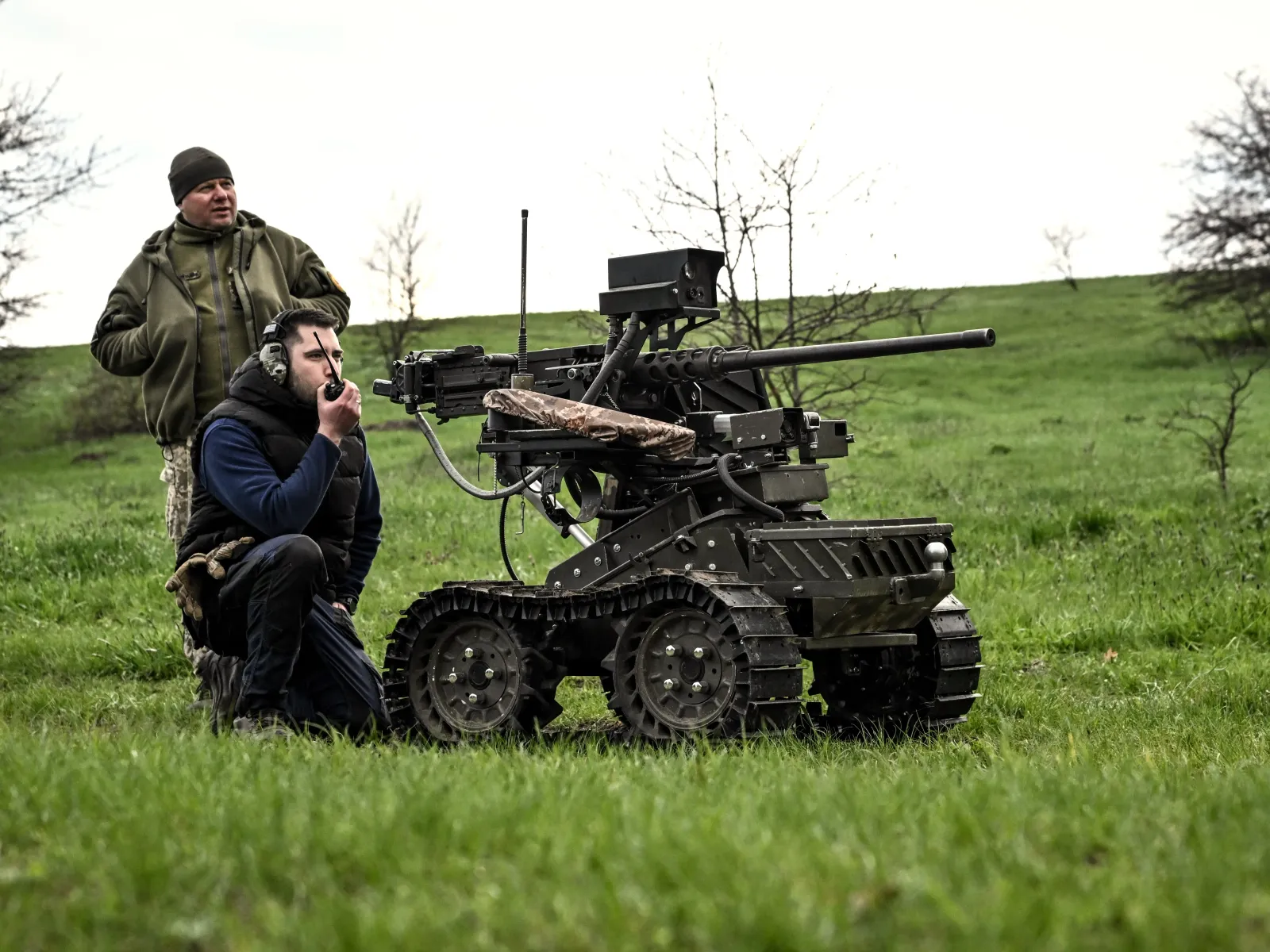
Ukraine’s defense firms test and iterate new gear in days, with adoption and adaptation measured in weeks, NATO officials say. For defense decision-makers, the consequence is blunt: if you can’t scale and integrate faster, your “better” tech arrives outdated.
Ukraine’s defense industry edge is brutally practical: it can test and upgrade weapons in days, then push fixes or updates in weeks. In a war where equipment can become out of date in weeks, that speed is not a nice-to-have. It is the business model, and the battlefield is the customer.
Sir John Stringer, NATO’s Deputy Supreme Allied Commander Europe, told Business Insider that one thing allies can clearly see in Ukraine is “the sheer pace of adoption and adaptation in technology. It is measured in weeks.” He added that Ukraine’s “success is rooted, amongst other things, in the fact that at the front line, you don’t just have operators.” You also have tech and industry, so “lessons are genuinely applied rather than admired.” In other words, feedback does not sit in a slide deck. It turns into hardware.
How does Ukraine make that happen? The source paints a picture of a feedback loop that collapses the distance between battlefield and factory. Soldiers test weapons and send feedback directly to manufacturers. Companies then change products and test with combat units, iterating fast because the environment demands it. Drone and weapons maker Frontline Robotics, for example, makes up to 20 changes to its products a month, driven by constant soldier feedback and battlefield testing. Mykyta Rozhkov, Frontline Robotics’ chief business development officer, described the manufacturing mindset as unusually agile: soldiers can request a change, and Frontline can start working “within minutes.” It tests with the brigades, fixes issues, and can deliver new updates “within a week.”
That is a cadence Western defense procurement systems typically are not built to match. The source explicitly ties the urgency to modern war’s pace: Ukraine is fighting for its life against Russia, and the conflict changes so quickly that weaponry can swiftly become out of date in weeks. Davyd Aloian, deputy secretary of Ukraine’s National Security and Defense Council, said speed is essential because wartime developments “evolves way faster than the regular advance planning for the procurement processes and so on.” If it takes months for weaponry to arrive, Aloian said, it “will already be outdated” for Ukraine’s battlefield. The “product development” problem becomes a logistics and governance problem, not a technical problem.
Western officials are now trying to translate this reality into their own systems. Stringer said the West must accelerate capability development “measured in weeks and months, not just years and decades,” though he acknowledged that some multi-decadal programs still have relevance, like frigates, destroyers, fast jets, and armored fighting vehicles. The key issue, in his framing, is whether allies can alter the “traditional model” where processes are measured in decades, not just years. German Army vice chief Heico Hübner echoed the strategic shift in a more blunt way, saying the war in Ukraine confirmed that the speed of military innovation has become a decisive factor of military power. He also reframed the competition away from only better technology: the key question becomes who can scale innovation more rapidly and integrate it into the force faster.
Ukraine’s approach is also helped by how work flows inside the system. The source notes that Ukraine’s military is more decentralized than many allies, giving troops and units more autonomy. Troops can independently purchase weapons; units can test prototype weapons; soldiers can often modify gear themselves. Companies receive feedback through informal channels like WhatsApp and FaceTime, rather than waiting for slower formal reviews. Another detail that matters for executives: Ark Robotics gets feedback faster because it works directly with military troops, “not the defense ministry.” The Ark Robotics CEO, speaking under a pseudonym for security reasons, described the iteration cycle as “insane,” saying it’s “like a constant game of how we can implement these changes.” Ark Robotics employees tour the front lines to test in real-world conditions, which the source notes is “actually an extremely dangerous job,” because “you have to go where the action is.”
For boards and leadership teams, the second-order implication is that speed is not only about R&D. It is about incentives, organizational structure, and risk tolerance. If lessons must be “applied rather than admired,” leadership has to empower experimentation, accept that prototypes will be imperfect, and build operational pathways that can absorb changes without turning them into procurement bottlenecks. That is why NATO assistant secretary general for defense industry innovation and armaments, Tarja Jaakola, emphasized that innovative Ukrainian companies get feedback from soldiers and then get fresh solutions “within weeks,” calling it “an important lesson that we need to learn from Ukraine.” NATO wants to “actually see how we can change our own mindset and our own way of working when we talk about capability development.”
Industry leaders in the source are making the same point from the market side. Oliver Waghorn, business development director at BAE Systems Digital Intelligence in the UK, said in February at Chatham House that industry now needs feedback from the fight within minutes or hours, warning that “Anything else, you've lost the battle, you've lost the race already.” Tie that to the Western pivot toward larger arsenals of cheaper systems that are not perfect but can be produced quickly and used at scale, and you get the governance challenge behind the headlines: decades of prioritizing exquisite, slower programs are colliding with a reality where agility wins.
The strategic stakes for decision-makers are simple, and the source is explicit about them. In a fast-changing war, a weapon that takes months or years to test and update may arrive too late to matter. So the “Ukraine lesson” is not just inspiration. It is a deadline. If Western militaries and defense companies cannot scale innovation more rapidly and integrate it into the force faster, they will keep developing the right ideas on the wrong timeline.
This story's Key Insights and Take-aways are locked.
Create a free account to unlock Executive Actions for one credit.
Register to UnlockAlways free for Executives Club members. Join the Club
More in Entertainment

Russell Brand's accuser 'bewildered and confused' as he denies 7 sex charges
The criminal case against the comedian is a live test of how media companies manage talent risk when serious allegations go public.

'It's a Magic Trick': Ballet Experts Say Rosalía's SNL Pose Is Impossible
Three ballet experts tell Rolling Stone Rosalía's gravity-defying SNL stillness shouldn't be possible - and why the debate is now part of the show.

Activision CMO: GTA 6 Will Boost Call of Duty, Not Bury It
Activision's top marketer says Rockstar's blockbuster will drive players back to consoles and into Modern Warfare 4, even as the company admits its recent strategy failed.