
UniIC finishes IPO tutoring phase for Beijing listing, five months after starting
Xi'an UniIC’s DRAM push joins CXMT to monetize China’s memory supercycle, with regulatory timing now front and center.
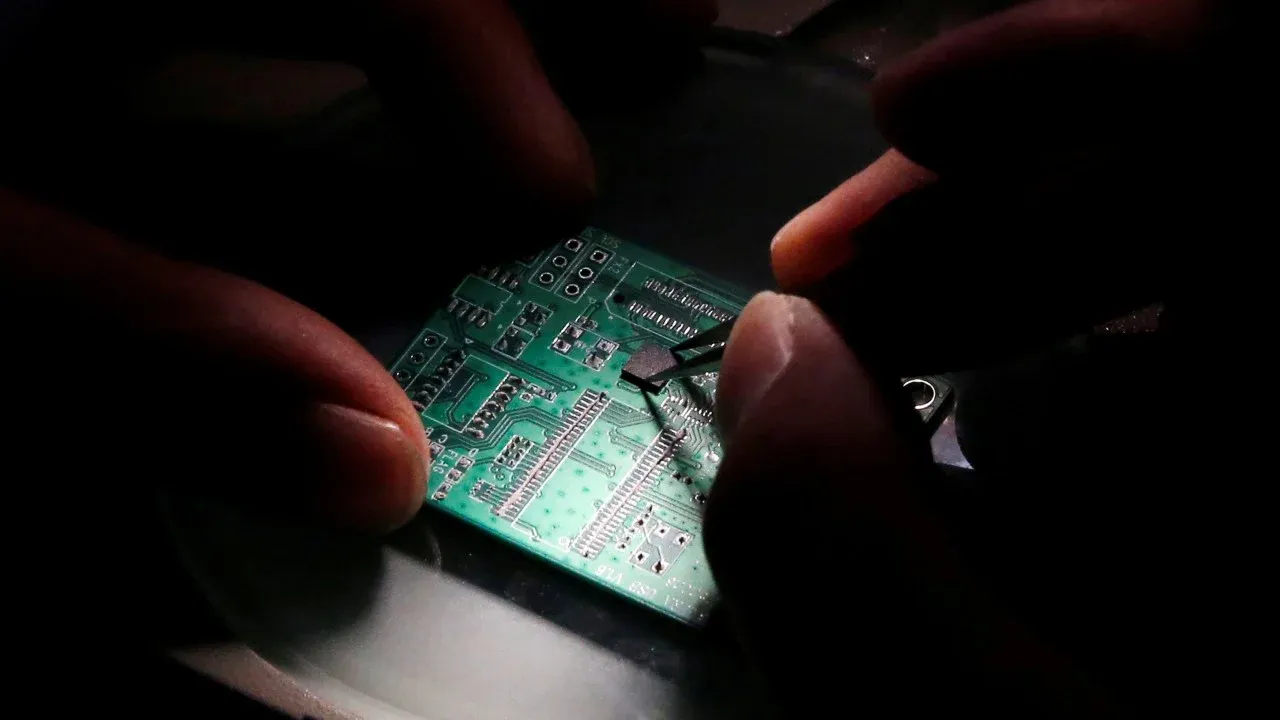
Xi'an UniIC, a DRAM maker backed by Tsinghua UniGroup, is accelerating its push for a mainland China IPO in Beijing. The company completed the mandatory IPO tutoring phase five months after it initiated the process.
Xi'an UniIC is moving faster than most investors expect from a pre-IPO semiconductor story. The DRAM manufacturer backed by China’s technology conglomerate Tsinghua UniGroup has completed its initial public offering tutoring phase, a mandatory step for mainland China listings, five months after UniIC initiated the process, according to SCMP.
Why does that matter right now? Because UniIC is not doing this in a vacuum. It is explicitly joining larger rival ChangXin Memory Technologies (CXMT) in trying to ride the current memory supercycle. In other words, UniIC is timing a capital market event around a sector window where demand and pricing for memory have been unusually favorable, and where the market appetite for “memory winners” tends to be highest.
The “tutoring phase” detail might sound like bureaucratic trivia, but in mainland China, it is part of the on-ramp. A tutoring phase is mandatory before a company can move forward with a public listing process, so completing it is effectively a checkpoint that the company has cleared a key gate. The fact UniIC finished it roughly five months after starting gives a concrete sense of momentum. It also reduces a big source of uncertainty that pre-IPO boards worry about: delays that can cause a company to miss its best macro and industry window.
UniIC is positioning itself in a market where capital is strategically valuable. DRAM is not a software-like business where working capital management is the whole game. Memory manufacturers are typically capital intensive, with production capacity, process technology, and supply chain execution all requiring sustained funding. That is exactly why IPO timing becomes an operational lever. When the cycle is favorable, raising money can mean accelerating upgrades and scaling plans. When the cycle turns, the same funding needs can look far less urgent, or far more dilutive, depending on valuation and market sentiment.
SCMP’s framing puts UniIC into the same bucket as CXMT. CXMT is the larger rival, and UniIC’s decision to push for a Beijing listing signals it wants to be seen as part of the same “category bet” the market is making on memory. For decision-makers, the important implication is that this is not a one-off company sprint. It is competitive timing among domestic players trying to benefit from the same favorable sector conditions.
The backing matters here too. UniIC is backed by Tsinghua UniGroup, a technology conglomerate. In Chinese industrial policy and technology ecosystems, group backing can influence everything from governance readiness to access to resources that support scale-up. Even without guessing at internal mechanics, the visible fact is that UniIC is supported by a heavyweight in the Tsinghua orbit, and that support can make the IPO path feel more feasible to regulators and the market, compared with a company without that kind of institutional weight.
At the board level, this kind of progress tends to change the conversation. When a company completes a tutoring phase, it signals fewer procedural bottlenecks between “we want to list” and “we are on a listing track.” That affects planning for capital structure, management bandwidth, and how the company communicates with investors. It can also reframe competitive posture versus CXMT. If both firms are working toward public listings while the memory supercycle remains the headline macro story, the winner is not just whoever has better chips. It is often whoever reaches the market at the right time with the cleanest path through required steps.
There is also a strategic signaling effect. In sectors like semiconductors, the market watches who is advancing through process milestones when the cycle is hot. UniIC completing its mandatory tutoring phase five months after initiating the process is a signal that the company is treating the memory supercycle as a real timing window, not a vague narrative. For other executives in similar roles across China’s tech and hardware landscape, that is the broader lesson: regulatory sequencing and industry timing are linked. The supercycle may last longer or shorter than anyone wants to bet on, but a checklist item finished on schedule can still be the difference between capturing a favorable moment and selling the same growth story under worse conditions.
This story's Key Insights and Take-aways are locked.
Create a free account to unlock Executive Actions for one credit.
Register to UnlockAlways free for Executives Club members. Join the Club
More in Business

Anthropic’s Levant Alpöge cracks the Jacobian conjecture after 87 years
A Harvard valedictorian used Claude to hit a 1939 breakthrough, but the missing “why” is the real problem.

Uber buys Delivery Hero for nearly $15B, vaulting to top food delivery outside China
The deal doubles Uber's dual-services footprint and pushes a ride-and-eats bundling play into 50 more markets.

Epic and Google drop settlement bid, forcing rival Android app stores by July 22
Google told the court it is ready to carry third-party app stores starting Wednesday, July 22.