

United's A321XLR brings doors, beds, and a snack bar to long-haul flying
United is betting the Airbus A321XLR can make narrow-body jets feel premium enough to steal routes from older 757s, while FAA approval still holds up one flashy feature.
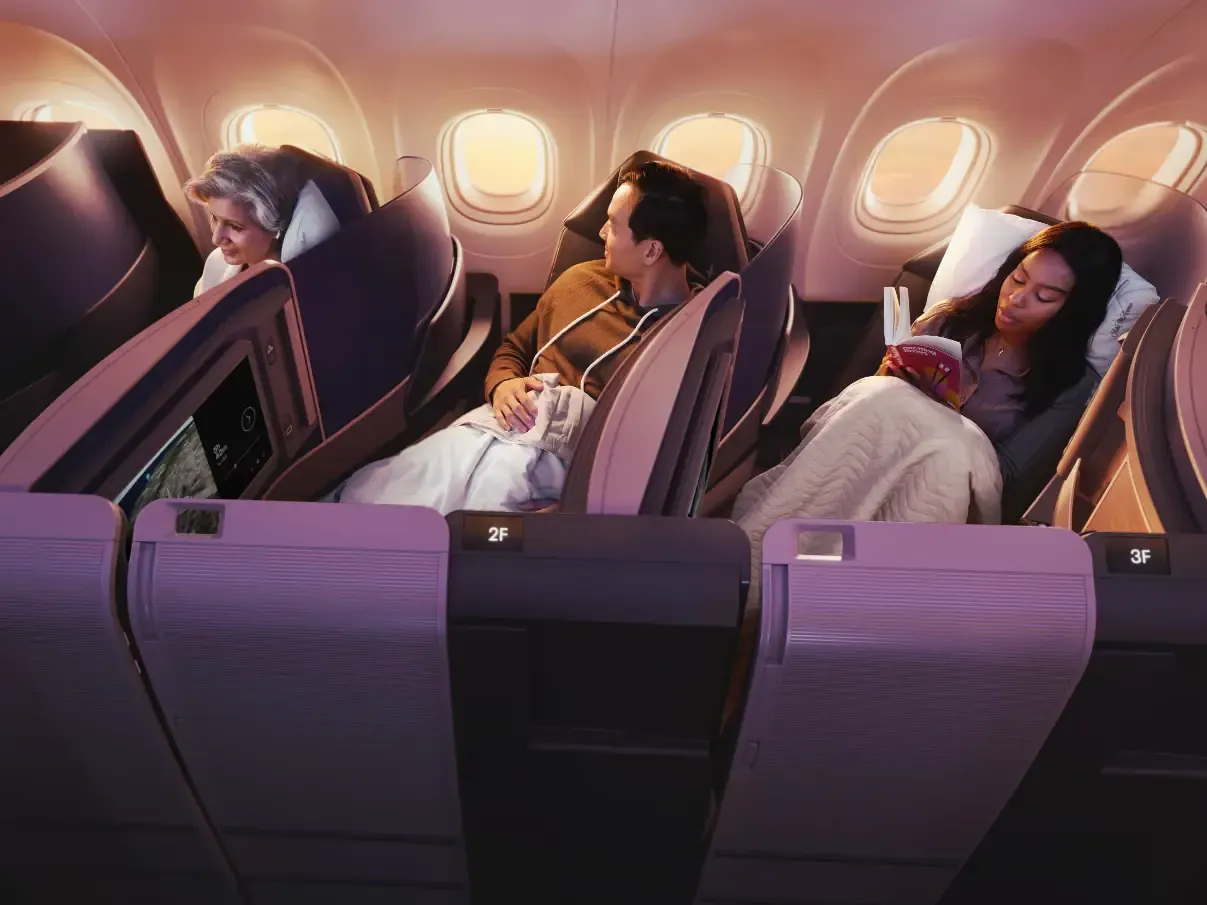
United Airlines is taking delivery of its first Airbus A321XLR on Wednesday, a long-haul narrow-body jet built with sliding business-class doors, lie-flat beds, and a walk-up snack bar. For operators, it signals how premium demand, aircraft economics, and cabin design are converging to reshape international route planning.
United Airlines is taking delivery of its first Airbus A321XLR on Wednesday, and the plane is not shy about its ambitions. The carrier says the jet is meant to deliver a “wide-body experience on a narrow-body jet,” with sliding doors in business class, lie-flat beds, and a walk-up snack bar in economy. One catch: the doors can slide closed, but flyers cannot actually use them until the FAA certifies them, so the flashiest piece of the premium pitch is still waiting on regulators.
That matters because this is not just a new plane, it is a different operating model. Flight-tracking data showed the Airbus A321XLR left the factory in Hamburg, Germany, on Wednesday and landed in Tampa, Florida, later that evening. United expects the jet to debut this summer, first on select international routes now flown by its Boeing 757s, then later across Europe, South America, and beyond. In plain English, the airline is trying to use a narrow-body aircraft to open routes that would usually require a larger wide-body jet, or not be worth flying at all.
The economics explain why airlines are interested. United said the A321XLR can replace 757 flying and outperform the older plane on range and fuel burn. The 757 dates to the 1980s, which in airline terms is ancient enough to make every efficiency improvement look like free money. Thanks to an extra gas tank in the belly, the A321XLR can fly about 5,400 miles, or roughly 11 hours nonstop, across oceans and continents. That extended range, plus lower operating costs, gives United a way to serve lower-demand routes that were previously out of reach for older narrow-bodies or too expensive for larger wide-bodies.
The cabin is built to make that strategy feel less like a downgrade and more like an upgrade. United’s new premium-heavy aircraft has 150 seats total, and about a fifth of them are business or premium economy. In the Polaris business class cabin, passengers get the headline feature everyone is talking about: sliding doors that create a cocoon around the seat. They also get plush linens, elevated meals, an amenity kit, a 19-inch television screen with Bluetooth connectivity for headphones, and a bed that stretches up to 78 inches. The tradeoff is layout: because wide-body Polaris seats cannot fit in a forward-facing configuration on a narrow-body jet, United has angled the seats inward, which means passengers face the aisle instead of the window. For frequent flyers who like the bird’s-eye view, that is a real compromise.
Premium Plus gets its own overhaul, too. United says the A321XLR version will have 12 large reclining loungers in a 2x2 layout with no middle seat, privacy dividers, a 16-inch Bluetooth-enabled screen, and a foot and legrest. It also comes with nicer meals and linens than regular coach. Between business class and Premium Plus, the plane has 32 high-dollar seats, which is 16 more than the 757 has. That is the real story under all the cabin gloss: United is squeezing more premium revenue out of a smaller aircraft, which tells you exactly where the airline thinks demand is strongest.
Coach is not being ignored, but it is being reimagined around convenience. The economy cabin uses the usual 3x3 layout with 118 seats, including 36 with extra legroom. Every seat gets a 13-inch Bluetooth screen, and large overhead bins designed by Airbus as part of its Airspace XL cabin should make it easier to stash roller bags and reduce gate-checking during boarding. At the back of the plane, United is adding a self-serve snack bar with snacks and drinks, a perk that is already available on the airline’s CRJ550 and A321neo and is open to all passengers. United even removed several rows of coach seats to make room for it. In other words, it gave up some density to make the experience feel less cramped and more premium, which is a notable signal about what the airline thinks travelers will pay for, or at least remember.
United is not flying this playbook alone. The A321XLR is part of a growing fleet trend, and there have already been more than 500 total orders for the aircraft. Spain’s Iberia was the launch customer and flew the inaugural route from Madrid to Boston in November 2024. American Airlines, Australia’s Qantas, Ireland’s Aer Lingus, Hungary’s Wizz Air, and Uzbekistan’s Qanot Sharq also fly the plane. United has 50 A321XLRs on order and plans to have more than half in service by 2028. The airline also plans to roll out its new “Elevated” cabins on its Boeing 787s, A321neo “Coastliners,” and CRJ450 regional jets, suggesting this is a systemwide bet, not a one-off vanity project.
The regulatory wrinkle is worth watching because it shows how much of airline product design now lives at the intersection of experience and certification. United’s doors are already installed, but the FAA has not yet approved them as airworthy, so they will stay open at launch. That is a reminder that in commercial aviation, even a premium feature is only real once it clears the regulator. For airline executives, the broader lesson is simple: the next competitive edge may come less from the size of the aircraft and more from how cleverly you use the cabin you already have. For everyone else, it means the long-haul experience is getting more customized, more premium, and a little more complicated to copy.
This story's Key Insights and Take-aways are locked.
Create a free account to unlock Executive Actions for one credit.
Register to UnlockAlways free for Executives Club members. Join the Club
More in Business

Anthropic’s Levant Alpöge cracks the Jacobian conjecture after 87 years
A Harvard valedictorian used Claude to hit a 1939 breakthrough, but the missing “why” is the real problem.

Uber buys Delivery Hero for nearly $15B, vaulting to top food delivery outside China
The deal doubles Uber's dual-services footprint and pushes a ride-and-eats bundling play into 50 more markets.

Epic and Google drop settlement bid, forcing rival Android app stores by July 22
Google told the court it is ready to carry third-party app stores starting Wednesday, July 22.