
Upton Lovell Shaman DNA flips XX after 200 years of male assumptions
A 4,000-year-old Stonehenge-area burial once displayed as a bearded man is now confirmed female.
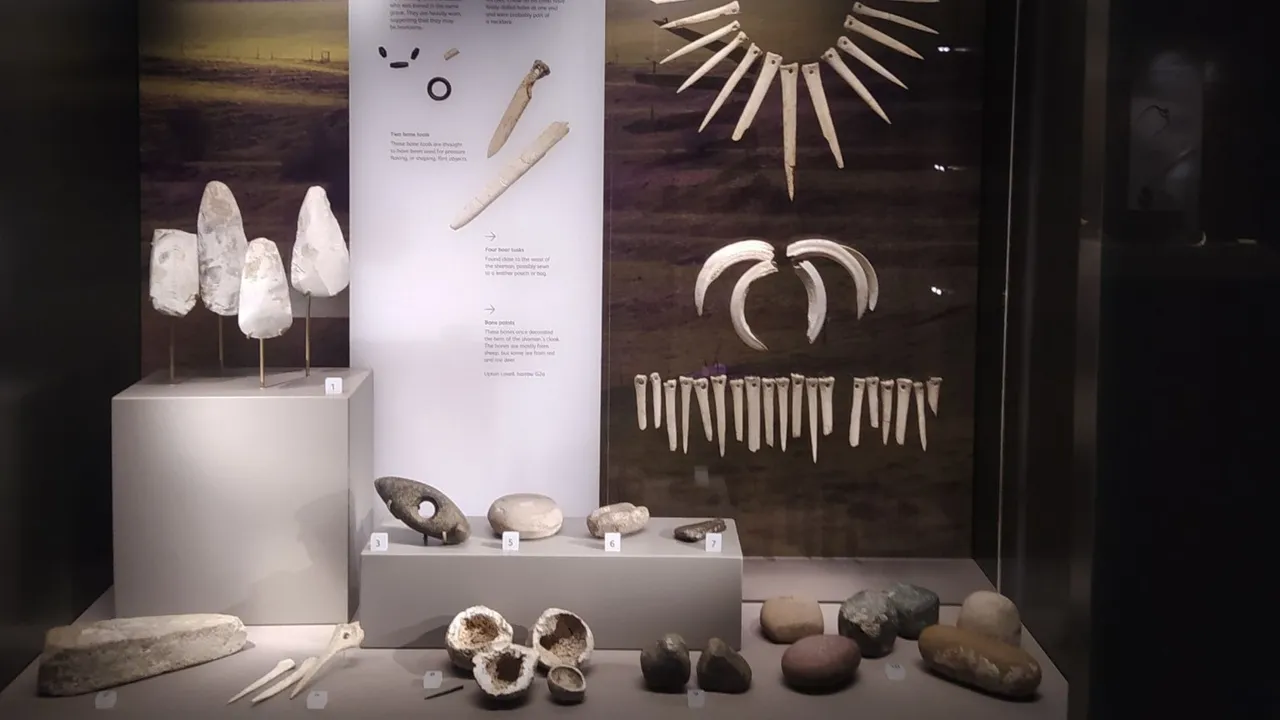
Researchers at the Francis Crick Institute analyzed ancient DNA from the “Upton Lovell Shaman,” a richly equipped Early Bronze Age burial near Stonehenge, and found XX sex chromosomes rather than XY. For museum leadership, academic audiences, and anyone tracking how science corrects the record, this is a high-visibility stereotype reset, unveiled in a new exhibition opening July 16.
A 4,000-year-old burial near Stonehenge long treated as the work of a male shaman is now confirmed as female, after ancient DNA testing found XX sex chromosomes instead of the expected XY. The shift is not subtle. For over two centuries, the “Upton Lovell Shaman” was displayed as a bearded male figure, and even the original excavator William Cunnington described the bones as “a stout man” based on “the largeness of the bones.” Now DNA from a tooth and a toe has pulled the curtain back: the results were the same each time, and the researchers found no evidence the grave contained more than one person.
This matters because the tools and burial context supported a specific story. The skeleton was found in 1801 near Upton Lovell, about 10 miles (16 kilometers) west of Stonehenge, and was surrounded by an unusually rich kit: stone axes, metalworking implements with traces of gold, and a touchstone used to test metal purity by comparing streaks from different metals. There were also pierced animal bones likely once sewn onto a garment as decoration, hinting at a ceremonial cloak. Archaeologists interpreted the combination of high-status metalworking gear and ritual-sounding objects as belonging to a spiritual specialist, so the remains earned the nickname “Upton Lovell Shaman.” The new genetic result rewrites that story at the most basic level: the person was not just a participant in metalworking culture. She was the metalworker.
David Dawson, director of the Wiltshire Museum, said the finding “completely tears up previous assumptions,” according to The Guardian. The stereotype he called out is familiar in any industry: “men do everything, men are the leaders, men are the metalworkers.” The DNA result provides what he framed as “smoking gun evidence of a female metalworker,” and he added a vivid analogy, comparing metalworking to “the space science of its day.” In other words, this is not merely a correction to a caption. It changes how people might read the skill, status, and knowledge systems of Early Bronze Age society.
If you want the operational detail, it’s in the data trail. The ancient DNA analysis was originally intended to trace ancestry. But the results caught researchers off guard by indicating sex chromosomes of XX, not XY. To be certain, the team tested DNA from both a tooth and a toe, and got the same answer each time, with no evidence the grave held more than one person, according to the statement. That is exactly the kind of “double-sample confirmation” that prevents well-intentioned but sloppy misreads. And it is also exactly why the correction has staying power: it is anchored to independent checks, not a single ambiguous signal.
The skeleton itself offers additional corroboration about role and lived experience. She stood around 5 feet, 4 inches (165 centimeters), unusually tall for a Bronze Age woman, and died at about age 45. Her body also showed patterns consistent with repetitive work with metalworking tools: arthritis in her right wrist but not her left. Those physical clues are the background narrative that makes the DNA result feel less like a plot twist and more like a long-missing chapter being restored to a coherent record. A 2022 study also found she was likely a skilled goldsmith who fashioned gold ornaments. That kind of craftsmanship helps explain why the burial looked elite. The grave goods were not random; they were the equipment of someone whose knowledge was valuable.
Susan Greaney, an archaeologist at the University of Exeter who was not involved in the study, previously told Live Science that covering objects with gold sheet could have been seen as magical or ritual, tied to beliefs and secrets held by only a few people, according to a 2022 email. That framing fits the burial’s mix of technical and ceremonial signals: instruments for metal purity and craft, alongside likely garment decoration. The new DNA result tightens the loop between “who had the skill” and “who held the ritual authority,” at least within the interpretive window archaeologists use when they find objects that behave like technology and symbols at the same time.
This is also not the first time elite burials have been mis-sexed. Live Science points to examples where an individual in Sweden’s Viking Age, buried with weapons and strategy games, was thought to be male but later verified to be female, and to a high-ranking Copper Age individual from Spain who was thought to be male until DNA showed they were female. The pattern is a reminder that legacy assumptions often harden into institutional default settings: museum displays, excavation notes, and public narratives can lag behind the evidence. The Wiltshire Museum says the findings will be unveiled Thursday (July 16) in a new exhibition on ancient DNA, “We Go Way Back,” opening at the Francis Crick Institute.
For decision-makers in museums, academic institutions, and research-adjacent organizations, the second-order stakes are clear. This kind of correction affects trust and credibility. When the public sees a bearded male figure replaced by the confirmed reality of XX, it becomes a visible referendum on how institutions handle uncertainty, how they update interpretations, and how they communicate methodology. For anyone in fields that rely on inference from incomplete evidence, the “Upton Lovell Shaman” story is a business lesson in disguise: assumptions are expensive, but confirmation workflows, like testing a tooth and a toe, are how you earn the right to change the story.
This story's Key Insights and Take-aways are locked.
Create a free account to unlock Executive Actions for one credit.
Register to UnlockAlways free for Executives Club members. Join the Club
More in Science

Alaska's 1,580-foot tsunami had warning signs. Scientists just found them.
Rapid glacier retreat, heavy rainfall, and thousands of tiny tremors preceded Alaska's 1,580-foot tsunami, a warning for every coastal community in a warming world.

The rare mutation that lets high-risk brains dodge Alzheimer's
Scientists found a natural defense against protein buildup, opening a new path to preventive treatments.

3,000 steps a day may halve Alzheimer's decline, study finds
New research links a modest daily walk to less tau buildup and nearly half the cognitive and functional decline, even for those with early signs.