
US launches strikes at 10 p.m. EDT on 'dozens' near Hormuz after blockade restart
Centcom says it hit dozens of military targets after resuming a blockade, tightening the region's risk and shipping outlook.
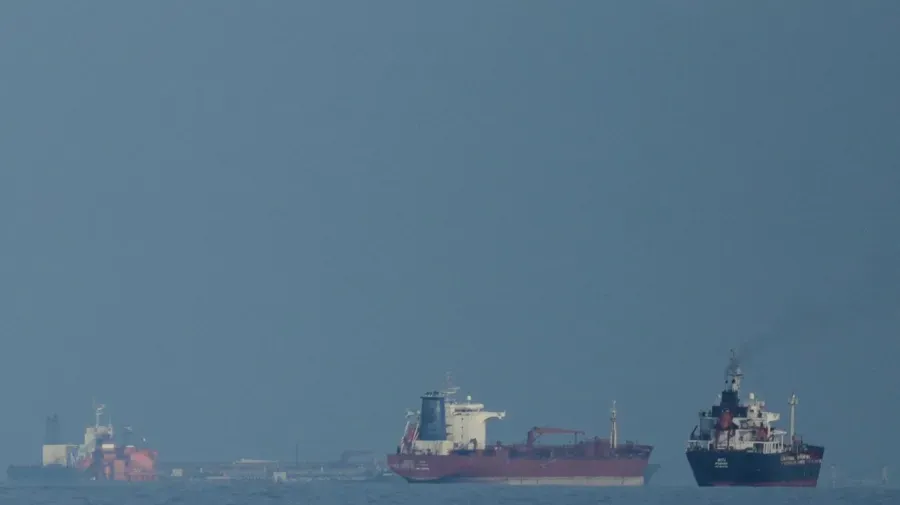
U.S. Central Command (Centcom) said it completed an additional round of strikes on 'dozens' of military targets near the Strait of Hormuz and Iran's coastal region at 10 p.m. EDT. The strikes followed the U.S. resuming a naval blockade at 4 p.m. EDT, with over 20 U.S. Navy warships.
U.S. Central Command (Centcom) says it completed an additional round of strikes on "dozens" of military targets near the Strait of Hormuz and Iran's coastal region at 10 p.m. EDT. Centcom linked the timing to a broader operational shift, saying the strikes came after the U.S. resumed a naval blockade at 4 p.m. EDT, using over 20 U.S. Navy warships.
That sequence matters, because it signals escalation by design, not accident. A blockade is not a background detail. It is an attempt to shape movement, enforce constraints, and raise the costs of operating in a contested corridor. When you combine that with strikes on multiple targets described as "dozens," you get a message that the U.S. is willing to apply pressure across more than one tool at once, and do it on a schedule.
For executives, the first order impact is usually not the geography, it is the supply chain math. The Strait of Hormuz sits at a global chokepoint for energy and trade flows. Even when companies are not directly sourcing from or selling to Iran, regional instability tends to travel through insurance pricing, route planning, port congestion, and contract risk allocations. The market tends to treat blockade language and strike updates as early indicators of higher volatility, not just higher risk. If those operational updates continue, boards should expect more frequent disruptions in timelines, with knock-on effects to working capital.
There is also a regulatory and compliance layer to the story. In U.S.-linked markets, operational escalations in the Middle East often trigger tighter attention from legal and risk teams to sanctions exposure, shipping documentation, counterparty screening, and the classification of goods and services that touch restricted jurisdictions. Even if no new sanctions are announced in this specific update, the practical burden usually increases: more diligence requests, more manual reviews, and more internal escalation when counterparties look like they could be entangled with the conflict area.
The operational details Centcom provided also matter for how investors and risk managers interpret probability. Centcom’s framing, including the choice to describe the targets as "dozens" and the explicit timestamps, suggests an effort to communicate scale and control. Meanwhile, the mention of over 20 U.S. Navy warships underscores that this is not a symbolic posture. It is a resource commitment aimed at enforcing the blockade. From a business perspective, that combination generally raises the expected duration and reduces the comfort of assumptions like "this will blow over quickly" or "traffic will resume normally once news cycles move on." In risk modeling, that changes what counts as the base case.
Second-order implications for boards often show up in governance, not headlines. Committees that oversee enterprise risk, audit, and compliance can find themselves asked tougher questions: Are we prepared for disruptions that are operationally sustained rather than momentary? Do our contracts allow for force majeure in ways that actually protect us, or do they just complicate disputes? How quickly can our procurement and logistics teams reroute? In practice, the presence of a naval blockade and strikes near a chokepoint typically increases the need for scenario planning, because the range of outcomes widens while visibility shrinks.
There is a strategic dimension too. When U.S. Central Command says it resumed a naval blockade and then carried out strikes, it implies an effort to compress the time between coercion and consequence. For peers in shipping, energy trading, defense-adjacent logistics, and multinational procurement, that kind of synchronization tends to raise uncertainty across markets that normally price smoother risk. The immediate takeaway is operational tension in a critical corridor. The longer takeaway is that decision-makers should treat ongoing announcements from regional commands as inputs to daily risk management, not distant geopolitics.
Bottom line: Centcom’s update, with "dozens" of targets hit at 10 p.m. EDT and a blockade resumed at 4 p.m. EDT with over 20 U.S. Navy warships, points to a deliberate intensification of pressure near the Strait of Hormuz and Iran's coastal region. For executives, the question is not whether news will be dramatic, it is whether that operational pressure translates into real-world friction for procurement, logistics, compliance workload, and market volatility. If it does, the smarter boards will already be running the scenarios.
This story's Key Insights and Take-aways are locked.
Create a free account to unlock Executive Actions for one credit.
Register to UnlockAlways free for Executives Club members. Join the Club
More in Politics

LA County: DOJ's 20,000 'noncitizen' voter list is 'unreliable,' includes U.S.-born
Preliminary review by Los Angeles County election officials finds errors in the federal list, raising the stakes for voter roll integrity ahead of November.

Trump's $1.5B Pentagon chip investment lands in North Carolina
A $1.5 billion defense infusion for North Carolina chipmaking signals a new era of Pentagon-backed reshoring - here's what it means for the industry.

Nigeria confirms first Ebola case in Abuja, a woman just off a Uganda flight
Health Minister Muhammad Ali Pate says the patient flew in from Uganda, putting Africa's latest outbreak on Nigeria's doorstep.