
US pushes for a useful quantum computer by 2028, aiming to accelerate the race
The government wants capability sooner. Here is what that means for funding, timelines, and competitive positioning across the quantum stack.
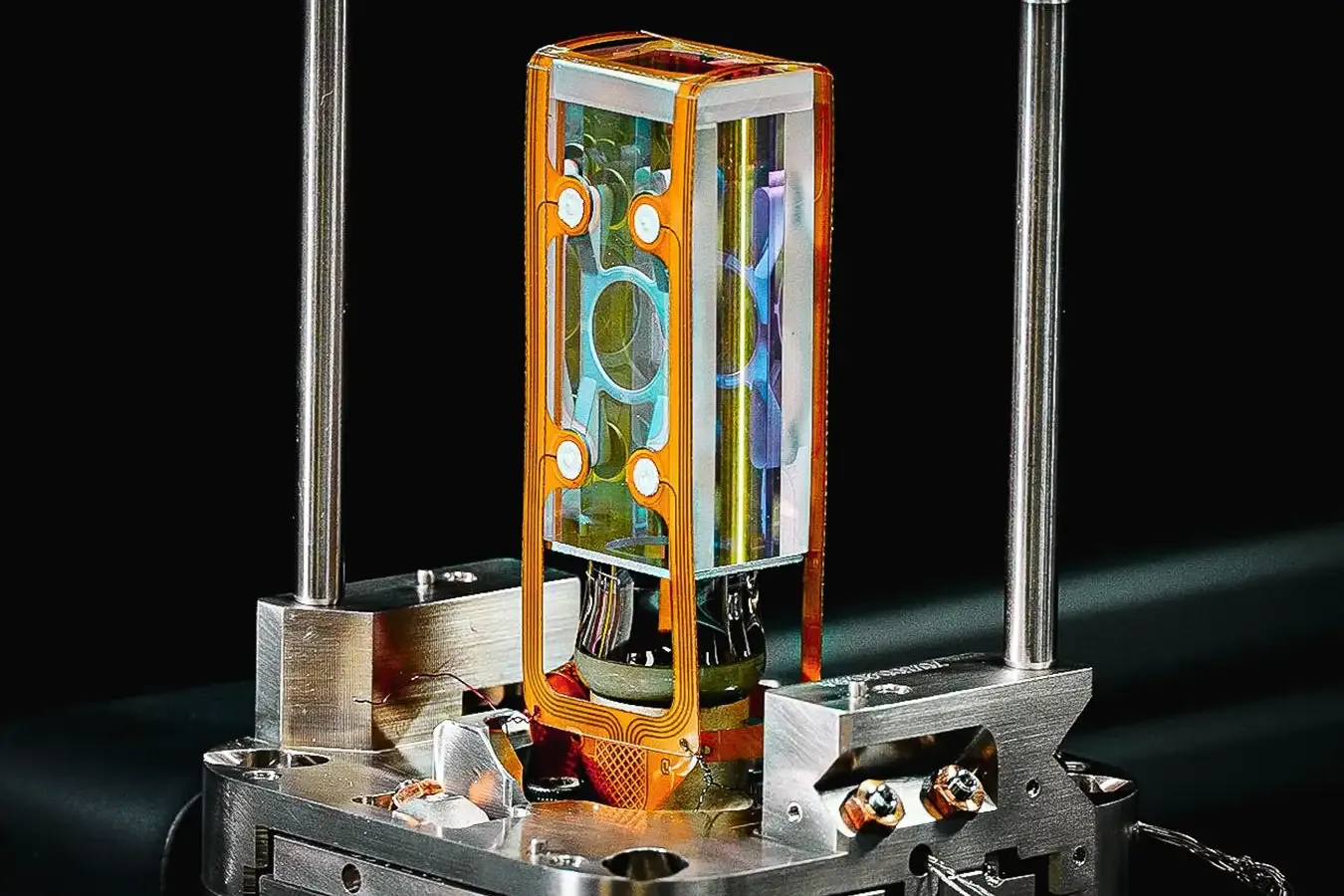
The US government is working to speed up the development of quantum computers so it can have a useful one by 2028. For decision-makers, that single deadline shifts how quantum programs get funded, prioritized, and measured.
The US government wants a useful quantum computer by 2028, and the real news is not the technology itself. It is the attempt to compress timelines, forcing the entire quantum ecosystem to move faster than “eventually” and into “build, prove, repeat.”
That push is essentially a clock-setting move. Instead of treating quantum computing as a distant research horizon, the government is trying to accelerate development so it can have something operational sooner. “Useful” is doing a lot of work in that sentence, but the direction is clear: the goal is not just better qubits in a lab, it is capability that can matter in the real world by a specific year.
To understand why this matters, it helps to remember how quantum has historically been financed and planned. Quantum is expensive, engineering-heavy, and notoriously hard to forecast. Even when progress is real, it often shows up as incremental improvements. Those increments can be meaningful to scientists while still feeling invisible to budgets and boards. When a regulator or major customer-like entity sets a calendar target, it changes what counts as progress. Projects that can show measurable strides sooner get attention. Those that cannot, even if they are scientifically valuable, get squeezed.
In plain English, “speeding up development” is not just about technology. It is about alignment. Contractors, university labs, and startups all have their own timelines and incentives, and they typically optimize for what funders and procurement processes will reward. If the government is trying to have a useful quantum computer by 2028, it will likely shape the questions that get asked in grants, contracts, and partnerships: What milestone can you demonstrate in months, not years? What can you run that is convincingly beyond classical capabilities, at least for a narrow set of tasks? How quickly can you iterate on hardware errors, control electronics, and system-level engineering?
There is also a second-order effect that often surprises executives: the deadline becomes a coordination mechanism across the supply chain. Quantum systems are not monoliths. They involve cryogenics, control systems, qubit hardware, error mitigation or correction strategies, software toolchains, and workflow integration that turns “cool demos” into something repeatable. If you are building any slice of that stack, a government acceleration push can pull demand forward, because integrators will need parts, methods, and proof points earlier than they otherwise would.
For boards and leadership teams in the quantum space, that creates both opportunity and risk. Opportunity, because public-sector urgency can unlock new funding channels and help validate pathways to production. Risk, because deadlines can also compress experimentation cycles. When schedules tighten, teams may feel pressure to choose approaches that look good on short-term metrics, potentially at the expense of longer-term architectural bets. The executives who do best under that kind of pressure are usually the ones who can translate technical progress into business-relevant milestones, without overpromising what the hardware can do today.
Strategically, the 2028 target also changes competitive posture. Quantum development is a race, but it is not only a race between quantum hardware companies. It is also a race between ecosystems: who has the best combination of devices, algorithms tailored to near-term constraints, and application workflows ready to test “usefulness” as early as possible. A government push to have a useful machine by 2028 acts like a forcing function, increasing the likelihood that more stakeholders will want partnerships sooner, not later.
So the stakes for decision-makers are immediate: quantum investment and execution plans will be evaluated against a new anchor date. The US government is not waiting for quantum to become ready on its own timeline. It is trying to accelerate development so it can have a useful quantum computer by 2028, which means the market will increasingly organize around that question: can anyone turn quantum potential into usable capability, on time?
This story's Key Insights and Take-aways are locked.
Create a free account to unlock Executive Actions for one credit.
Register to UnlockAlways free for Executives Club members. Join the Club
More in Science

Alaska's 1,580-foot tsunami had warning signs. Scientists just found them.
Rapid glacier retreat, heavy rainfall, and thousands of tiny tremors preceded Alaska's 1,580-foot tsunami, a warning for every coastal community in a warming world.

The rare mutation that lets high-risk brains dodge Alzheimer's
Scientists found a natural defense against protein buildup, opening a new path to preventive treatments.

3,000 steps a day may halve Alzheimer's decline, study finds
New research links a modest daily walk to less tau buildup and nearly half the cognitive and functional decline, even for those with early signs.