

US rules out Iran talks as war risk cover adds $8 to oil barrel
Escalating tensions in the Strait of Hormuz are pushing up crude prices and insurance costs, forcing energy traders and shippers to reassess risk.

The US decision to rule out talks with Iran until it stops attacking vessels in the Strait of Hormuz has sent Brent crude futures higher and added up to $8 per barrel in war risk insurance premiums, according to a leading marine insurance expert. For energy companies and shipping lines, this means higher input costs and a renewed focus on alternative routes and hedging strategies.
Oil prices climbed in early Friday trading after the US explicitly ruled out negotiations with Iran until it ceases attacks on vessels in the Strait of Hormuz. Brent crude futures rose on the news, while war risk insurance premiums for tankers transiting the region jumped by as much as $8 per barrel, according to a leading marine insurance expert. The move signals a hardening of Washington's stance, dashing hopes for a quick diplomatic resolution and leaving the market to price in a prolonged period of geopolitical tension.
The Strait of Hormuz is a critical chokepoint for global energy flows, carrying a substantial share of the world's crude oil and liquefied natural gas. Any threat to shipping through this narrow waterway immediately reverberates across commodity markets, as traders factor in the risk of supply disruptions. The US refusal to engage diplomatically until Iran halts its maritime aggression removes a potential off-ramp, making military confrontation more plausible and keeping the risk premium firmly embedded in crude prices.
War risk cover is a specialized insurance product that protects shipowners against losses from hostile acts, including missile strikes, mines, and sabotage. The $8 per barrel increase is a direct cost for tanker operators, who must either absorb it or pass it along to charterers and ultimately to refiners and consumers. This premium sits on top of already elevated freight rates, squeezing margins for energy traders and adding to the inflationary pressure that central banks are struggling to contain.
Market participants are now bracing for a sustained period of volatility. Brent futures have been swinging with every headline, but the underlying trend is upward as the diplomatic channel closes. The lack of a clear de-escalation path means that military options remain on the table, and any incident-even an accidental one-could trigger a sharp spike in prices. Traders are increasing their hedging activity, buying options and futures to protect against adverse moves, which in turn adds further upward pressure on the curve.
For energy companies, the immediate implications are higher input costs and a greater need for risk management. Refiners that rely on Middle Eastern crude must decide whether to lock in prices now or gamble on a future easing of tensions. Shipping lines are evaluating rerouting options, though alternatives like the Bab el-Mandeb or the Cape of Good Hope add significant transit time and fuel costs. Consumers may eventually feel the pinch at the pump, though the impact could be delayed by existing inventories and strategic reserves.
The marine insurance expert's assessment underscores the severity of the situation. While the exact premium varies based on vessel type, cargo, and voyage specifics, the $8 per barrel figure reflects the market's collective judgment of the risk. This is not a temporary blip; it is a structural shift in the security environment of the region. Insurance underwriters are likely to keep premiums elevated as long as the threat persists, and they may raise them further if attacks intensify or expand beyond the Strait.
Looking ahead, the situation remains fluid. If Iran continues its provocations, war risk premiums could climb even higher, and oil prices could test new multi-year highs. Conversely, any unexpected diplomatic opening-however unlikely given the current rhetoric-would likely trigger a rapid selloff. For now, the default assumption is continued tension, which means higher costs for anyone moving oil through the region. Companies with exposure to Gulf shipping should stress-test their supply chains against a scenario where the $8 premium becomes the new baseline, and prepare for the possibility that it could double.
This story's Key Insights and Take-aways are locked.
Create a free account to unlock Executive Actions for one credit.
Register to UnlockAlways free for Executives Club members. Join the Club
More in Business
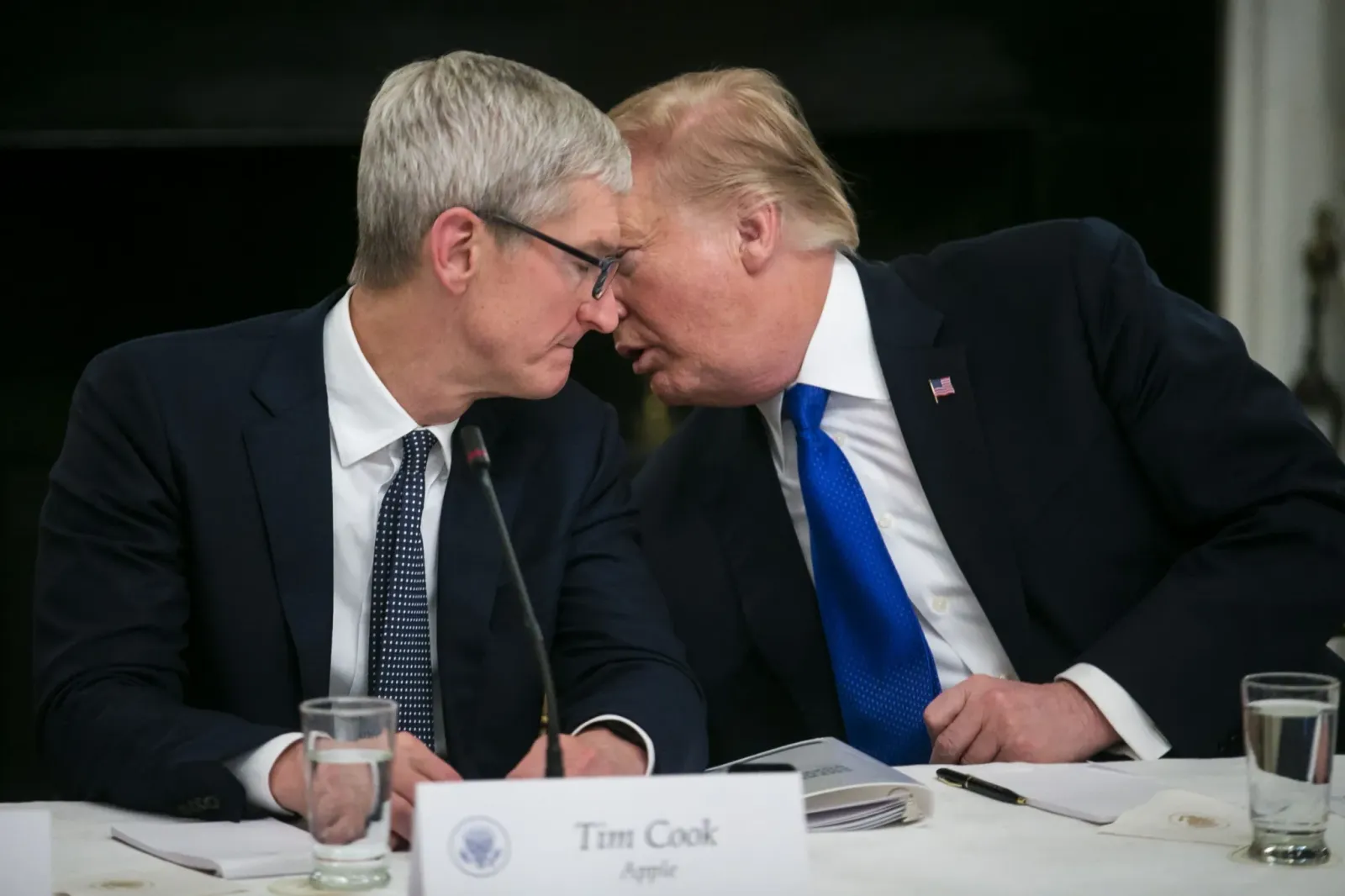
Tim Cook steps down as Apple CEO, stays on as chair with $45M equity
The 'Trump whisperer' keeps his White House and Beijing access as Apple navigates tariffs and a $4.6 trillion market cap.
Snowflake shares surge as AI data demand crushes estimates, lifting full-year forecast
Stocks jumped on stronger-than-expected guidance, signaling enterprise AI workloads are accelerating faster than Wall Street priced in.

Tim Cook's 15-year Apple CEO run ends: 3 lessons for any successor
After 15 years, Tim Cook hands Apple to John Ternus - here's how he turned a $350B company into a $4.6T juggernaut.