

US watchdog probes Tesla's Cybercab self-certification hours after launch
NHTSA wants to know how Tesla certified a vehicle with no pedals, wheel, or mirrors as compliant with federal safety standards.
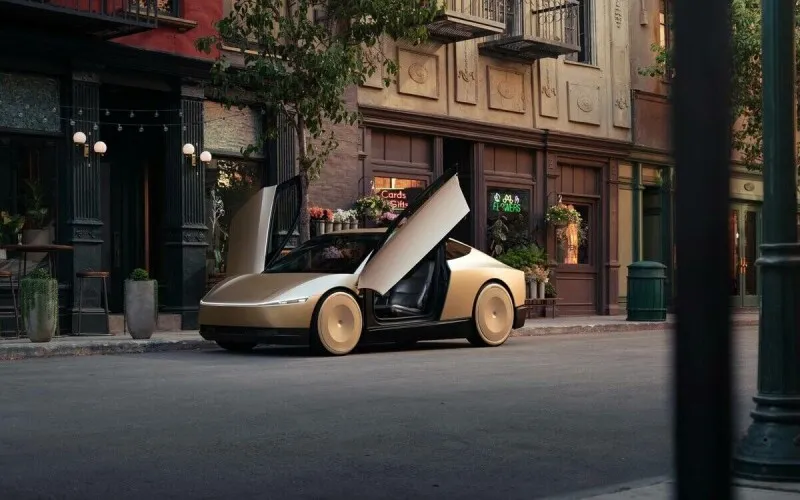
NHTSA opened an Audit Query into Tesla's self-certification of the Cybercab just hours after its commercial rollout in Austin. The probe examines whether Tesla's reliance on FMVSS inapplicability determinations holds up under federal oversight.
The National Highway Traffic Safety Administration (NHTSA) has opened an investigation into Tesla's self-certification of its Cybercab, just hours after the autonomous vehicle began a commercial rollout on the streets of Austin, Texas. The probe centers on the Cybercab's lack of conventional controls - no brake pedal, accelerator, steering wheel, or mirrors - and whether Tesla's certification that the vehicle meets all applicable Federal Motor Vehicle Safety Standards (FMVSS) can withstand regulatory scrutiny. Tesla told NHTSA it had certified the Cybercab "as compliant with all applicable FMVSS," but the agency is now asking how that conclusion was reached.
In an Audit Query (AQ) issued over the weekend, NHTSA said it intends to "examine the process and technical data on which Tesla relied when certifying the Cybercab and related issues." The agency specifically flagged that it will consider "the extent to which Tesla's certification depended on determinations that certain FMVSS are inapplicable to the Cybercab." NHTSA Administrator Jonathan Morrison said, "NHTSA fully supports the safe development and deployment of automated vehicles. But as the federal regulator, we need to ensure that all of our laws are followed." The AQ is a preliminary step, but it signals that the agency is not willing to accept self-certification at face value for a vehicle that fundamentally departs from conventional design.
The probe comes as NHTSA is updating its requirements for autonomous vehicles designed never to be operated by a human. Tesla appears to have jumped the gun, self-certifying the Cybercab before those updated rules are finalized. The agency's statement notes that "clear vehicle performance requirements" - such as brake controls - exist, and automakers "must certify that their vehicles meet these standards - subject to oversight from the agency to confirm compliance." When certified vehicles appear to not adhere to these requirements, NHTSA conducts an investigation. The Cybercab's lack of permanently attached manual controls makes it an obvious candidate for such scrutiny, especially since NHTSA has not yet established a clear framework for vehicles that are never meant to be driven by a person.
Tesla is not alone in deploying autonomous vehicles without conventional controls. Amazon's Zoox was granted a two-year exemption at the end of July 2026, with a cap of 2,500 exempted vehicles per 12-month period. That exemption provides a precedent for such vehicles, but it also highlights the difference: Zoox went through an explicit exemption process, while Tesla self-certified without seeking one. NHTSA's probe will likely examine why Tesla chose self-certification over an exemption, and whether its interpretation of FMVSS applicability is defensible. The agency's AQ explicitly mentions "determinations that certain FMVSS are inapplicable," which suggests Tesla may have argued that standards written for human-driven cars simply do not apply to a robotaxi with no controls. NHTSA wants to see the technical data behind that argument.
For Tesla, the probe adds regulatory risk to an already ambitious commercial launch. The Cybercab is central to CEO Elon Musk's vision of a robotaxi fleet, and any finding that the self-certification was improper could force a recall, halt operations, or require retrofitting controls - a costly outcome that would undermine the vehicle's entire design philosophy. More broadly, the investigation signals that NHTSA is serious about enforcing safety standards even as it works to accommodate a new class of vehicles. Automakers and AV developers will be watching closely, as the outcome could set a precedent for how self-certification is treated for vehicles that lack human controls. If NHTSA finds Tesla's approach invalid, it could force every AV maker to seek formal exemptions or wait for updated rules, slowing the entire industry's path to market.
For other companies developing purpose-built autonomous vehicles - from Zoox to Waymo and others - the probe underscores the importance of engaging with regulators early and transparently. Self-certification may seem like a faster path to market, but it carries the risk of retroactive scrutiny. The NHTSA's action suggests that the agency expects automakers to either seek exemptions or wait for updated rules, rather than unilaterally declaring certain standards inapplicable. Boards and executives should assess whether their own certification strategies align with the regulator's evolving expectations. The Cybercab probe is not just about Tesla; it is a signal that NHTSA will hold all AV makers to a high bar when it comes to proving safety compliance.
The investigation is in its early stages, and NHTSA has not made any findings of non-compliance. But the mere opening of an AQ within hours of launch is a strong signal that the agency is watching closely. For Tesla, the immediate challenge is to demonstrate that its self-certification was based on sound technical data and a defensible reading of FMVSS. For the broader industry, the probe is a reminder that innovation and regulation are on a collision course, and that the path to market for AVs will be shaped as much by legal interpretation as by engineering. The next few months will reveal whether Tesla's gamble on self-certification pays off or becomes a cautionary tale for the entire autonomous vehicle sector.
This story's Key Insights and Take-aways are locked.
Create a free account to unlock Executive Actions for one credit.
Register to UnlockAlways free for Executives Club members. Join the Club
More in Business
Amazon Prime Air 767 overshoots Miami runway, killing at least 5
The Boeing 767 freighter from San Juan struck vehicles and erupted in flames, prompting a ground stop and a fresh NTSB investigation into Amazon's air cargo network.

Death sentence for TV presenter Sarah Khalifa: Egypt's drug case hits media
The sentencing of Sarah Khalifa and 11 others underscores the severity of Egypt's anti-drug laws and the exposure of public figures to capital punishment.
Tim Cook steps down as Apple CEO, stays on as chair with $45M equity
The 'Trump whisperer' keeps his White House and Beijing access as Apple navigates tariffs and a $4.6 trillion market cap.