
Useful quantum error correction could arrive by 2028, earlier than most timelines
If 2028 is real, error-corrected logical qubits become the benchmark that investors and boards will demand.

Ars Technica reports promises for useful, error-corrected quantum computing as soon as 2028, alongside updates on trapped ion processors and a re-evaluation of quantum supremacy claims. For decision-makers, the consequence is clear: the performance debate is shifting from raw qubits to error-corrected logical qubits.
Quantum computing news usually ramps up near the end of the year, when companies try to demonstrate they are meeting milestones on schedule. But Ars Technica points out that this year’s momentum has started early, with summer announcements that range from incremental progress to attention-grabbing promises. The headline promise is the one that matters most to anyone tracking timelines and budgets: useful, error-corrected quantum computing could arrive as soon as 2028.
That date matters because it collides with what many people in the field expect. The conventional estimate has been that useful quantum computers are still about five to 10 years away. The Ars framing explains why 2028 is such a big deal: most of the interesting problems that quantum computing could help with will not run on today’s error-prone hardware without error correction. In plain English, the current systems are too noisy for the kinds of long, structured computations that would actually move the needle. So the story is not “more qubits.” The story is how quickly teams can build a path to logical qubits, where errors can be detected and corrected.
To understand why the 2028 claim is so consequential, you have to understand what “useful” usually means in quantum. Ars describes the core mechanism: error correction relies on linking a small collection of physical hardware qubits together into what’s called a logical qubit. A logical qubit is not just extra qubits. It includes redundant storage of information plus nearby qubits that can be measured to determine when errors occur and how to fix them. This is how the system turns chaos into something computable. Without that step, the quantum advantage story tends to collapse under noise, because the output stops being reliable before the computation finishes.
There is a second reason 2028 is a board-level topic, not just a lab curiosity. When error correction becomes the benchmark, the measurement of progress changes, and so do incentives. Companies can no longer market themselves primarily around headline hardware updates, or around demonstrations that only work in carefully constructed conditions. Ars’s rundown also includes “details on an updated trapped ion processor,” which signals that teams are still iterating on hardware platforms, but the broader storyline is that hardware progress alone is not the endgame.
And then there is the part of the market conversation that tends to get messy: claims of quantum supremacy. Ars notes a “case in which claims of quantum supremacy have been cut back a bit thanks to advances in more traditional algorithms.” That is an important correction in itself, because supremacy is often discussed as a milestone where a quantum device does something a classical computer supposedly cannot do efficiently. But if classical algorithms improve, the milestone can get harder to defend. For executives and investors, this is a reminder that the bar is not static. The definition of “beating the best classical” can move as the classical side evolves, which means quantum teams have to keep proving they are improving on the right dimensions.
This is why the 2028 promise has such practical implications. If useful error-corrected computing really moves closer, then the competitive landscape shifts from “who has the most qubits” to “who can operationalize logical qubits fast enough to run real algorithms.” Logical qubits also raise the operational burden: they require carefully organized qubit layouts and measurement cycles that are consistent enough for correction to work. In a funding or partnership context, that changes what stakeholders ask for in reporting and due diligence. You start looking for evidence that the error correction loop is functioning, not just that hardware is getting incrementally better.
Regulatory and governance angles, while not explicitly detailed in the source, are part of the background executives should already be thinking about when timelines like 2028 appear. In technology sectors, earlier milestones tend to draw more scrutiny from boards, auditors, and partners because promises become contractual. When a company says “soon,” the market will want clarity on what “useful” includes, which benchmarks matter, and whether the progress is reproducible outside a single demonstration. The Ars summary also highlights how announcements in the summer can matter because they signal what companies want the market to believe before year-end benchmark season.
So the strategic stake is simple: if 2028 is on the table, decision-makers in the quantum ecosystem should treat error correction as the central scoreboard. Hardware updates and algorithmic tweaks still matter, but they now sit inside a bigger question: can teams turn fragile physical qubits into logical qubits that sustain computation long enough to solve problems that actually justify investment. In the near term, the biggest second-order effect is that boards will demand sharper proof of progress, because the field has already shown it can revise expectations, and classical competitors can tighten the floor under “quantum supremacy” claims.
This story's Key Insights and Take-aways are locked.
Create a free account to unlock Executive Actions for one credit.
Register to UnlockAlways free for Executives Club members. Join the Club
More in Technology

Nvidia's $89B data center quarter: the 9 companies cashing in
The AI buildout is minting fortunes beyond GPUs, and memory, cloud, and cooling suppliers are riding the same wave.
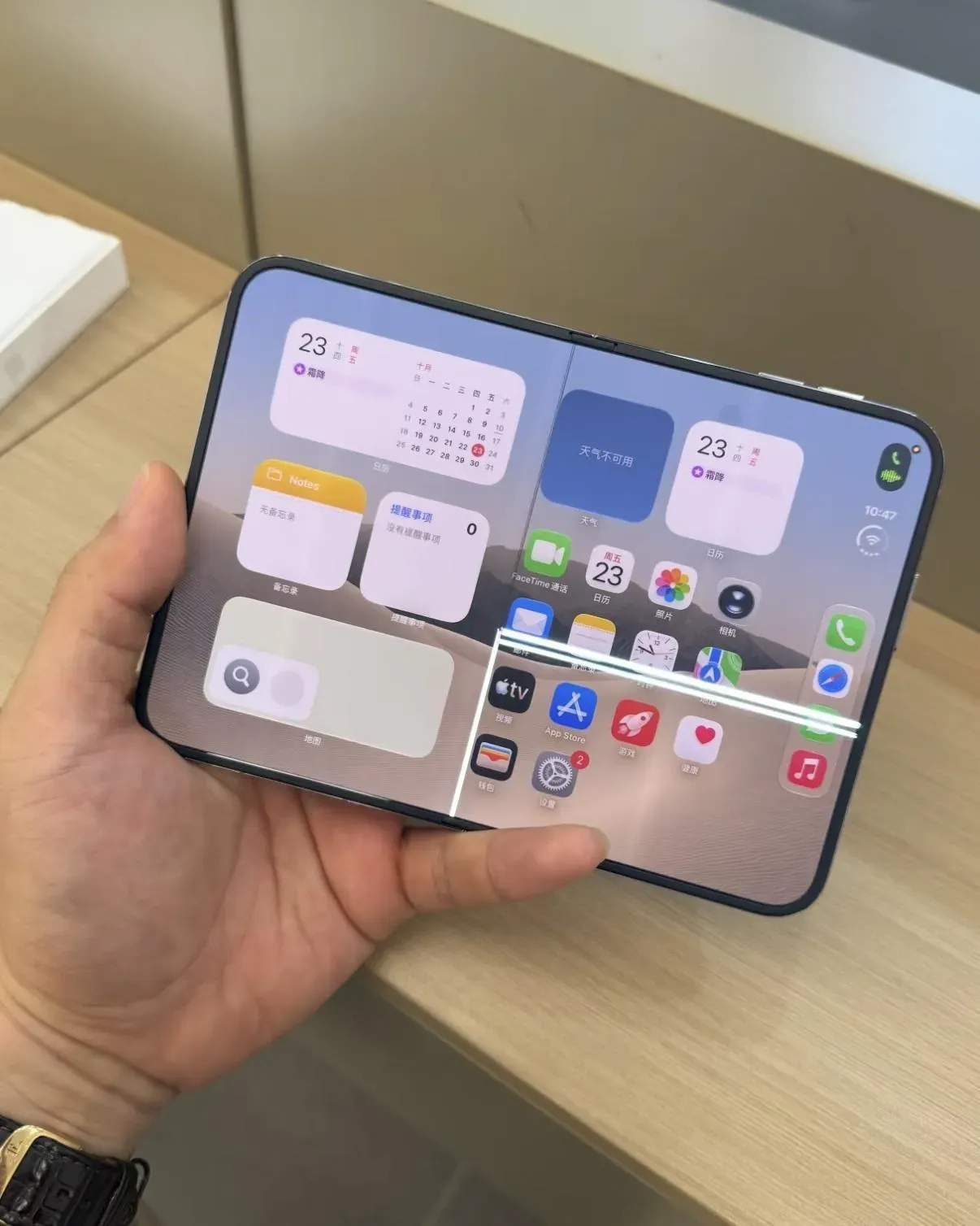
A YouTuber dissected the iPhone Duo and thinks he found crackgate's cause
CuriousHagi's teardown of Apple's foldable reveals a gear-like hinge that may explain why screens crack in the same spot within hours.

Google quietly links your phone number to every Android account on your SIM
Adding a SIM now ties your phone number to all Google accounts - and future accounts inherit it. Here's the security and privacy stakes.