
Viu CEO Janice Lee: nearly 20% of long-form users watch microdrama
The format launched months ago, and Viu is building a broader branded and co-production plan around it.
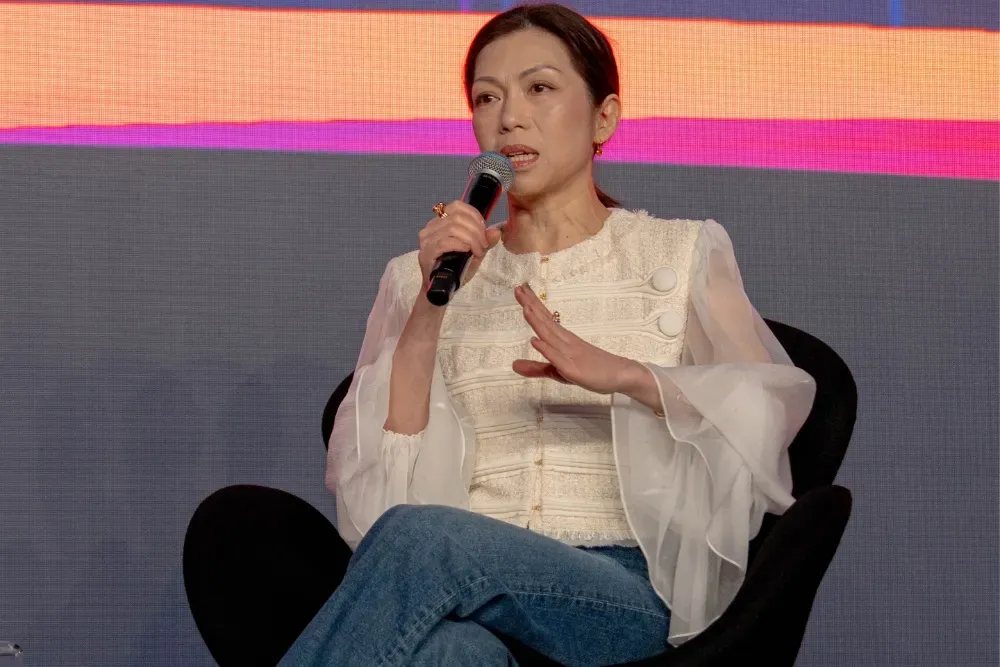
Viu CEO and PCCW Media group managing director Janice Lee said close to 20% of Viu's long-form user base is consuming microdrama, a format launched only a few months ago. She shared the platform expansion strategy onstage at APOS 2026 in Bali, tying microdrama to short-form, pan-regional tentpoles, and ad-funded growth.
Viu CEO and PCCW Media group managing director Janice Lee just dropped a number that is hard to hand-wave: close to 20% of the platform’s long-form user base is already consuming microdrama. And here is the catch, the format only launched a few months ago.
Lee said this onstage at the APOS 2026 conference in Bali, positioning microdrama as an early proof point inside Viu’s broader content and monetization push. In other words, this is not a vague “we’re experimenting” story. It is a “users are adopting it now” story, which matters because adoption rates are the fuel that turns content strategy into commercial strategy. If nearly one in five long-form viewers is sampling microdrama quickly, that suggests Viu is not just adding another genre. It is changing how audiences allocate their attention on the same platform.
To understand why executives should care, it helps to remember how streaming businesses typically fight for the same scarce resource: viewer time, and the willingness to pay or watch ads. Long-form streaming usually relies on a slower burn. Microdrama, by contrast, is designed for faster consumption cycles. Lee’s claim signals that the time-shift might already be happening inside Viu’s existing user base, not only through net-new audiences. That can reshape content calendars, marketing spend, and even how revenue teams forecast.
Lee’s comments also fit into a familiar industry logic: when platforms see early consumption traction, they scale the production and distribution mechanics, then build a monetization flywheel around it. In the source, Lee outlined a strategy spanning short-form content, pan-regional tentpoles, and ad-funded initiatives. Microdrama sits at the intersection of those three, because it can be produced and tested faster than traditional tentpoles, then connected to wider brand and regional distribution as the platform learns what hooks audiences.
There is also a strategic implication for how Viu may use branded content. When a platform shifts engagement patterns, advertisers and brand partners care not just about reach, but about context and repeatability. Microdrama consumption concentrated among existing users can make brand integrations more measurable in the way ad stakeholders want, particularly if the format becomes an established viewing habit rather than a one-off novelty. The source notes Lee’s push for branded content and co-production, which is a classic way to spread risk: co-production can reduce the upfront burden while giving partners shared rights, shared distribution leverage, and access to each other’s creative pipelines.
From a governance perspective, these are the kinds of moments boards and investor committees watch closely. Content is expensive, and executives are often judged on whether they can convert engagement into durable economics. A nearly 20% share of long-form users consuming microdrama quickly can be used as a decision-grade input for budgeting debates: How much do we allocate to microdrama versus long-form? How do we structure co-production deals to keep upside while protecting downside? How should we measure performance across different time-spend behaviors.
Finally, the APOS 2026 stage context matters. Conferences like APOS are where media executives compare operating models across markets, including how streaming services localize content and how they balance subscription, ads, and partnerships. Lee’s message is effectively a public thesis: microdrama is not a side project. It is part of a content operating system that can be scaled with short-form formats, broader regional tentpoles, and ad-funded distribution. For peers across streaming, telecom-aligned media groups, and regional platforms, the stake is straightforward. If viewers can be retrained into a new format within months, the competitive question becomes who adapts fastest and who turns that adoption into a repeatable commercial engine.
This story's Key Insights and Take-aways are locked.
Create a free account to unlock Executive Actions for one credit.
Register to UnlockAlways free for Executives Club members. Join the Club
More in Entertainment

Russell Brand's accuser 'bewildered and confused' as he denies 7 sex charges
The criminal case against the comedian is a live test of how media companies manage talent risk when serious allegations go public.

'It's a Magic Trick': Ballet Experts Say Rosalía's SNL Pose Is Impossible
Three ballet experts tell Rolling Stone Rosalía's gravity-defying SNL stillness shouldn't be possible - and why the debate is now part of the show.

Activision CMO: GTA 6 Will Boost Call of Duty, Not Bury It
Activision's top marketer says Rockstar's blockbuster will drive players back to consoles and into Modern Warfare 4, even as the company admits its recent strategy failed.