

VW's job-slashing deal hands bosses a win, weakens Germany's co-determination
Volkswagen's surprise agreement to cut jobs marks a victory for management and a setback for the country's labor co-determination model, with ripple effects for German industry.

Volkswagen's management secured a landmark deal to slash jobs, a win for CEO Oliver Blume and a blow to Germany's co-determination system. The agreement signals a shift in power from labor unions to corporate leadership, with implications for other German manufacturers facing similar cost pressures.
Volkswagen's management just pulled off what many thought impossible: a sweeping job-cutting deal that hands the company's bosses a decisive victory. The agreement, reached after months of tense negotiations, allows the automaker to reduce its workforce significantly, a move that CEO Oliver Blume and his team have long argued is essential for survival. But the real significance extends far beyond VW's factory floors. It is a direct challenge to Germany's co-determination model, the post-war system that gives workers a powerful voice in corporate decisions. For decades, that model has been a cornerstone of the country's economic stability, but this deal suggests its grip is loosening under the pressure of global competition and the electric-vehicle transition.
The deal itself is a study in strategic brinkmanship. VW's management threatened to close plants in Germany for the first time in the company's history, a move that would have shattered the implicit social contract between labor and capital. The unions, led by IG Metall, initially balked, but ultimately conceded to a plan that avoids outright closures while still achieving substantial headcount reductions. The specifics are telling: the company will cut tens of thousands of jobs over the coming years, primarily through early retirement and buyouts, and will also reduce production capacity at several sites. In exchange, workers get a guarantee of employment until 2030 at some plants, but at the cost of accepting lower wages and reduced bonuses. For Blume, this is a clear win: he gets the cost savings he needs to compete with Tesla and Chinese rivals, without the reputational damage of a full-blown plant closure.
The broader implications for Germany's co-determination model are profound. Co-determination, which mandates that workers hold half the seats on supervisory boards of large companies, was designed to ensure that labor interests are embedded in strategic decisions. It has been credited with fostering social peace and high productivity, but critics have long argued that it makes German companies slow and inflexible. VW's deal is a signal that even the most entrenched bastions of co-determination are now willing to bend. The fact that IG Metall accepted significant concessions suggests that unions are losing their bargaining power in the face of existential threats to the industry. This is not just about VW; it is a template for other German manufacturers, from suppliers to machinery makers, that are grappling with the same pressures. If they can replicate VW's success, the balance of power in German boardrooms will shift decisively toward management.
The context is crucial. VW has been struggling with high production costs, particularly in Germany, where labor is expensive and energy prices have soared since the Ukraine war. The company's transition to electric vehicles has also been slower than hoped, with its ID series failing to gain traction against Tesla's Model Y and a wave of cheaper Chinese EVs. In the first half of this year, VW's operating margin fell to just 4.4%, well below the company's long-term target of 9-11%. The job-cutting deal is part of a broader cost-cutting program that aims to save €10 billion by 2026. Without these savings, analysts warn, VW would be forced to make even more drastic decisions, including potentially closing plants in Germany, which would have been a political and social catastrophe. By securing the deal, Blume has bought time and credibility, but he has also set a precedent that will resonate across the German economy.
For other companies, the message is clear: the era of labor-friendly compromises is over. The co-determination model, once seen as a competitive advantage, is now being renegotiated in real time. Firms in the automotive supply chain, which employ hundreds of thousands of workers in Germany, are watching closely. Many are already planning similar restructuring moves, and they will likely use VW's deal as a benchmark for what is achievable. The unions, for their part, are in a difficult position. They cannot afford to be seen as obstructionist in an industry that is fighting for its survival, but they also risk alienating their members if they concede too much. The VW deal may be the first of many such compromises, and each one will further erode the co-determination model that has defined German capitalism for half a century.
The political fallout is also significant. The German government, which owns a 20% stake in VW through its state of Lower Saxony, has traditionally supported co-determination as a way to protect jobs. But Chancellor Olaf Scholz's coalition has been largely silent on the deal, a tacit acknowledgment that the economic realities outweigh ideological commitments. This is a sharp contrast to the past, when politicians would have intervened to protect workers. The silence suggests that even the Social Democrats, who are historically aligned with unions, recognize that the industry's future depends on cost competitiveness. For workers, the deal is a bitter pill, but it may be the least bad option. The alternative, as VW's management repeatedly warned, was plant closures and even larger job losses. In that sense, the deal is a pragmatic compromise, but it is one that fundamentally changes the relationship between labor and capital in Germany.
Looking ahead, the stakes are high for everyone involved. For Blume, the deal is a personal victory that strengthens his position within the company and the broader Volkswagen Group. He has shown that he can take on the unions and win, which will give him more authority to push through further reforms. For the unions, the deal is a warning that their power is not absolute, and they will need to adapt to a new reality where they are negotiating from a position of weakness. For the German economy, the deal is a test case for whether the country can maintain its industrial base in the face of global competition. If VW succeeds in becoming leaner and more competitive, it could serve as a model for other industries. If it fails, the consequences will be felt far beyond the automotive sector. Either way, the co-determination model that has been a pillar of German prosperity is now on notice, and the VW deal is the clearest sign yet that its days are numbered.
This story's Key Insights and Take-aways are locked.
Create a free account to unlock Executive Actions for one credit.
Register to UnlockAlways free for Executives Club members. Join the Club
More in Business
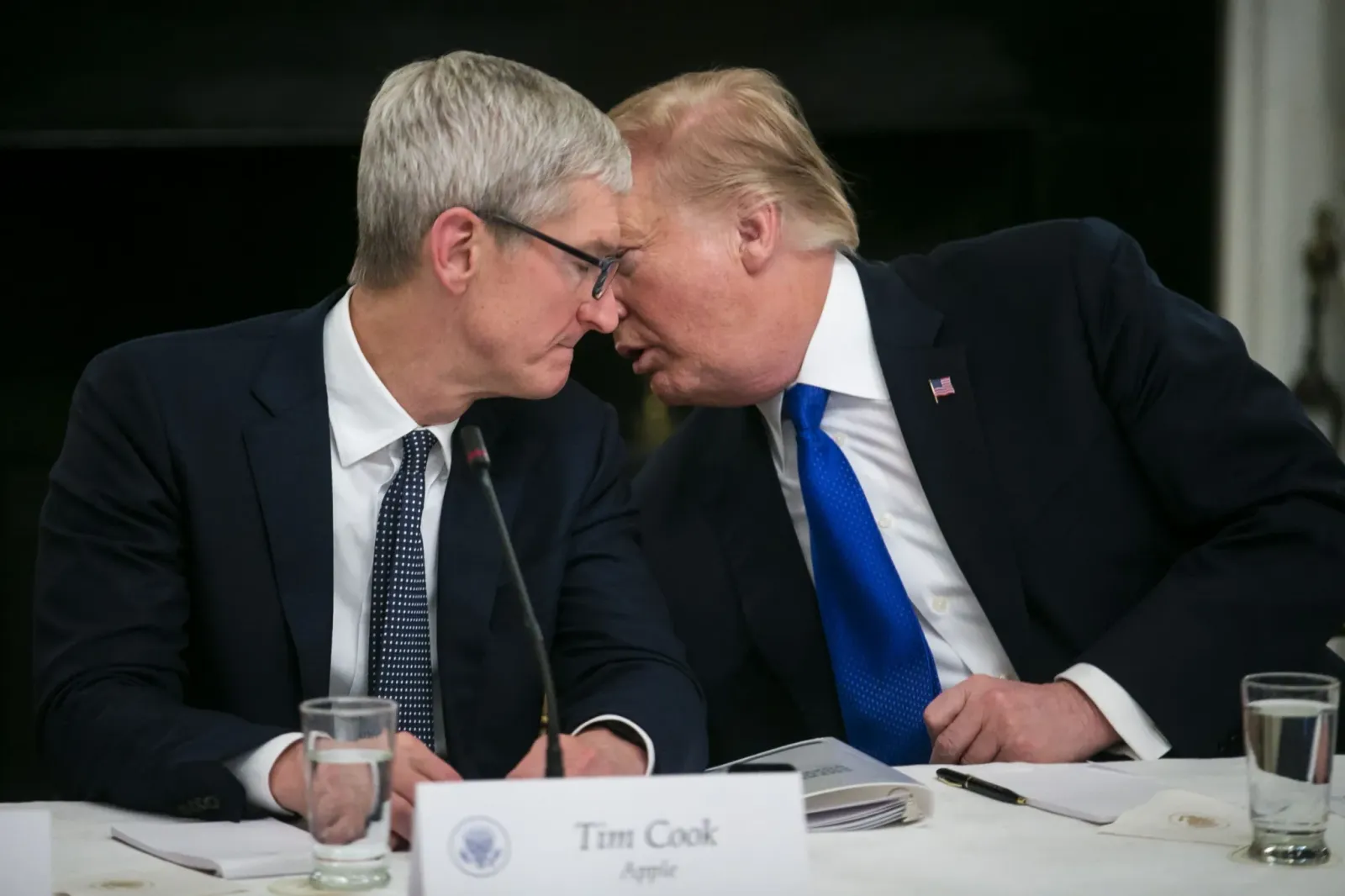
Tim Cook steps down as Apple CEO, stays on as chair with $45M equity
The 'Trump whisperer' keeps his White House and Beijing access as Apple navigates tariffs and a $4.6 trillion market cap.

Snowflake shares surge as AI data demand crushes estimates, lifting full-year forecast
Stocks jumped on stronger-than-expected guidance, signaling enterprise AI workloads are accelerating faster than Wall Street priced in.

Tim Cook's 15-year Apple CEO run ends: 3 lessons for any successor
After 15 years, Tim Cook hands Apple to John Ternus - here's how he turned a $350B company into a $4.6T juggernaut.