
Walmart CEO David Guggina: AI warehouses unload trucks in minutes, not hours
Walmart says store-level data helps robots build pallets so workers can move faster and cut supply chain costs.
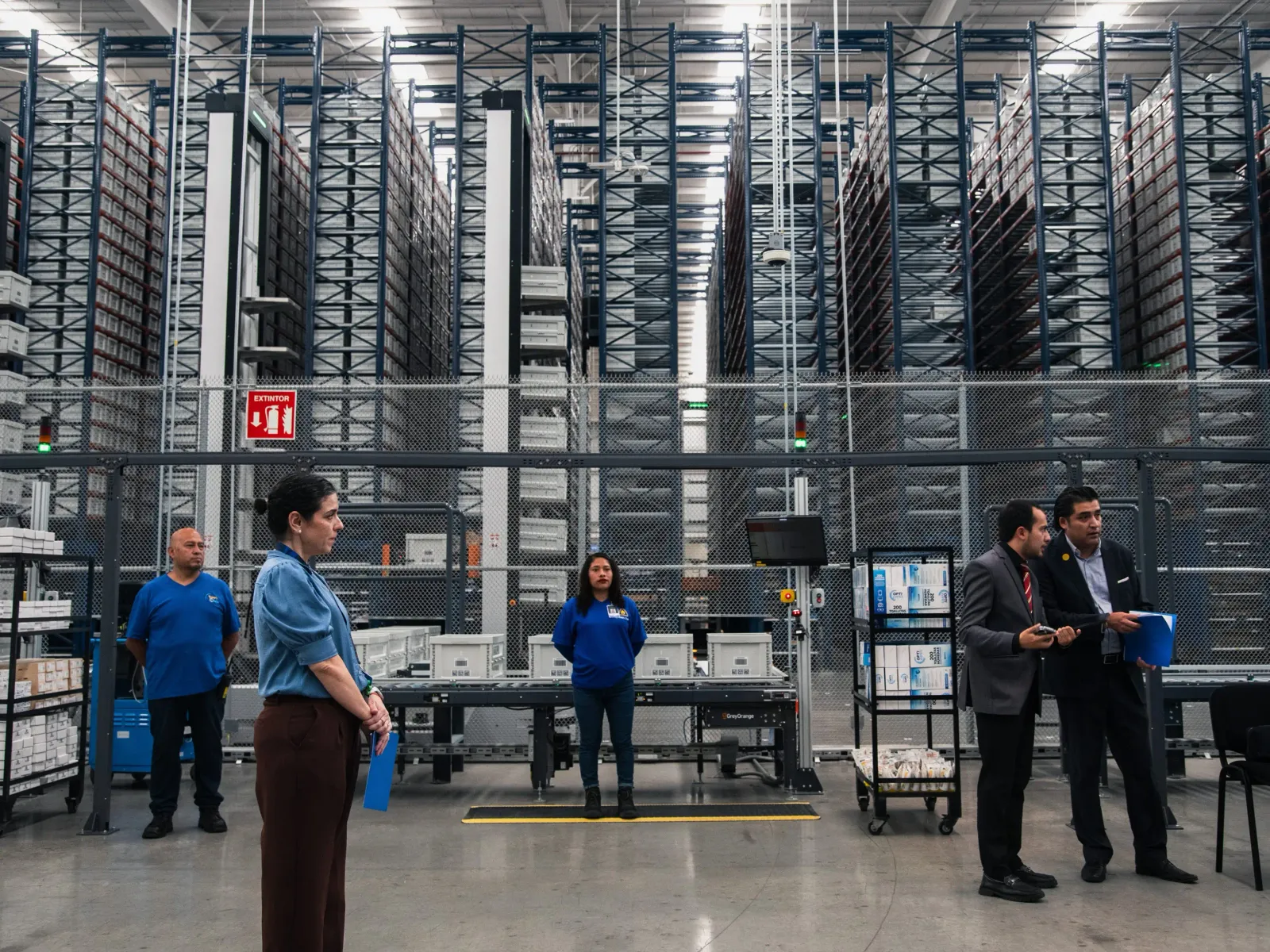
Walmart US CEO David Guggina told an Oppenheimer conference that store workers can unload trucks in minutes due to automated distribution centers using AI-coordinated robots. For decision-makers, it signals how physical automation plus store-level inventory visibility can translate into faster operations and lower costs.
Walmart US CEO David Guggina gave a specific, operational claim on Tuesday: store workers can unload a trailer in minutes what previously took them hours. He tied the improvement to Walmart’s automated distribution centers, which organize freight for faster unloading by using store-level data to direct robots to arrange pallets.
If you run a retail operation, those two sentences matter because they connect “AI in the building” to “time in the day.” The bottleneck is not just moving boxes. It is getting the right mix of pallets into the right sequence so store teams can restock shelves efficiently instead of burning hours wrestling with incoming trucks.
Here is what Walmart says is doing the heavy lifting. Over the past several years, it has spent money building new facilities equipped with robots coordinated by AI. The goal is not abstract optimization. It is a more practical workflow inside distribution centers: store-level data feeds into how robots layer pallets, which in turn determines how quickly and smoothly store employees can unload trailers.
Guggina described one key concept as “moving to intelligently layered pallets.” In plain English, it means pallet arrangements are designed so unloading is faster. He told the Oppenheimer Consumer Growth and E-commerce conference that this approach allows Walmart to unload that trailer in minutes. The point is that automation is changing the structure of what arrives at stores. That structure directly affects the effort required by workers at the receiving dock.
There is a second layer to the story, and it is even more operational. Walmart’s automated distribution centers could also know which pallets contain the most urgent supplies for a given store, and then load those pallets onto the truck last. Why last? Because unloading happens in reverse order. Load the urgent items last, and they can be unloaded first, helping stores tackle high-priority restocking sooner rather than later.
This matters beyond a single warehouse because it changes how retailers think about information flow. Traditional distribution often optimizes the distribution center in isolation. Walmart is emphasizing visibility at the store level, so the robots are not just efficient movers; they are decision-making arrangers. That changes the economics of staffing too. When workers spend hours unloading trucks, labor is effectively consumed by a waiting and handling problem. When the unloading window shrinks to minutes, that labor time can shift toward shelves and customers.
Guggina also put a deployment stake in the ground: Walmart expects to have 16 of these next-generation distribution centers by the end of the year. That is the part executives should watch. Speed gains in one site are useful. Scaling the same design across 16 facilities is how you turn a pilot into an advantage that competitors feel in their operating metrics, their costs, and their ability to hold lower prices.
Walmart framed the investment logic in a familiar retail language: the combination of automation and inventory visibility helps run a better supply chain, improve stores, and cut costs. And those savings, he said, allow Walmart to continue investing in lower prices for customers. For peers, the quiet implication is that the company is treating physical AI as a lever in the price-and-margin equation, not just a tech demo.
There is also a governance angle, even if the conference comments did not dwell on it. Large retailers are increasingly expected to justify automation investments to boards through clear operational KPIs, labor impact, and resilience. Here, Walmart’s claim is KPI-shaped. It is about reducing truck unloading time from hours to minutes. That is the type of measurable outcome that can keep capital spending on track, especially when competition for consumer share depends on availability and freshness as much as on price.
Zoom out one more level, and the second-order implications start stacking. Faster unloading can reduce dwell time and improve the cadence of replenishment. Better pallet sequencing can reduce errors and rework during restocking. Inventory visibility at the store level can tighten the feedback loop between demand and supply decisions. None of these are guaranteed by the comments alone, but the mechanism Walmart described points toward a more synchronized system: distribution centers organized by AI, informed by store-level data, feeding store teams with less friction.
For decision-makers watching this space, Walmart’s core message is simple and sharp: physical automation becomes strategically powerful when it is connected to real operational inputs, like what stores need and how pallets should be layered and sequenced. The race is not just building robots. It is building a faster, more controlled flow from warehouse to aisle.
This story's Key Insights and Take-aways are locked.
Create a free account to unlock Executive Actions for one credit.
Register to UnlockAlways free for Executives Club members. Join the Club
More in Business

Anthropic’s Levant Alpöge cracks the Jacobian conjecture after 87 years
A Harvard valedictorian used Claude to hit a 1939 breakthrough, but the missing “why” is the real problem.

Uber buys Delivery Hero for nearly $15B, vaulting to top food delivery outside China
The deal doubles Uber's dual-services footprint and pushes a ride-and-eats bundling play into 50 more markets.

Epic and Google drop settlement bid, forcing rival Android app stores by July 22
Google told the court it is ready to carry third-party app stores starting Wednesday, July 22.