

Warframe's Rebb Ford says Destiny 2's end was 'cataclysmic'
The Warframe creative director says Bungie's shutdown shows what happens when business logic outranks game-making, with ripple effects for rivals, players, and studio strategy.
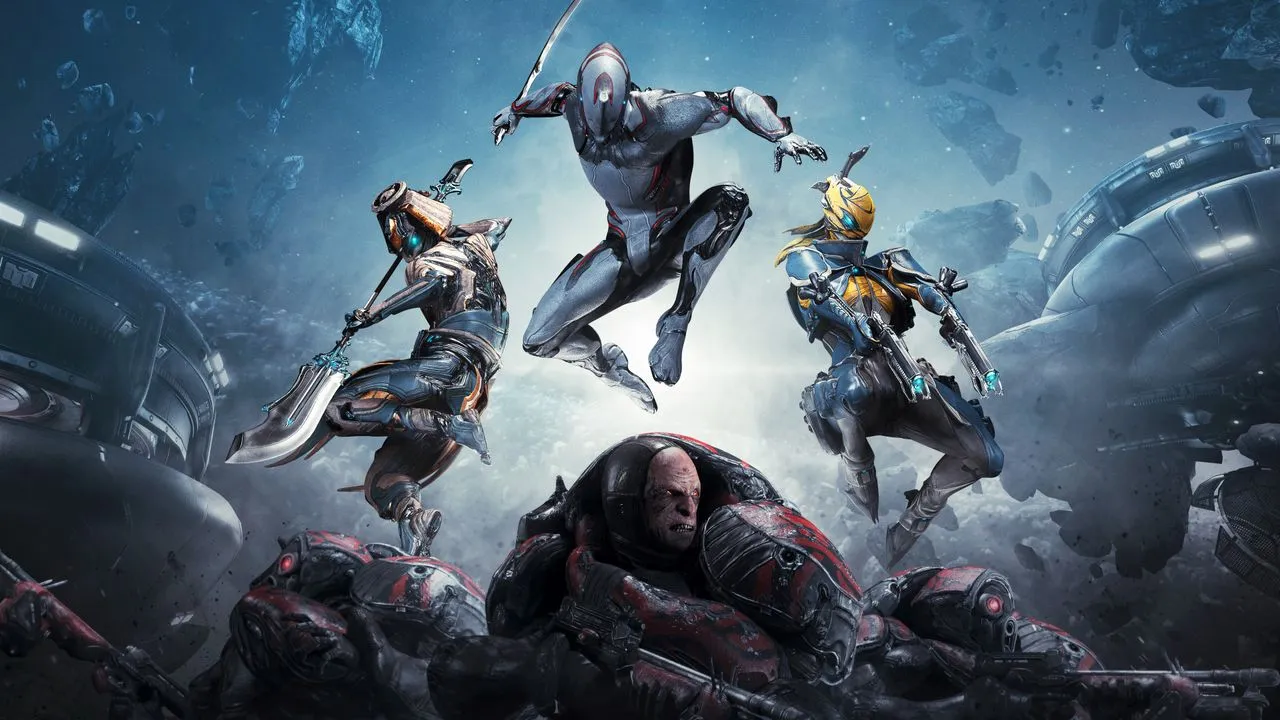
Rebb Ford, creative director of Warframe, called Destiny 2's end of development “cataclysmic” and “unthinkable,” saying there is “no world where it makes sense” from the perspective of someone who enjoys videogames. His reaction highlights a familiar executive tension in games: when business-side priorities become the loudest voice in the room, even marquee franchises can be cut in ways that reshape competitor positioning and investor expectations.
Rebb Ford, the creative director of Warframe, did not mince words about Bungie ending Destiny 2 development. On a recent episode of the OnlyFrame podcast, Ford called the news “cataclysmic” and “unthinkable,” adding, “There is no world where it makes sense, from someone who enjoys videogames, that you can just do that. You can just end one of the biggest things to hit the gaming industry in the past 10 years.” That is the core shock here: Destiny 2 was not some niche side project. It was one of the biggest live-service games in the business, and Ford's reaction captures just how abrupt the decision looked from inside the broader games ecosystem.
Ford's bigger point was not just emotional, either. He said the moment showed “what happens when the business side of things” becomes the biggest voice in the room, and he stressed that he and Cohh Carnage have “emphasized with gusto how much we hate when that becomes the biggest voice in the room.” In other words, the outrage is less about nostalgia and more about governance. Live-service games are long, expensive, and dependent on constant support, which means the people holding the budget often have enormous leverage over creative teams. When that leverage leads to a shutdown of a flagship franchise, the signal to the rest of the industry is brutal: even a giant can be stopped if the numbers no longer justify the road ahead.
That is part of why Ford's comments landed with extra weight. Warframe is Destiny 2's best-known competitor, so he is not speaking from the sidelines of gaming culture. The two games overlap in audience but differ sharply in tone and design. Destiny 2 obsesses over “the most minute gun stats,” while Warframe, as the source puts it, is “viscerally weird,” the kind of game that can get Werner Herzog to talk about being “cursed to walk through this senseless universe in living metal, haunted by dreams.” Warframe has not matched Destiny 2's peaks on Steam and is not generally viewed as as polished, but it has survived for years with a steady, sizable audience. That endurance matters. In a category where engagement can vanish fast, longevity is a competitive moat all by itself.
Ford also underscored something important for anyone tracking game studios as businesses: Warframe exists in the shadow of Bungie's wider legacy. In May, shortly after Destiny 2's ending was announced, Ford said, “there is no Warframe without the legacy of Bungie games.” He even tied that history back to his own adolescence, recalling how at age 16 he and his best friend, who gave him the name “rebulast,” picked up their midnight release editions of Halo 3, sped home, told their parents it was important, and played more Halo than you could imagine. That quote matters because it shows the relationship here is not pure rivalry. It is a lineage. Bungie's design DNA helped shape the modern shooter space that Warframe grew into, and Ford is openly acknowledging that shared ancestry even while he criticizes the business logic behind Destiny 2's end.
The episode also briefly widened the lens to a near-miss in corporate ownership. Ford reminded podcast viewers that before Sony bought Bungie, Sony was actually looking to buy Leyou, the Chinese parent company of Warframe developer Digital Extremes. After reading a headline from a 2020 report, Ford said, “I'll leave it at that,” then added, “Warframe is made by Digital Extremes and Sony wanted to buy Digital Extremes, according to a 2020 article. So there was a time, is all.” When Carnage responded, “Y'all might have dodged a timeline bullet,” Ford replied, “Yup.” That exchange is a reminder that the shape of today's gaming market is partly the result of acquisition paths not taken. Leyou was later acquired by Tencent in December 2020, and the source notes that was less than half the cost of Sony's later Bungie deal: Tencent spent $1.5 billion on Leyou, while Sony spent $3.6 billion on Bungie. Those numbers are not directly comparable as strategic assets, but they do show how quickly ownership outcomes can diverge across similar targets.
For executives, investors, and operators, the strategic lesson is straightforward. In live-service gaming, creative identity, retention, and capital allocation are locked in a constant tension, and the wrong balance can turn a crown-jewel franchise into a write-off in the eyes of leadership. Ford's comments also show how a rival studio can benefit from simply staying powerfully itself: Warframe has spent a decade building a distinct identity, and its annual TennoCon convention, which has now been going for a decade, returns this July in London, Ontario. That kind of continuity matters to players who want certainty and to boards that want recurring engagement. The PC Gaming Show also returns Sunday, June 7 at 12 pm PDT, with its Steam page offering a place to wishlist anticipated games and tune in for reveals. For everyone else watching the sector, the message from Ford is hard to miss: in games, the business side can absolutely win the room, but the creative and market consequences do not stop there.
This story's Key Insights and Take-aways are locked.
Create a free account to unlock Executive Actions for one credit.
Register to UnlockAlways free for Executives Club members. Join the Club
More in Business

Anthropic’s Levant Alpöge cracks the Jacobian conjecture after 87 years
A Harvard valedictorian used Claude to hit a 1939 breakthrough, but the missing “why” is the real problem.

Uber buys Delivery Hero for nearly $15B, vaulting to top food delivery outside China
The deal doubles Uber's dual-services footprint and pushes a ride-and-eats bundling play into 50 more markets.

Epic and Google drop settlement bid, forcing rival Android app stores by July 22
Google told the court it is ready to carry third-party app stores starting Wednesday, July 22.