

Warframe’s Rebecca Ford says live-service teams must “make a good game” before exits
After Destiny 2’s June shutdown, Ford frames the business reality that can override even the best intentions.
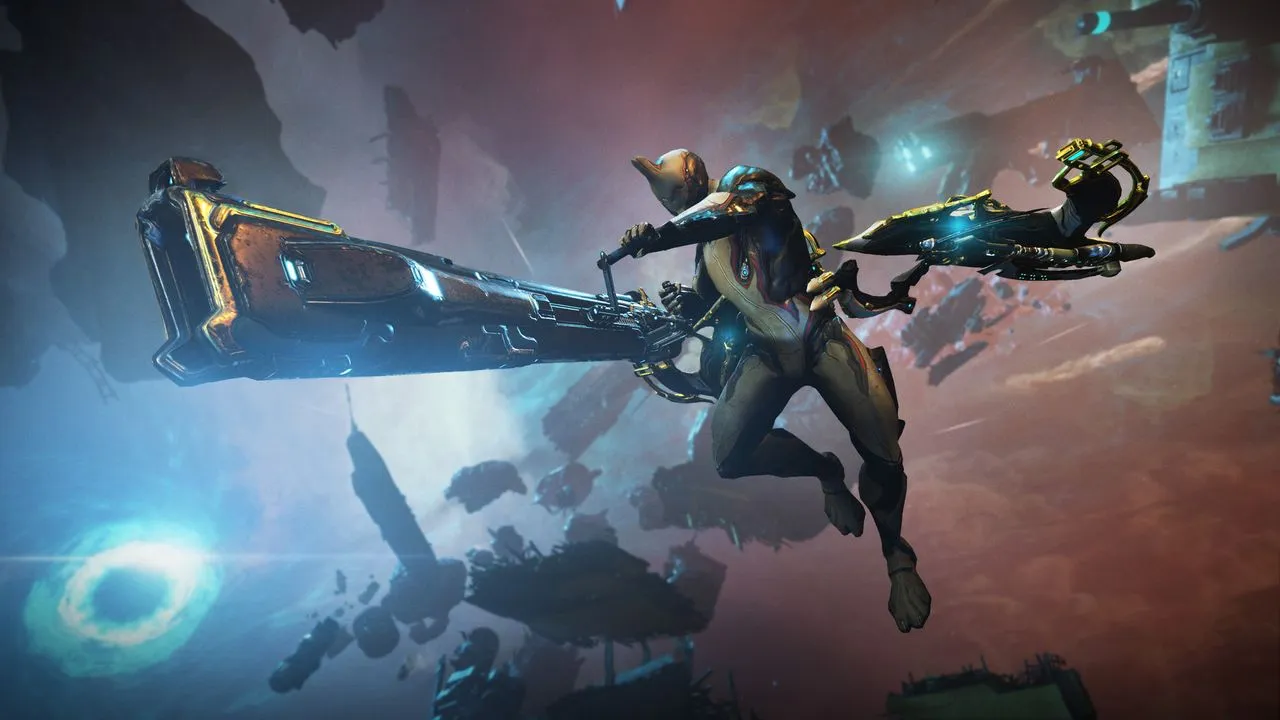
Rebecca Ford, creative director of Warframe developer Digital Extremes, says live-service survival depends on building a good game before being “kicked out.” Her comments come as Bungie’s Destiny 2 ended with a sudden final update in June, following reports that Sony took a considerable loss on acquiring the studio and carried out layoffs.
Live-service games don’t really die from one dramatic bug. They usually get pushed out by something quieter and harder to argue with: the business decision.
That is the blunt lesson Rebecca Ford, creative director at Warframe developer Digital Extremes, puts behind the headline advice she gave GamesRadar+ at TennoCon 2026. After Destiny 2’s sudden finish in June, Ford’s pragmatic rule for anyone running a live game is: "Just try and make a good game before they kick you out." In the same interview, she also calls what happened to Bungie "horrible news" for everyone, and adds, “Not the first time it’s happened, and it’ll happen again.”
If you manage a studio, this is one of those moments where sentiment and strategy line up. Live-service work is relentless by design. It demands continuous updates, constant hotfixes, and a community loop that has to keep finding reasons to show up again. Ford is clear that this is not just a creative challenge. It is also an ongoing negotiation with forces outside your studio’s control.
Destiny 2 is the freshest example. Bungie’s sci-fi FPS ended with a slightly unceremonious end in June, and the pivot was fast: a sudden final update after it was reported that Sony took a considerable loss on acquiring the studio. That report also tied into “a large amount of layoffs.” Even without reading between the lines, the takeaway for operators is obvious. When a parent company absorbs losses, the cut usually lands on something with a continuing cost structure, not on something with a short, contained timeline. Live services fit the pattern because they are expensive to run even at peak stability.
Ford’s reaction to Bungie’s situation is unusually direct, and it points to a structural truth about the industry. “It shows that even if you care so much, the business side of this industry always gets the last remark,” she says. And then she goes further, explaining that these outcomes are not rare accidents. “Those are the types of stories and experiences that, when you're in a position where you have your own game, your own IP, and you work as hard as you do on it… That's not the first time it's happened, and it'll happen again,” she tells GamesRadar+.
That “business aspect” framing matters for decision-makers because it flips how risk is assessed. The common internal assumption is that execution is the main threat. Ford’s comments suggest another threat exists alongside execution, and it sits closer to finance: the idea that you may not be in control of your own goodbye. She says that “the idea that we aren't in charge of our own goodbye is something I wake up thinking about every single day.” That is a leadership burden most fans never see. It also explains why “make a good game” is not just inspirational advice. In Ford’s view, it is protection.
Digital Extremes, for its part, has something to point to. Warframe has been “going steady for 13 years now,” which is not a small feat in a genre that routinely churns through new entrants and shifting player tastes. Ford also notes that TennoCon gets bigger each year, suggesting the franchise has maintained mindshare and community energy. On top of that, Warframe is free and, as she describes it, “well-balanced,” which makes the game easy to settle into. In live-service terms, balance and accessibility are not fluff. They are retention infrastructure.
Still, Ford does not present Warframe’s longevity as immunity. She acknowledges layoffs have happened in the studio before, so the internal pressure Ford describes is not theoretical. But she adds a detail that matters for governance and operating cadence: Warframe’s leadership structure includes longtime employees. She says she herself rose from community management to her current role. “Anyone here in a leadership position didn't come into the company in that position,” she explains, and “I think gives us a little bit of a unique way of working as a team.” In other words, it is not just that the game has lasted. The organization’s institutional knowledge has stayed closer to the ground where community realities show up.
Ford ties this together with trust and process. “None of us signed up for this, but we do it because it must be done, and we trust each other,” she says. She also points to continuous improvement, including how the studio works in-office or remotely, adding that “every day, every week, we can improve how we work as a business.” For boards and exec teams, that is the most interesting second-order implication of her quote. If the end can be externally triggered, then internal cohesion becomes a risk control. It helps the team ship with consistency, withstand restructuring, and keep the live loop running even when staffing is stressed.
So what should peers take from this? The stakes for live-service leaders are not just whether your game can attract players. It is whether your studio can keep delivering while the parent-company math, the acquisition hangover, and the cost-cutting cycle keep doing what cost-cutting cycles do. Ford’s advice lands as a harsh but useful prioritization: if you cannot control the business decision, build the thing that makes the business case harder to ignore. And if it still happens anyway, you will be starting from a position of strength, not from a story of missed execution.
In a world where Destiny 2 can end in June with a sudden final update after reported Sony losses and layoffs, “make a good game” reads less like hype and more like an operating doctrine. The question for every exec running a live service is whether they are optimizing only for today’s content calendar, or for the deeper problem Ford keeps “waking up” thinking about: the possibility that your goodbye is out of your hands.
This story's Key Insights and Take-aways are locked.
Create a free account to unlock Executive Actions for one credit.
Register to UnlockAlways free for Executives Club members. Join the Club
More in Entertainment

12TB Steam 'teraleak' goes beyond Valve: GTA 3, Mafia 2 prototypes exposed
A 12-terabyte dump of Steam data reveals prototypes and builds of third-party classics like GTA 3 and Mafia 2, plus unreleased Valve content, rewriting game history.

LinkedIn's romance problem: 1 in 4 workers say dating on it is fair game
A new survey shows a quarter of U.S. employees treat the professional network as fair game for romance, even as LinkedIn bans it and removes hundreds of thousands of offending posts.

Enhypen's first No. 1 album breaks K-pop's Billboard 200 streak
The K-pop group's 98,000-unit debut tops the chart while Dolly Parton's catalog reentry shows how death reshapes streaming.