

Warhammer 40K’s The Infinite and the Divine gets a sequel: Orikan and Trazyn return
The author is back for The Wicked and the Warped, where two long-time necrons must team up against Chaos corruption.
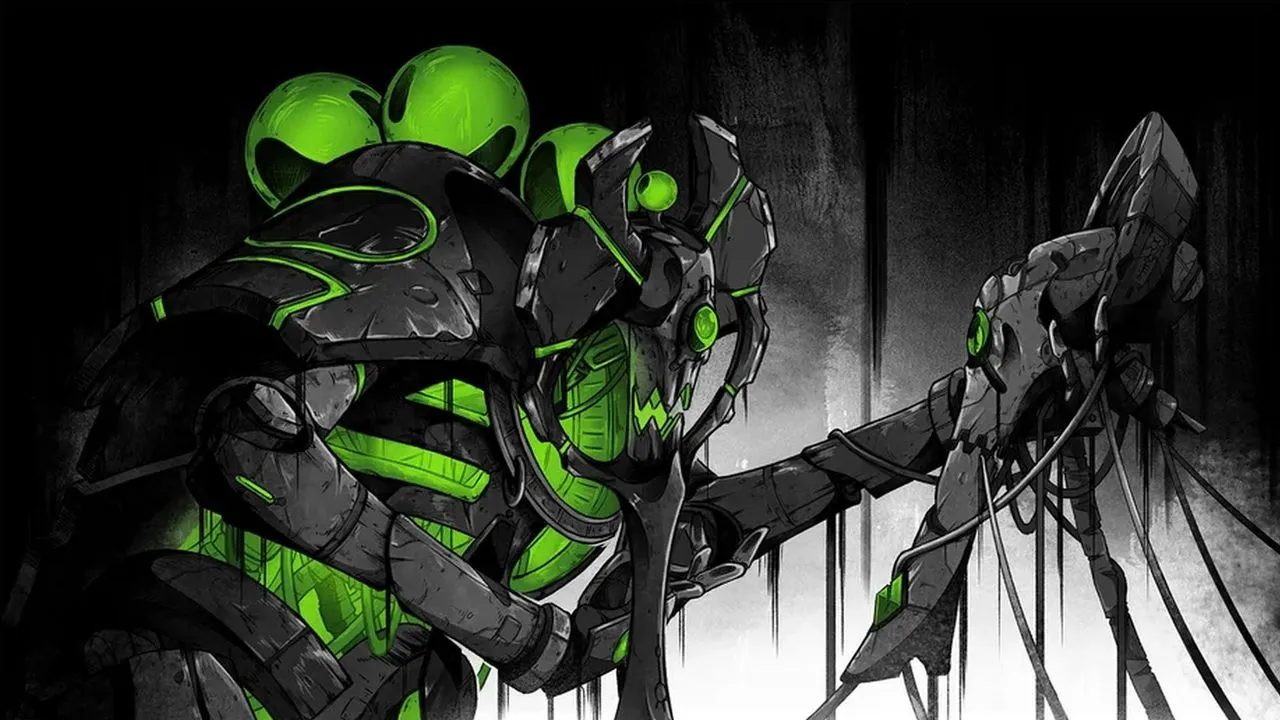
Games Workshop announced that Orikan the Diviner and Trazyn the Infinite will return in The Wicked and the Warped, a new Warhammer 40,000 novel from the same author as The Infinite and the Divine. The sequel escalates their rivalry into a forced partnership to investigate a Chaos-corrupted lost expedition, with a new reprint set in motion now.
If your favorite Warhammer 40,000 book is The Infinite and the Divine, you are getting the sequel you didn't strictly need, but will probably crave anyway. Games Workshop announced on Warhammer Community that Orikan the Diviner and Trazyn the Infinite are back in The Wicked and the Warped.
This time, the tone shift is the core of the pitch: the two rivals, locked for ages in a heated feud over a particular artifact, are now pushed into cooperation. In The Wicked and the Warped, they have to figure out what happened to an expedition lost on a planet corrupted by Chaos. That single premise is doing a lot of work, because it turns a long-running grudge into a high-stakes problem-solving mission.
To understand why this matters, you have to remember what made The Infinite and the Divine stand out in the first place. The broader Warhammer 40,000 novels ecosystem is often described in terms of who is narrating: humans and space marines were an early focus, but it took time for Games Workshop to publish more books from the perspective of 40K's alien factions. For example, for readers into orks, there is Ghazghkull Thraka: Prophet of the Waaagh, and for aeldari pirates, there is Voidscarred. But the peak, at least in this particular lineage, is still Robert Rath's The Infinite and the Divine.
That book centers on a long-term feud between two necrons, Orikan the Diviner and Trazyn the Infinite. They are immortal robots, once flesh-and-blood, who went a little loopy in the uploading process. Their rivalry is sparked by an argument over who owns a particular artifact, and it escalates into a universe-sized mess. Games Workshop's own summary of the story leans hard into the absurd consequences of petty conflict, including “clashing with Exodite armies, xenos uprisings, and a spell in Necron small claims court.” That mix is part grimdark, part comedy, and part bureaucratic chaos, and it is why the book has been compared in tone to The Hitchhiker's Guide to the Galaxy.
Now put that characterization against the new sequel’s premise. A forced alliance is not unique to 40K, but the source text connects it to a familiar mechanism: as Dawn of War showed, if you want an unlikely alliance, throw Chaos at some enemies and they will have to work together. In other words, The Wicked and the Warped is not just adding plot. It is stress-testing the central “why these two will never get along” engine, then asking the story question executives and product teams know well: what happens to core positioning when the environment changes?
For decision-makers watching this kind of property, there are second-order implications worth noting. First, sequelization can be a release strategy play: the source says The Wicked and the Warped does not have a release date yet, but The Infinite and the Divine is being reprinted in hardback in the meantime. That creates a production runway while preserving reader attention, which matters when you are operating in a niche with vocal fans. Second, format diversification shows up immediately in the next sentence of the source, pointing to an audiobook narrated by Richard Reed that “has” good things associated with it. Even without extra details, the business implication is clear: a blockbuster concept is being supported across multiple consumption modes, so fans can stay in the ecosystem between big releases.
Third, the storytelling choice signals how Games Workshop is managing tone. The source emphasizes that The Infinite and the Divine was self-contained while still generating enough universe gravity to support another chapter. The sequel premise keeps the humor-adjacent absurdity of two immortals arguing, but it cages that vibe inside a Chaos corruption mystery. That matters strategically because it keeps continuity for existing readers while giving new readers a more direct entry point: “lost on a planet corrupted by Chaos” is a straightforward threat line, even if the delivery is character-driven bickering.
And that brings us to the practical stake for peers in similar roles, from content producers to investors in IP-led businesses: when a sequel arrives without an explicit date, the real job is maintaining confidence in the franchise's momentum. Here, the confidence is built by name recognition (Orikan and Trazyn), a repeat authorship signal (the source notes the sequel is by the same author), and a concrete premise that resolves the curiosity gap right away. You do not have to guess what the sequel is. You know the mission, you know the setting type (Chaos corruption), and you know the relationship dynamic (rivals forced to cooperate).
Bottom line: The Infinite and the Divine did not strictly need an extra book, but Games Workshop is turning reader affection into forward momentum with The Wicked and the Warped. If you are the kind of decision-maker who thinks about where attention comes from and how it stays, this is a clean example: use character loyalty and a strong threat hook, reprint to bridge the gap, and make the next installment feel inevitable even when it is unexpected.
This story's Key Insights and Take-aways are locked.
Create a free account to unlock Executive Actions for one credit.
Register to UnlockAlways free for Executives Club members. Join the Club
More in Science

Alaska's 1,580-foot tsunami had warning signs. Scientists just found them.
Rapid glacier retreat, heavy rainfall, and thousands of tiny tremors preceded Alaska's 1,580-foot tsunami, a warning for every coastal community in a warming world.
The rare mutation that lets high-risk brains dodge Alzheimer's
Scientists found a natural defense against protein buildup, opening a new path to preventive treatments.

3,000 steps a day may halve Alzheimer's decline, study finds
New research links a modest daily walk to less tau buildup and nearly half the cognitive and functional decline, even for those with early signs.