

Warner Bros. buries details on Aug. 14, 2026, but Abrams' Oak Street hunt looks built for surprise
A David Robert Mitchell sci-fi fantasy with JJ Abrams behind it launches Aug. 14, 2026, and the mystery is the point.
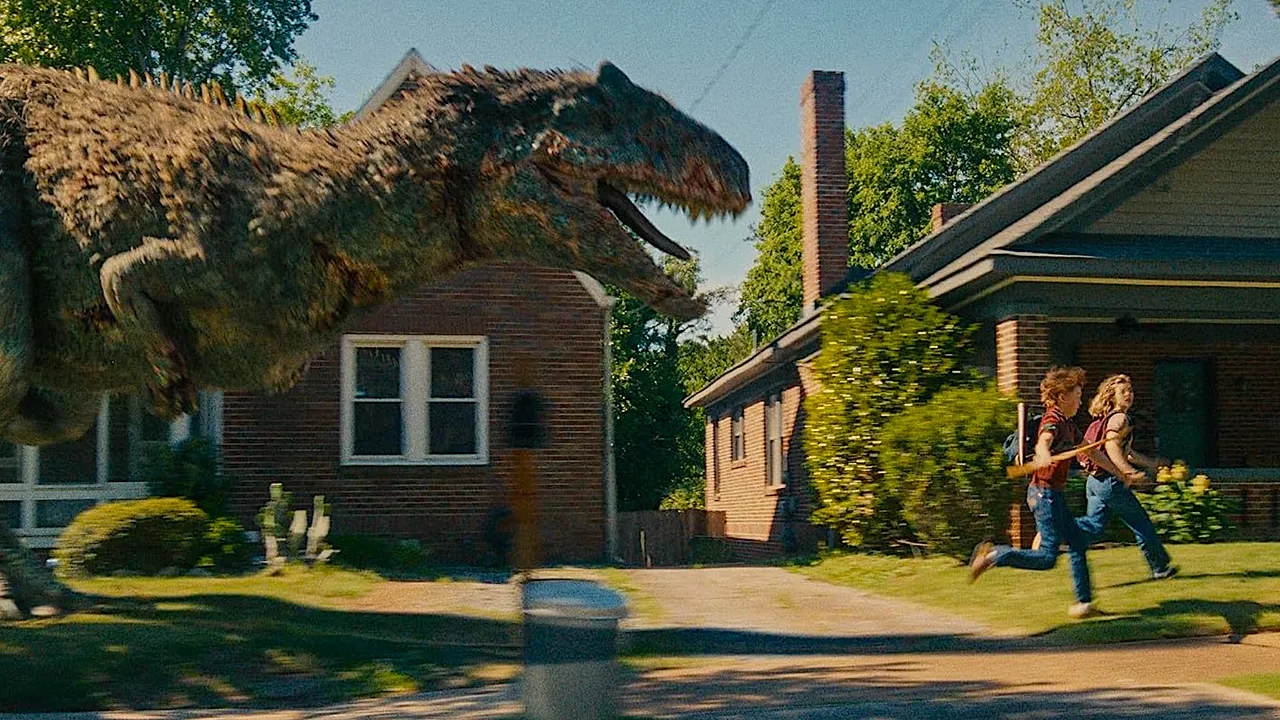
Warner Bros. is set to release JJ Abrams-backed Bad Robot and David Robert Mitchell's “The End of Oak Street” in theaters Aug. 14, 2026, with the plot framed as “The Twilight Zone meets Jurassic Park” plus a dash of “A Quiet Place.” For decision-makers, the strategic question is whether Warner can turn controlled secrecy, suburban-scale thrills, and a tight release window into a late-summer audience hit.
Summer is slipping away, and the calendar pages are already begging for August. But Warner Bros. is still making room for a different kind of pitch: a blockbuster-sized sci-fi fantasy that arrives on Aug. 14, 2026. “The End of Oak Street” is being positioned like “The Twilight Zone” meets “Jurassic Park,” with “A Quiet Place” energy, meaning the audience gets a neighborhood-scale premise that quickly turns into running, screaming, and survival.
The early teaser already tells you what kind of movie this is. Ewan McGregor and Anne Hathaway star as a suburban family whose neighborhood is whisked into a prehistoric, dinosaur-filled reality after a strange cosmic event. Hathaway’s Denise Platt explains to her children in the first teaser that “our house, our neighborhood, our whole street, has moved.” That teaser landed 30 million views after dropping in March. In other words, Warner Bros. does not need to sell the vibe with plot specifics. It has sold the feeling, and it has done it fast.
At the center of the launch is an intentional creative blend: executive producer J.J. Abrams and Bad Robot, the same shop behind “Lost,” “Cloverfield,” “Star Trek,” and “Star Wars: The Force Awakens,” paired with writer-producer-director David Robert Mitchell, known for “It Follows.” Mitchell’s sensibilities matter here because the story is not trying to be a pure dinosaur spectacle. The narrative is described as surreal survival material, built for escalating dread rather than just creature action. That is why the “Twilight Zone meets Jurassic Park” framing works. It implies both cosmic rules and primeval consequences, which is a potent combo when you need a summer movie to feel fresh without rewriting the audience’s expectations from scratch.
For executives thinking about what wins in late summer, the release date and the secrecy are not random details. The film thunders into multiplexes on Aug. 14, 2026. Warner Bros. is keeping whether aliens are involved unclear and keeping that tight under wraps. That ambiguity is a marketing asset, not a production accident. The source points to a 1964 “Outer Limits” episode called “A Feasibility Study,” where aliens abduct a 6-block suburban neighborhood to their planet Luminos to study them as candidates for enslavement. The parallel is there, but Warner is not confirming it. That creates a “spectator participation” effect: audiences fill in the gaps, then show up to see which version of the hypothesis is real.
This is also where second-order implications show up for the people who fund, schedule, and greenlight entertainment at scale. A late-summer release is often treated as a make-or-break slot because back-to-school season tends to shift attention. The article explicitly frames “The End of Oak Street” as the best bet for a late summer smash before the kiddies return to school. If Warner hits, it validates the strategy of deploying a mid-to-late summer tentpole that leans on broad concept appeal, strong creator-brand pull, and viral teaser momentum. If it misses, it also becomes a case study: can suburban dread and creature mayhem overcome the audience drift that typically follows early fall?
The cast and production team also suggest the movie is engineered for wide demographic reach without losing genre identity. Maisy Stella and Christian Convery are listed as co-stars, and the production includes Hannah Minghella, Jon Cohen, Matt Jackson, and Tommy Harper. The point is not just that you have recognizable names, it is that the film is built as an event. It has an Abrams engine, a Mitchell style, and a family-centric on-ramp through Ewan McGregor and Anne Hathaway. That matters because it turns “big threat” content into character-based stakes quickly, which is exactly what survival stories need to stay emotionally legible even when the setting goes off the rails.
Finally, the competitive context is right there in the source, even if it is phrased like a wink. There is another summer contender mentioned, “Masters of the Universe,” described as a nostalgic romp that did not land as a sleeper hit, supposedly running about 20 minutes too long. The implicit lesson is that audience patience is finite. “The End of Oak Street” is leaning into clarity of premise instead. Primeval creatures rampaging across driveways and lawns, residents fighting back with guns and garden tools, and a neighborhood that has been physically moved by a cosmic event. That is not subtle, but it is direct. In a market where attention is the true scarce resource, directness plus a high-concept hook plus controlled mystery can be a winning equation.
So the strategic stake for peers, investors, and operators is simple: can Warner Bros. turn controlled under-wraps into a reason to watch now, not later, and can Bad Robot and David Robert Mitchell deliver the kind of surreal survival that sticks through August? With a teaser already pulling 30 million views and a big-name creative stack, “The End of Oak Street” has the pieces. The question is whether the execution matches the promise of “The Twilight Zone meets Jurassic Park” with just enough “A Quiet Place” to keep audiences scared of what is outside the frame, and not bored by what is already inside.
This story's Key Insights and Take-aways are locked.
Create a free account to unlock Executive Actions for one credit.
Register to UnlockAlways free for Executives Club members. Join the Club
More in Business

Anthropic’s Levant Alpöge cracks the Jacobian conjecture after 87 years
A Harvard valedictorian used Claude to hit a 1939 breakthrough, but the missing “why” is the real problem.

Uber buys Delivery Hero for nearly $15B, vaulting to top food delivery outside China
The deal doubles Uber's dual-services footprint and pushes a ride-and-eats bundling play into 50 more markets.

Epic and Google drop settlement bid, forcing rival Android app stores by July 22
Google told the court it is ready to carry third-party app stores starting Wednesday, July 22.