

Warner Bros. faces a Dec. 2026 Barbie 2 deadline or loses Gerwig, Robbie, Gosling
If no deal lands by December 2026, franchise rights revert to Mattel, forcing Barbie 2 to reset creatively.
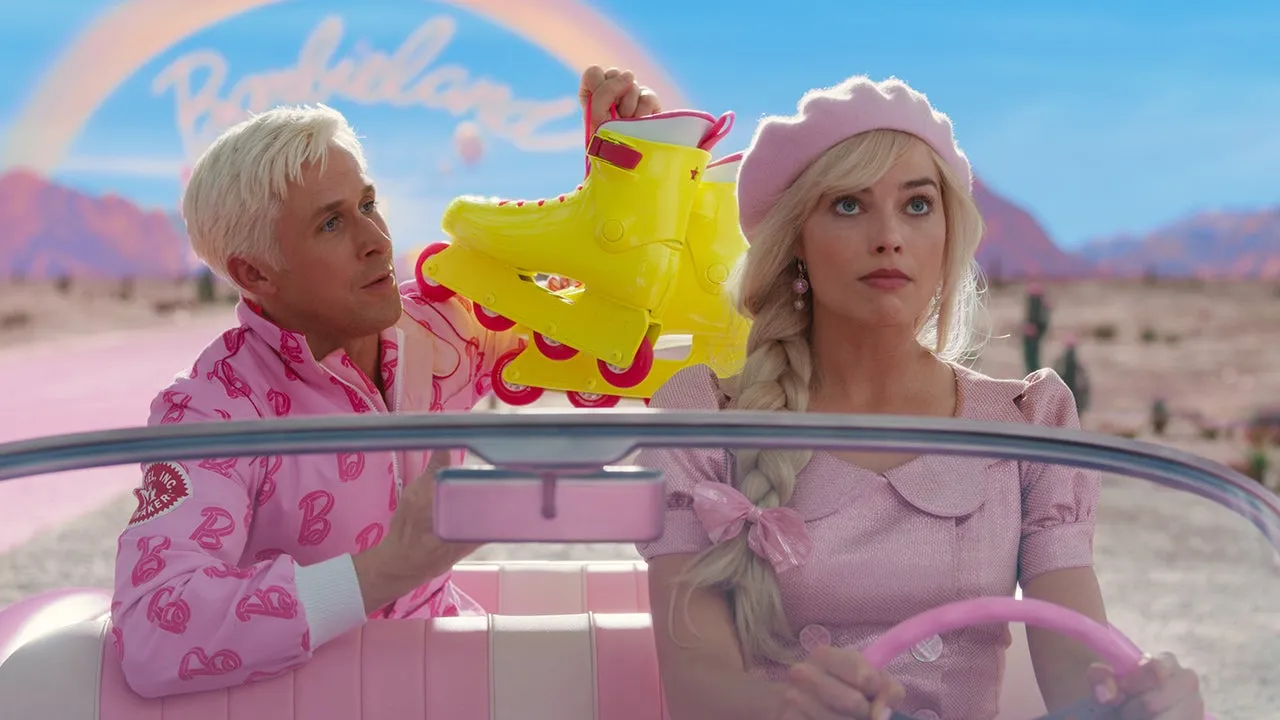
Warner Bros. negotiations for Barbie 2 have stalled, with director Greta Gerwig, writer Noah Baumbach, and stars Margot Robbie and Ryan Gosling at risk. Warner Bros. CEO David Zaslav is reportedly blocking the current offers, and failure by December 2026 would trigger rights reversion to Mattel.
Negotiations for Barbie 2 are effectively frozen, and Warner Bros. has a hard deadline looming: if it cannot make a deal by December 2026, it will lose director Greta Gerwig, writer Noah Baumbach, and stars Margot Robbie and Ryan Gosling. The reason is not a creative disagreement. It is money, timing, and executive risk control, playing out behind the scenes after the 2023 film delivered a record-breaking $1.5 billion in theaters.
A new report from The New York Times says both sides have failed to agree on terms for the cast and crew to return. The sticking points include Warner Bros.' offers that include a cut of box office profits tied to the film's success, along with raises, including paying Gosling his $20 million asking price. The central dispute, according to the report’s sources, is that Warner Bros. CEO David Zaslav believes the offers are “too generous” and refused to give them the OK. A Warner Bros. representative pushes back, saying talent representatives declined an offer made in May and have yet to file a counteroffer. Either way, the clock is running, and a monthslong standoff is what you get when nobody blinks.
This is a high-stakes negotiation because Barbie is not just another studio sequel. Warner Bros. is trying to replicate rare upside from a release that happened three years ago. In that context, the expectation that progress should be faster is not just fan impatience. It is also how studios typically manage talent packages. Big franchises live on optionality: lock key creative and starring talent early, so the next film can move from talk to script to schedule without losing momentum or forcing a costly reset.
And time is exactly what the report frames as the problem. If Warner Bros. cannot reach a deal by December 2026, the rights to the movie franchise will revert back to Mattel. That sounds like a legal footnote until you translate it into production reality. Reversion means the next live-action Barbie film could still be made at another studio, but it would do so without Gerwig, Baumbach, Robbie, or Gosling. It would also need to proceed without carrying over any of the story elements established in the 2023 project.
That last part is the real gut-punch for decision-makers. When a franchise has both a universe and a signature creative voice, losing the creative team does not just change marketing posters. It can change what the audience expects to recognize. The report notes that the 2023 project already established story elements, and that those may not be carried forward if the sequel effectively “resets” under a new rights situation. In plain English, studios do not only pay for talent. They pay for continuity, and continuity is part of brand value.
Warner Bros. itself did not throw the blame entirely one way. In a joint statement, Warner Bros. co-chairs Pam Abdy and Michael De Luca said: “We have a rights deal with Mattel in place and have made a series of big offers to try and finalize deals to make the next Barbie film. Unfortunately, we have been unable to reach an agreement thus far.” That wording matters. It signals there is an underlying contractual framework already in motion, but the immediate problem is execution, specifically the inability to convert an offers package into signed returns from the key people.
The creative side adds another wrinkle: this is not a “nobody knows what the movie will be” scenario. The report says Gerwig and Baumbach have reportedly expressed they already have a story for Barbie 2 in mind and are ready to begin the writing process. That creates a brutal asymmetry. Studios can keep pushing offers, but if time expires and rights revert, the writing may never happen under Warner Bros., and it will be forced into new hands with new constraints.
There is also a public perception layer that can feed back into negotiations. IGN gave Barbie a 9/10 review, calling it “a masterful exploration of femininity and the pressures of perfection.” Reviews like that can strengthen a talent team’s negotiating leverage because they validate both artistry and commercial viability. They do not guarantee a deal, but they can make “standard sequel terms” feel insulting when a previous blockbuster has already proven the upside. Meanwhile, Deadline reported in March 2024 that Gerwig told it she had come around on the idea of a Barbie sequel, saying, “I want to do it.”
So what happens next is not just a movie question. It is a boardroom question for any studio, streamer, or entertainment executive thinking about how to price talent in an era where upside is real but uncertainty is constant. The second-order risk here is that a rights reversion can turn a controlled sequel pipeline into an open bidding problem, potentially at a moment when audiences want the familiar version of a story. For Warner Bros., the strategic stake is clear: either strike the deal and preserve continuity, or watch time run out and force a franchise rebuild without the people who made the 2023 film feel like more than a cash register.
This story's Key Insights and Take-aways are locked.
Create a free account to unlock Executive Actions for one credit.
Register to UnlockAlways free for Executives Club members. Join the Club
More in Business
Leopold Aschenbrenner’s $45B AI hedge fund plunged, losing most value in days
Former OpenAI researcher Leopold Aschenbrenner watched Situational Awareness unravel quickly, forcing AI fund managers to ask what risk they missed.

Anthropic’s Levant Alpöge cracks the Jacobian conjecture after 87 years
A Harvard valedictorian used Claude to hit a 1939 breakthrough, but the missing “why” is the real problem.

Uber buys Delivery Hero for nearly $15B, vaulting to top food delivery outside China
The deal doubles Uber's dual-services footprint and pushes a ride-and-eats bundling play into 50 more markets.