

Warner’s Barbie sequel stalls until December as Gosling’s $20M ask blocks deals
Warner Bros. has a rights deadline with Mattel and needs Margot Robbie, Ryan Gosling, and Greta Gerwig locked before reversion.
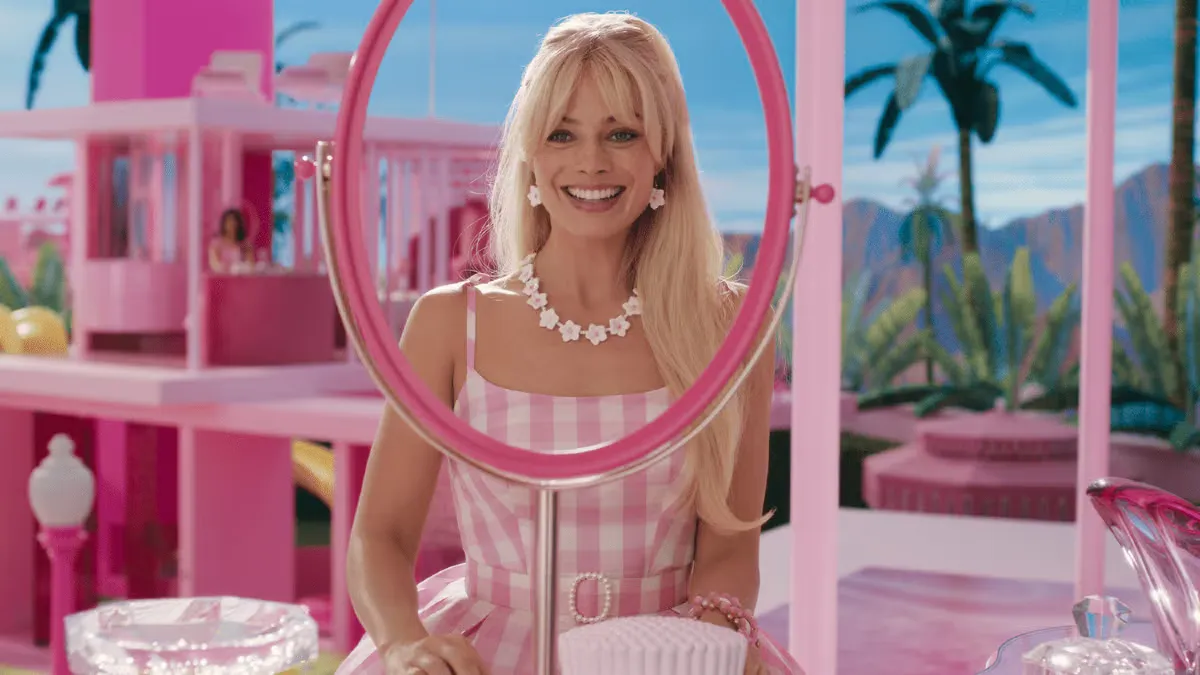
Warner Bros. Pictures is stalling its Barbie sequel talks with Margot Robbie, Ryan Gosling, and Greta Gerwig, with Gosling’s asking price reported at $20 million. The clock runs until December before rights revert to Mattel, forcing decision-makers to choose between leverage and speed.
Warner Bros. Pictures is running out of time on the Barbie sequel, and the sticking point is not the movie’s creative direction. It is contracts. Per a New York Times report cited by TheWrap, Warner Bros. has until December to lock deals with the film’s stars Margot Robbie and Ryan Gosling, plus filmmaker Greta Gerwig, before the rights revert to Mattel.
The headline number in those negotiations is Gosling’s asking price, reported at $20 million. That figure matters because it is high enough to turn what should be a straightforward follow-up to a 2023 smash into a boardroom-level bargaining match where timing itself becomes leverage. TheWrap also reports that Zaslav rejected Warner’s latest offers to talent as too generous, though a Warner Bros. spokeswoman disputed that and said talent reps have not countered since declining an offer made in May.
This is what makes the Barbie sequel situation a useful stress test for anyone watching media deals: the studio is not just negotiating compensation, it is negotiating the calendar. Warner’s co-chairs, Pam Abdy and Michael De Luca, said in a statement, “We have a rights deal with Mattel in place and have made a series of big offers to try and finalize deals to make the next ‘Barbie’ film. Unfortunately, we have been unable to reach an agreement thus far.” In other words, Warner believes it is offering meaningfully. But it still cannot close.
And the clock is real. Warner has until Dec. to finalize the deals before rights revert to Mattel. In film licensing terms, reversion deadlines are designed to prevent studios from sitting on rights indefinitely. It is the industry equivalent of a lease clause: if you do not execute, you do not get to keep the asset. That is why the talks are not merely about who gets what. They are about who controls the next step once the calendar hits December.
Gosling’s reported $20 million request lands at a moment when his career schedule is already flexing in other directions. TheWrap notes that last week it was revealed at San Diego Comic-Con that Gosling will star in his first superhero movie, Ghost Rider, for Marvel Studios and director Shawn Levy. Even if that film’s development timeline is separate, it can still affect negotiation posture. When talent is visibly in demand and lined up for major franchises, the perceived urgency for a counterparty can drop.
Meanwhile, the creative engine is also idling on purpose. Gerwig and her husband and writing partner Noah Baumbach already have a story in mind for the sequel, according to the report, but are withholding it. They will not commence writing until a deal closes. That is a very specific form of leverage. The creative team is not saying, “No.” They are saying, “Not until the business piece is done.” For studios, that makes delays more expensive than they look on paper, because every week without writing can ripple into production planning, staffing, and release strategy.
On the studio side, the negotiation backdrop is shaped by corporate incentives. Warner’s CEO David Zaslav is reported to have rejected the latest offers as too generous, while the spokeswoman countered by saying there were no counteroffers after declining an offer made in May. That discrepancy is less about who is right and more about how negotiations create friction: one side frames the other side as unwilling to move; the other side frames the delay as a consequence of stalled back-and-forth. Either way, the deals are not landing.
Mattel is also in the mix as the rights owner, and the company’s stance provides additional pressure. Mattel CEO Ynon Kreiz has previously said he wants to avoid delays, adding, “We expect projects to move and be in active development,” and “We don’t want to sit on the back burner.” TheWrap also notes Mattel’s last movie, Masters of the Universe, grossed only $113.5 million globally and recently premiered on Prime Video where it is currently #1 on the platform. That combination is a reminder that content performance and brand confidence matter to Mattel’s leadership, not just to Warner’s.
Strategically, this is more than a single sequel. It is a signal about how Hollywood is behaving when talent pricing, franchise calendars, and rights structures collide. If you are a studio executive, board member, or investor watching media, you learn something uncomfortable: even after a breakout hit, the next installment can stall if bargaining power shifts from the studio to the talent and the rights holder. And once the “active development” window closes in the calendar sense, the business story becomes harder to fix.
For peers in similar roles, the Barbie sequel is a case study in second-order risk. Delays can reduce studio leverage because the creative team can hold the script. They can also reduce talent leverage over time if other commitments take priority, which can force both sides into worse options. Either way, the December rights reversion deadline turns contracting into strategy. Not making a deal is no longer just a negotiation outcome. It becomes an operational decision with real consequences for who controls the IP next, who plans the release, and who absorbs the opportunity cost.
This story's Key Insights and Take-aways are locked.
Create a free account to unlock Executive Actions for one credit.
Register to UnlockAlways free for Executives Club members. Join the Club
More in Business

Anthropic’s Levant Alpöge cracks the Jacobian conjecture after 87 years
A Harvard valedictorian used Claude to hit a 1939 breakthrough, but the missing “why” is the real problem.

Uber buys Delivery Hero for nearly $15B, vaulting to top food delivery outside China
The deal doubles Uber's dual-services footprint and pushes a ride-and-eats bundling play into 50 more markets.

Epic and Google drop settlement bid, forcing rival Android app stores by July 22
Google told the court it is ready to carry third-party app stores starting Wednesday, July 22.