
Wax Heads turns record-store help into a story-driven puzzle, not shelf restocking
A Steam cozy game tasks you with finding the album that could change someone’s life.
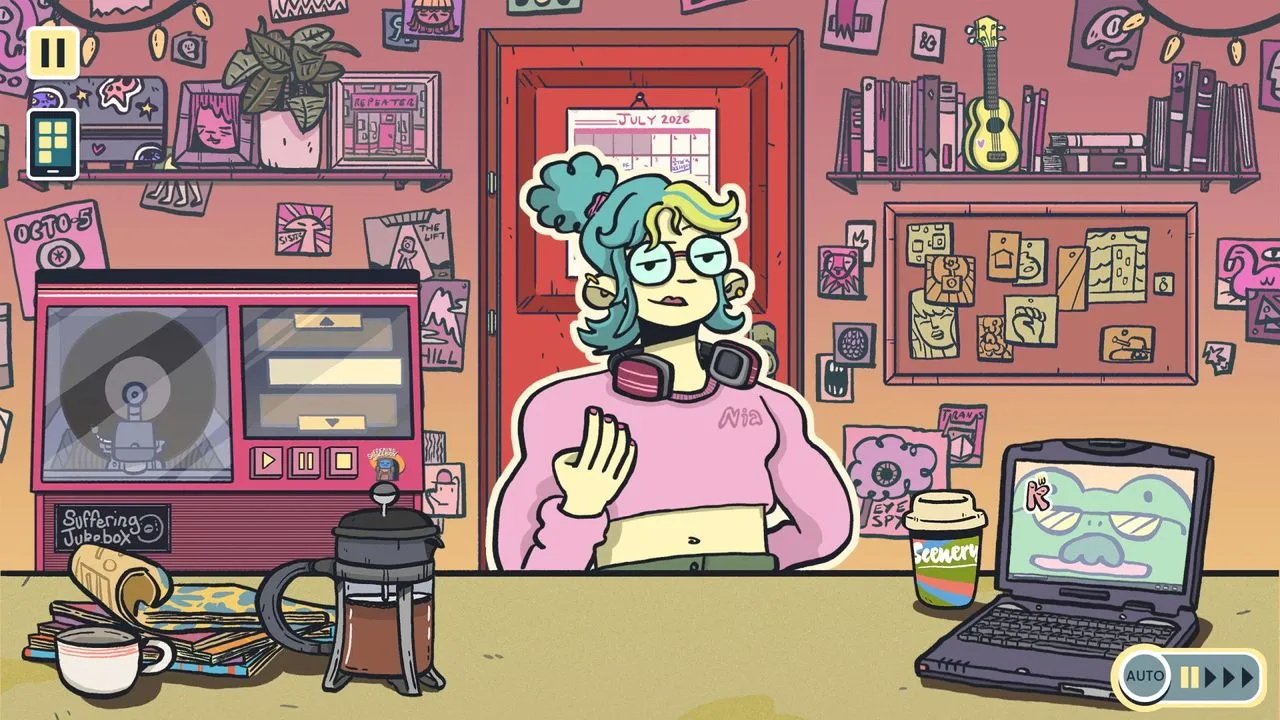
Wax Heads, a story-focused puzzle game on Steam, follows Repeater Records, a struggling record store hub, and its staff and regulars. For decision-makers, it’s a reminder that “cozy” mechanics can still carry strong narrative incentives and community stakes.
If you’re tired of shop sims that boil down to restocking shelves, Wax Heads is the pivot. Instead of barcodes and inventory counts, you help customers find the album they want, often based on tiny clues they barely remember. It sounds like a neat twist at first, but the game quickly proves it is doing something more specific: turning everyday retail assistance into a story about a real kind of subculture record store and the people who keep it alive.
The core setup is simple but smart. You play through an extremely specific store, a record shop that promotes local bands and zines, while Repeater Records struggles as the hub of a town’s music scene. The game tasks you with exploring the mazey shop, keeping up with a daily music press, checking an Instagram-like called Phonogram, and paying attention to what people wear for clues about their preferences. It is not just “figure out the album with the saxophone cover.” It is about reading the customer, the shop, and the scene as one interconnected system.
From a business lens, the interesting part is the incentive structure. In most retail games, the player is rewarded for speed and accuracy. In Wax Heads, you are rewarded for interpretation. Some customers are forgetful, others want recommendations shaped around their taste, and the game nudges you to build knowledge of the store and its culture to solve the next interaction. That matters because it changes what kind of user retention you get. You are not only learning puzzle patterns; you are learning a living information environment: press content, an active social feed, and observational cues from clothing. The game effectively models a small-community feedback loop where “helping the customer” also means “supporting the scene.”
The vibe reinforces that loop. The tone lands halfway between Empire Records and High Fidelity, and the Scott Pilgrim art style gives the whole thing a familiar, punchy visual language. But the deeper payoff is that each lovable weirdo who works at Repeater Records has their own story, and so do the regulars. In other words, it is not only a puzzle game. It is a shop-sim wrapper around character arcs, and those arcs are tied directly to what inventory you choose to surface and what records you help people discover.
The invented album blurbs are a key part of how the game sells credibility without needing real-world licensing. The blurb about a metal band rumored to have killed their original lead singer hits as exactly the kind of subculture mythology vinyl collectors talk about. That line matters because it signals the design’s intent: these records are written to feel like artifacts from a community, not random fantasy props. You can even queue up songs on the jukebox, with each track acting as a recreation of a niche subgenre. The result is a feedback channel where solving the “what record?” question also becomes “what sound is this place into?” That is how you get from cozy mechanics to emotional attachment.
If you care about games as products, Wax Heads also points to why narrative-driven systems work even in smaller, calmer packages. The game makes you slow down, notice, and connect details, which is usually the enemy of performance-focused loop design. Yet it still delivers an immediate “mission” every time you help a customer. That tension is the trick: it preserves the satisfy-you-fast feel of classic puzzle games, while gradually layering in story, community dynamics, and a sense that the store matters beyond the immediate transaction.
There is also an obvious market positioning angle in the “relaxed” framing. The title explicitly shows up with cozy-game recommendations, and it sits beside lists like “Best cozy games,” “Best anime games,” “Best JRPGs,” “Best cyberpunk games,” and “Best gacha games” in the source context. That kind of tagging matters because it shapes who clicks, and then whether the product delivers on those expectations. Wax Heads appears designed to be welcoming. You are not punished for curiosity. You are rewarded for engaging with the store ecosystem: exploring, reading the press, checking Phonogram, and using clothing and context as clues.
Finally, for decision-makers looking at what people pay attention to in interactive media, Wax Heads is a clean case study. It takes a “local hub under pressure” premise, Repeater Records struggling as a record-store anchor, and turns community survival into a player activity that feels personal. Even when the problem looks like “identify the correct album,” the game keeps widening the stake to “support the scene.” Wax Heads is available on Steam, and the source notes that there is a demo you can play now. If you are building, investing, or governing products in this space, the strategic takeaway is clear: mechanics can be cozy without being shallow, and community stories can turn simple retail interactions into reasons to come back tomorrow.
This story's Key Insights and Take-aways are locked.
Create a free account to unlock Executive Actions for one credit.
Register to UnlockAlways free for Executives Club members. Join the Club
More in Entertainment

Russell Brand's accuser 'bewildered and confused' as he denies 7 sex charges
The criminal case against the comedian is a live test of how media companies manage talent risk when serious allegations go public.

'It's a Magic Trick': Ballet Experts Say Rosalía's SNL Pose Is Impossible
Three ballet experts tell Rolling Stone Rosalía's gravity-defying SNL stillness shouldn't be possible - and why the debate is now part of the show.

Activision CMO: GTA 6 Will Boost Call of Duty, Not Bury It
Activision's top marketer says Rockstar's blockbuster will drive players back to consoles and into Modern Warfare 4, even as the company admits its recent strategy failed.