
Waymo fires back at Tesla, says pure-AI robotaxis aren't safe
Ahead of Tesla's Cybercab launch, Waymo publicly warns that vision-only, end-to-end AI systems can't cut it for full autonomy.

Waymo, Alphabet's autonomous driving unit, is publicly arguing that fully autonomous vehicles require a mix of sensors and that pure end-to-end AI systems aren't safe enough, a direct jab at Tesla's approach. The warning, issued ahead of Tesla's Cybercab launch, signals an intensifying battle over which technical path will define the robotaxi market.
Waymo is going on offense. The Alphabet-owned autonomous driving company issued a pointed warning ahead of Tesla's highly anticipated Cybercab launch: fully autonomous vehicles are not possible without a mix of sensors, and pure end-to-end AI systems are not safe enough for the road. The message, reported by TechCrunch, is an unusually direct salvo from the company that has logged millions of miles in commercial robotaxi service, aimed squarely at the camera-only, end-to-end neural network approach that Tesla CEO Elon Musk has staked his robotaxi ambitions on.
The stakes could not be higher. Tesla is expected to unveil its dedicated Cybercab robotaxi on October 10 at an event in Los Angeles, and Tesla's approach relies on a vision-only system - what Musk has long touted as a path to full self-driving using cameras and neural networks trained on vast amounts of real-world driving data. Waymo, by contrast, uses a combination of lidar, radar, and cameras, a sensor suite that it argues provides the redundancy necessary for safe operation in unpredictable environments. By publicly warning that end-to-end AI models aren't ready for full autonomy, Waymo is drawing a clear line in the sand: it is framing Tesla's technical bet as a safety risk, not just a competitive difference.
This is not merely a philosophical disagreement. It is a battle for the regulatory and public narrative that will shape billions of dollars in investment and the future of urban mobility. Robotaxis are no longer a futuristic concept; Waymo already operates commercial driverless ride-hailing services in Phoenix, San Francisco, and Los Angeles, and recently expanded to new areas. Tesla has promised a network of autonomous vehicles where owners can send their cars out to earn money - a 'Tesla Network' vision that depends entirely on its full self-driving software being robust enough to operate without human oversight. Waymo's warning lands directly ahead of Tesla's big reveal, and it is clearly designed to influence both consumer perception and the regulators who hold the keys to commercial expansion.
For decision-makers, the timing matters. Tesla's Cybercab launch is expected to include a prototype vehicle and, possibly, a detailed timeline for production and deployment. But Waymo's critique strikes at the core of Tesla's promise: if vision-only, end-to-end AI cannot achieve full autonomy safely, then the entire robotaxi business model - one that does not require a human driver behind the wheel - collapses. Waymo is essentially saying that its approach, which includes lidar and radar, is the only proven path to the level of safety regulators and the public will demand before autonomous vehicles become widespread.
There is also a regulatory subtext. Waymo has already faced its own scrutiny, including a recall and investigations by the National Highway Traffic Safety Administration over collisions involving its vehicles. But it has navigated those hurdles and continues to expand its 24/7 commercial service in places like Phoenix and San Francisco, crossing real passengers every day. Tesla, meanwhile, has yet to launch a commercial robotaxi network, and its full self-driving software remains at Level 2 - meaning a human must supervise at all times - despite Musk's repeated promises of imminent robotaxi deployment. Waymo's public stance, therefore, is also a reminder that the gap between demonstration and deployment is wide, and that regulatory approval for truly driverless operations is a high bar.
The argument over sensors is not new. For years, the industry has debated whether lidar is a crutch or a necessity, and whether end-to-end neural networks can handle rare edge cases without redundant sensor fusion and explicit safety layers. Waymo's position is that achieving full autonomy - the kind that can operate without a driver in dense, chaotic cities - requires multiple, complementary sensor modalities to provide the necessary depth, accuracy, and reliability. Pure end-to-end AI systems, the company argues, lack the safety case needed to validate them for deployment where lives and liability are on the line.
For executives and investors watching this space, the timing is telling. Waymo is not just making a technical argument; it is making a market argument, designed to shape perception before Tesla steals the spotlight with its Cybercab reveal. With lidar costs falling and sensor fusion having proven itself in millions of paid rides in Phoenix, San Francisco, and Los Angeles, Waymo is positioning itself as the safe, proven choice, while casting Tesla's timeline and tech as unproven and risky. This is a classic high-stakes framing war between two radically different engineering cultures - one that prizes iterative software learning, the other that prizes sensor redundancy and rigorous safety validation.
The stakes extend well beyond the two companies. Insurance providers, city governments, and passengers are all watching to see which approach earns trust. A single high-profile collision involving a vision-only robotaxi could set the industry back years, while the perception that lidar-based systems are 'too expensive' could slow adoption for Waymo's own scale-up. For executives and boards watching the robotaxi race, Waymo's warning is a reminder that the path to full autonomy is not just a technological contest but a credibility contest - and the winner will not be the company with the flashiest demo, but the one that can convince passengers, regulators, and the public that its cars are safe enough to trust. That is a bar that no amount of marketing can clear.
This story's Key Insights and Take-aways are locked.
Create a free account to unlock Executive Actions for one credit.
Register to UnlockAlways free for Executives Club members. Join the Club
More in Technology
AI researcher's 26,000-word claim: Neural nets aren't tangled after all
Nick Cammarata's Goodfire post has the AI world split - if he's right, monitoring frontier models just got a lot easier.
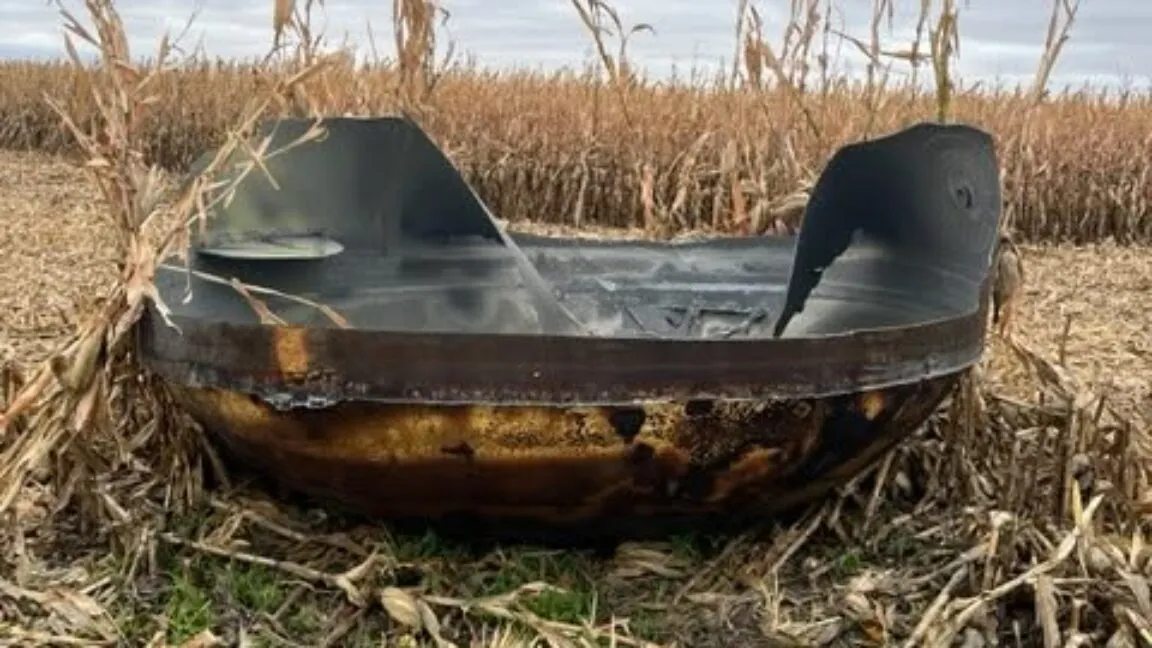
A Chinese rocket deorbited over Minnesota and landed in a farmer's cornfield
Experts tied the fragment to LandSpace's Zhuque-2E, which launched on September 15 and shed debris over the American Midwest after deploying 10 satellites.

JPMorgan Chase deploys first $5B into defense tech and hypersonic missiles
The bank is moving off its balance sheet to back robot factories, hypersonic missiles, and supply chains, signaling a new era of bank-backed military innovation.