
Waymo's 2028 Singapore debut lands in the world's most crowded robotaxi market
The U.S. operator enters a market already packed with Chinese rivals WeRide and Pony AI, while a transport minister predicts AVs everywhere in five years.
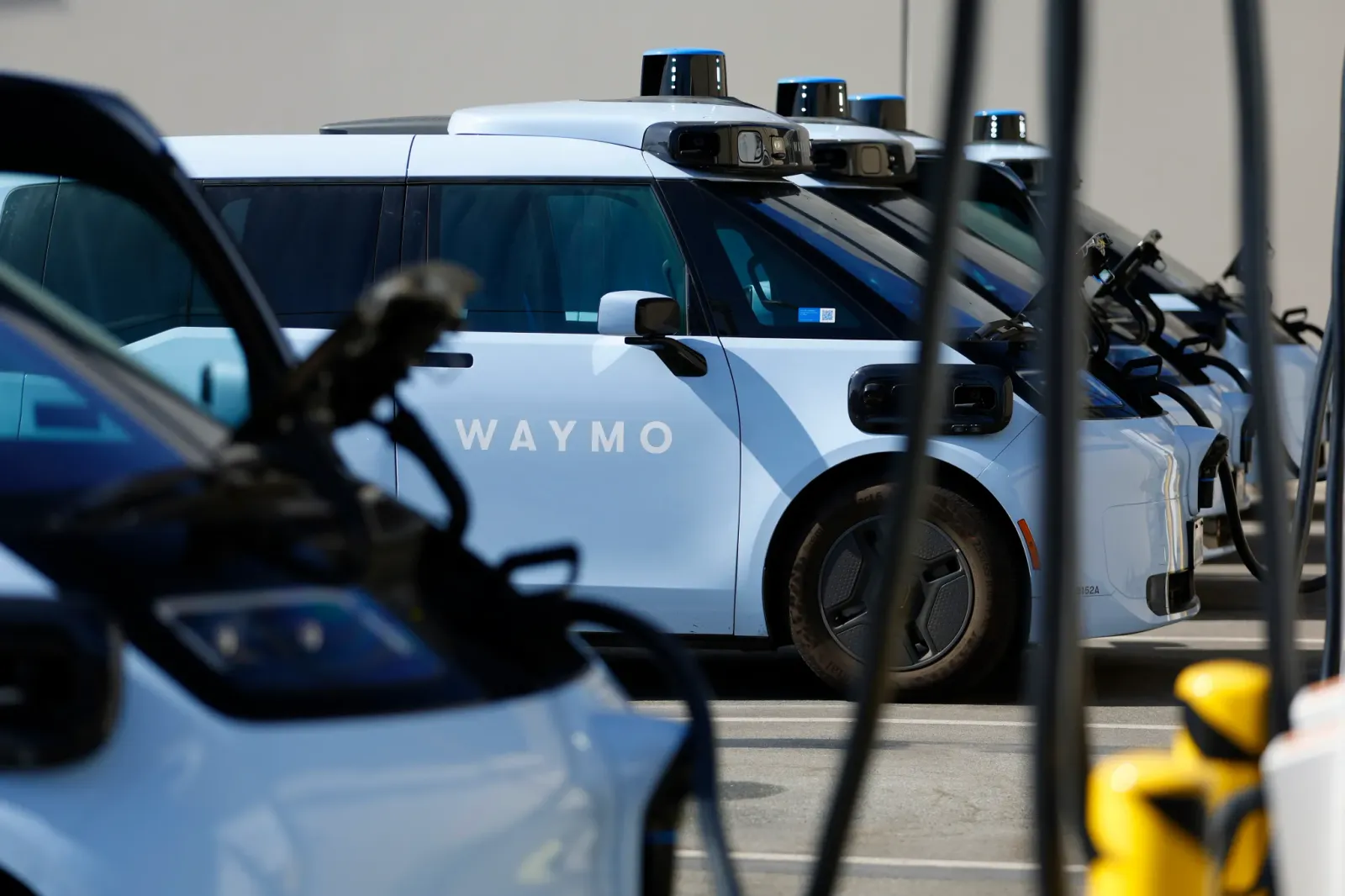
Waymo co-CEO Tekedra Mawakana announced plans to launch robotaxis in Singapore by 2028, the company's first Southeast Asian market. For mobility and ride-hailing leaders, the move intensifies competition in a market already crowded with Chinese players and signals Waymo's aggressive global expansion.
Waymo is heading to the most crowded robotaxi market on the planet. On Sept. 18, the U.S. operator announced plans to launch in Singapore by 2028, its first Southeast Asian market. The move comes days after the company revealed a Tokyo entry for 2027, its first in Asia. Co-CEO Tekedra Mawakana praised Singapore's transportation ecosystem in a press release, calling it one of the safest and most efficient in the world. But Singapore is already home to Chinese rivals WeRide and Pony AI, which have partnered with Grab and ComfortDelGro to run autonomous shuttles in the Punggol district, a government test bed for physical AI technology.
That crowded field is exactly why this entry matters. Singapore's transport minister, Jeffrey Siow, has made AVs a centerpiece of his strategy, calling them a game-changer and predicting that in five years, many autonomous vehicles will be on the roads. For Waymo, Singapore offers a dense, highly regulated urban environment that can stress-test its technology beyond U.S. highways. But it also pits the American firm directly against Chinese competitors with deep pockets and established local partnerships. The winner could export a playbook across Southeast Asia, where urbanization and tech adoption are accelerating.
Waymo's global expansion is accelerating. After years of operating primarily in Phoenix and San Francisco, the company is now eyeing Germany, the UK, Japan, and Singapore. Mawakana said in Tokyo that Waymo will grow its fleet responsibly, working with local partners like taxi app GO and Nihon Kotsu for the Japan launch. Japan's robotaxi landscape is barren, with no fully operational public services yet, though Uber, Nissan, and Wayve plan a pilot in late 2026. Singapore, by contrast, already has operational shuttles, making it a more mature testing ground for Waymo's technology.
The expansion has sparked anxiety among human drivers. In Singapore, Siow sought to reassure drivers in a July parliamentary address, noting that there are over 70,000 taxi and private-hire drivers but only about 20 AVs on the roads. Even if every AV in the world were moved to Singapore, he said, they would number fewer than 10% of the local taxi and private-hire fleet. That math underscores the incremental pace of adoption, but it also hints at the scale of disruption ahead as fleets grow.
For executives in mobility, logistics, and ride-hailing, Waymo's move signals that cross-border AV competition is no longer theoretical. The company is betting that its operational expertise and brand can overcome the local advantages of Chinese rivals. Singapore's government has welcomed Waymo, viewing it as a validation of its AV strategy. But the real test will come when the vehicles hit the road in 2028, navigating a city where public transit is world-class and tolerance for error is low.
The implications stretch beyond ride-hailing. Waymo's presence in Singapore could accelerate regulatory frameworks for AVs across the region, setting standards that other countries may adopt. It also pressures traditional automakers and fleet operators to partner with or build their own autonomous systems. For CFOs and board members, the lesson is clear: the race for autonomous mobility is now global, and companies that move early to secure partnerships in dense, regulation-friendly cities will hold the advantage.
Ultimately, Waymo's Singapore launch is a bet on the future of urban transport. The company is entering a market where the government is actively courting AV players, where Chinese competitors have a head start, and where infrastructure is among the best in the world. Whether Waymo can outmaneuver WeRide and Pony AI remains to be seen, but its willingness to dive into the most crowded AV market in the world says a lot about its ambitions.
This story's Key Insights and Take-aways are locked.
Create a free account to unlock Executive Actions for one credit.
Register to UnlockAlways free for Executives Club members. Join the Club
More in Technology

AI researcher's 26,000-word claim: Neural nets aren't tangled after all
Nick Cammarata's Goodfire post has the AI world split - if he's right, monitoring frontier models just got a lot easier.

A Chinese rocket deorbited over Minnesota and landed in a farmer's cornfield
Experts tied the fragment to LandSpace's Zhuque-2E, which launched on September 15 and shed debris over the American Midwest after deploying 10 satellites.

JPMorgan Chase deploys first $5B into defense tech and hypersonic missiles
The bank is moving off its balance sheet to back robot factories, hypersonic missiles, and supply chains, signaling a new era of bank-backed military innovation.