

Waymo’s import of Chinese EVs bypasses dealer bans meant for consumers
Alphabet’s robotaxi unit appears to be buying Chinese electric vehicles at scale, raising questions about U.S. security and tariff enforcement.
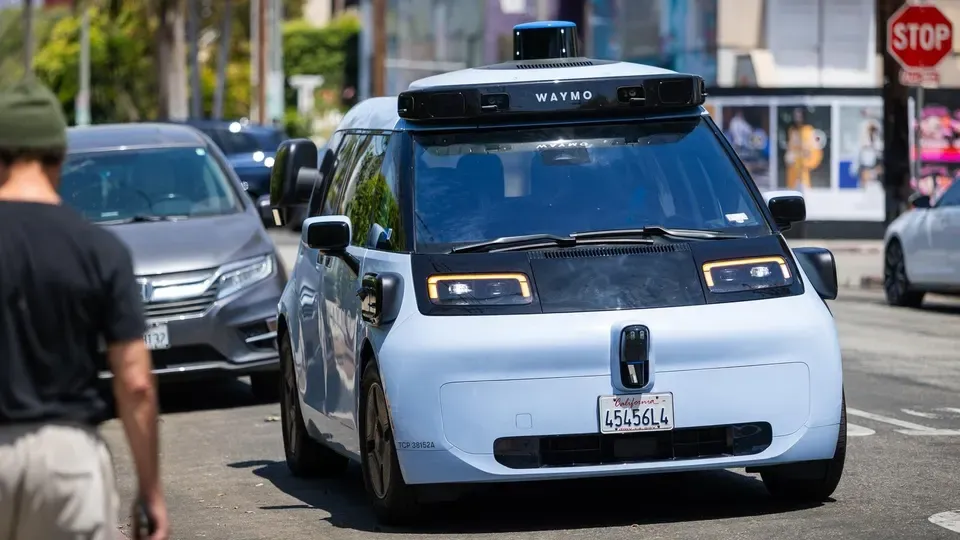
Waymo, Alphabet’s robotaxi company, appears to be importing thousands of Chinese EVs, even though U.S. rules have been used to keep Chinese cars off dealer lots. For executives, the key consequence is a potential enforcement gap between consumer car markets and fleets used for transportation services.
The U.S. has been trying to keep Chinese cars off dealer lots using tariffs and security rules. Yet Waymo, Alphabet’s robotaxi business, appears to be importing thousands of Chinese EVs anyway. That tension matters because it exposes how “keep Chinese products out” policy can look very different depending on how a vehicle is used and who is allowed to operate it.
Here is the simple reality: the same policy environment that has restricted Chinese EVs from mainstream retail channels is colliding with a new buyer. Waymo is not buying through the usual dealer pipeline; it is acquiring vehicles for a robotaxi operation. The headline fact that “Waymo is importing thousands” is the tell. It signals that Chinese EVs can still find a path into the U.S., just not necessarily the path that regulators and tariff structures were designed to choke off.
To understand why this is more than a weird loophole story, you have to look at how these rules typically function in practice. Tariffs are designed to raise the cost of importing certain goods, making them less competitive versus domestic or otherwise favored alternatives. Security rules are meant to reduce perceived risk, often by targeting specific categories of technology or supply chain exposure, or by tightening requirements that can make approvals harder for certain imports.
When these tools are applied to the consumer auto market, the immediate effect is visible: Chinese cars show up less often on dealer lots. But a fleet buyer is not a consumer. A robotaxi company is building an operational stack that includes vehicles, software, and logistics. Even if the policy goal is “reduce Chinese EV penetration,” the route into the U.S. can still exist for entities that can structure the procurement process differently, rely on different documentation, or categorize their usage in a way that triggers different compliance pathways. In other words, the system can discourage retail presence while still allowing bulk acquisition through another channel.
This matters for decision-makers because it changes how you should think about competitive risk and compliance risk. Boardrooms often treat trade restrictions as a stable moat: if tariffs raise the price, imports slow, and local players gain breathing room. But Waymo’s apparent thousands of imports suggest those moats can shift shape. When a large, sophisticated buyer identifies a viable method to source restricted goods, the policy impact may be redistributed rather than eliminated. The volume might move from the dealer lot to the fleet.
There is also a procurement signal hiding inside the headline. Robotaxi operators are essentially running transportation businesses at industrial scale. Vehicles are not a one-off purchase; they are a component of uptime, maintenance planning, replacement cycles, and deployment speed. If Chinese EVs are accessible to Waymo despite the broader U.S. posture, it implies the company sees enough operational value in that supply to justify the complexity. That is a commercial choice as much as it is a regulatory navigation story.
Now widen the lens. The U.S. auto market is already a battlefield of industrial policy, national security framing, and shifting manufacturing footprints. A move like this can pressure other fleet operators to re-check their own procurement assumptions. If robotaxis or ride-hailing services can source Chinese EVs via a different channel, competitors will want to know whether they face the same constraints or whether those constraints were never uniform. Regulators, in turn, may look at the gap and decide whether enforcement needs to tighten around the underlying risk, not just the visible retail endpoints.
For peers in similar roles, the stakes are not just about one company buying cars. It is about how regulatory intent translates into real-world outcomes, and whether “restricted” actually means “limited everywhere” or “limited in the places we looked.” If the latter, compliance planning becomes a moving target, and strategy around supply chain, fleet economics, and market positioning has to account for channel-specific rules. Waymo’s apparent import of thousands of Chinese EVs is a live example of how quickly the business world can find the edges of policy, and how those edges can reshape competition without changing the words on paper.
This story's Key Insights and Take-aways are locked.
Create a free account to unlock Executive Actions for one credit.
Register to UnlockAlways free for Executives Club members. Join the Club
More in Business

Anthropic’s Levant Alpöge cracks the Jacobian conjecture after 87 years
A Harvard valedictorian used Claude to hit a 1939 breakthrough, but the missing “why” is the real problem.

Uber buys Delivery Hero for nearly $15B, vaulting to top food delivery outside China
The deal doubles Uber's dual-services footprint and pushes a ride-and-eats bundling play into 50 more markets.

Epic and Google drop settlement bid, forcing rival Android app stores by July 22
Google told the court it is ready to carry third-party app stores starting Wednesday, July 22.