

Waymo’s Nature Communications model decodes human split-second crash avoidance with a virtual driver
Waymo built a computer cognitive model that explains how people react to surprises, then tested it against its autonomous cars.
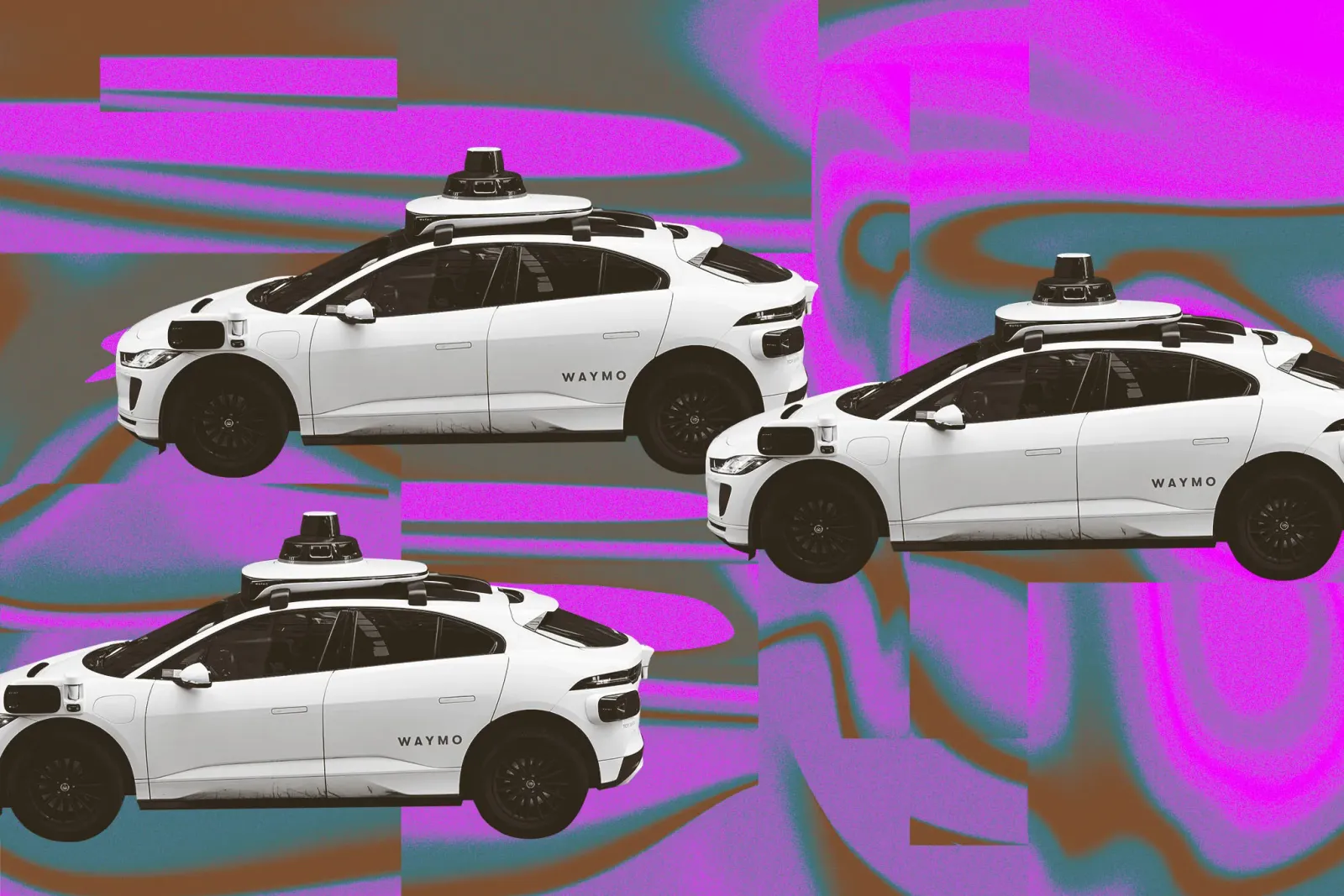
Waymo used years of simulation work to publish a Nature Communications research paper describing a new computer-based cognitive model of human driving decisions. For decision-makers, it raises the bar for how autonomy teams validate safety against the messy, human parts of the road.
Waymo has taken one of the hardest problems in autonomous driving and translated it into something it can measure. In a research paper published in Nature Communications, the company describes a new computer-based cognitive model that explains how human drivers make split-second decisions to avoid crashes. The point is not just academic curiosity. It is a way to make simulations reflect what drivers actually do when the world gets weird, fast.
What makes this move feel consequential is the groundwork Waymo already built to study those “weird, fast” moments. The company has experience creating virtual systems for autonomy research, including realistic 3D worlds meant to anticipate natural disasters and unpredictable edge cases. It also created a virtual representation of a hyperattentive driver and tested that model against Waymo’s autonomous vehicles across simulated scenarios, with the goal of seeing which system is better at crash avoidance. The Nature Communications paper builds on that approach by adding a cognitive layer that aims to explain the decision-making mechanics, not only the outcomes.
To understand why this matters, you have to zoom out to how autonomy validation typically works. Real-world driving data is messy, expensive, and slow to accumulate for rare events. Regulators and internal safety teams still want evidence, but evidence for edge cases often comes from simulation. That means the simulation has to be credible, especially when the road throws surprises: cut-ins, abrupt braking, pedestrians behaving unpredictably, or any situation where human reaction time and attention shape what happens next. Waymo’s focus on split-second decisions is essentially an attempt to model the “reasoning in the loop” that human drivers apply when they are forced to choose between multiple possible futures in fractions of a second.
This is also a story about incentives. Autonomy teams are under pressure to prove that safety is not an accident of good weather and clean roads. A model that explains how humans respond to surprises can serve as a sanity check, a benchmark, and, potentially, a training or scenario-generation tool. Even if an autonomous system does not explicitly copy human behavior, it still has to handle the kinds of reactions humans produce, because that is where interaction risk lives. Vehicles on the same roads are not just following rules. They are making decisions in real time under uncertainty.
Waymo’s simulation stack, as described, is built for exactly that uncertainty. Realistic 3D worlds are one piece. The company also designed scenarios to test against its own autonomous vehicles, using a virtual hyperattentive driver as a stand-in for an especially alert human. This matters because “surprise” is not only about what appears on the road, but also about whether an attention model detects it early enough to influence outcomes. By publishing a cognitive model that explains how drivers make split-second crash-avoidance decisions, Waymo is signaling that it wants to move beyond “did we avoid a crash?” toward “how do we arrive at safe actions quickly?”
There is another second-order implication for executives and boards: governance and documentation. Safety claims in autonomy increasingly require traceable rationale, not only performance metrics. A research paper in Nature Communications is a formalized artifact, something that can be scrutinized by external experts and referenced in internal safety cases. That can help when teams face questions from regulators or the public about why a particular failure mode is unlikely. The cognitive model framing gives Waymo a more structured explanation for the decision process it believes humans use, which can strengthen how leadership communicates safety strategy.
Regulatory context matters here because regulators do not evaluate autonomy like a game of “score the correct lane.” They evaluate risk, uncertainty, and the ability to handle edge cases. A computer-based cognitive model focused on crash avoidance decisions can be a powerful input into how safety teams design testing coverage and scenario realism. If your validation is built around simulations, your model assumptions become part of your safety story. Waymo is effectively saying: we can model human surprise response in a way that is testable, and we can use that to compare against autonomous behavior in simulated environments.
For peers, the strategic stake is simple. Autonomy is not only competing on raw perception accuracy or on path planning. It is competing on how well systems behave when humans act unpredictably and quickly. Waymo’s work suggests a direction that more teams will feel pressure to follow: incorporate human decision-making, especially under surprise, into the way you test and explain safety. The closer autonomy gets to understanding the “why” behind human split-second choices, the more credible safety validation becomes, and the faster companies can iterate without waiting for rare events to happen on cue.
This story's Key Insights and Take-aways are locked.
Create a free account to unlock Executive Actions for one credit.
Register to UnlockAlways free for Executives Club members. Join the Club
More in Technology

OpenAI says 10,000 agents cracked a 90-year math problem in 88 hours
The company's claim is audacious, but one mathematician is pushing back. Here's what it means for AI-driven discovery.

Meta still serves child sexual abuse ads on Instagram in India - BBC report
A new report following the BBC Eye investigation says the ads are still there - what it signals for every platform with a self-serve ad engine.

White House yanks 'Build the Wall' game after Tetris Company copyright warning
The administration's arcade game vanished in hours - and the takedown playbook every brand can learn from.