
Widow’s Bay flips “final girl” to “final woman” and challenges the ethics of killing one
Season one’s curse plot forces Tom Loftis and Ruth Livingston into a moral standoff where experience becomes power.
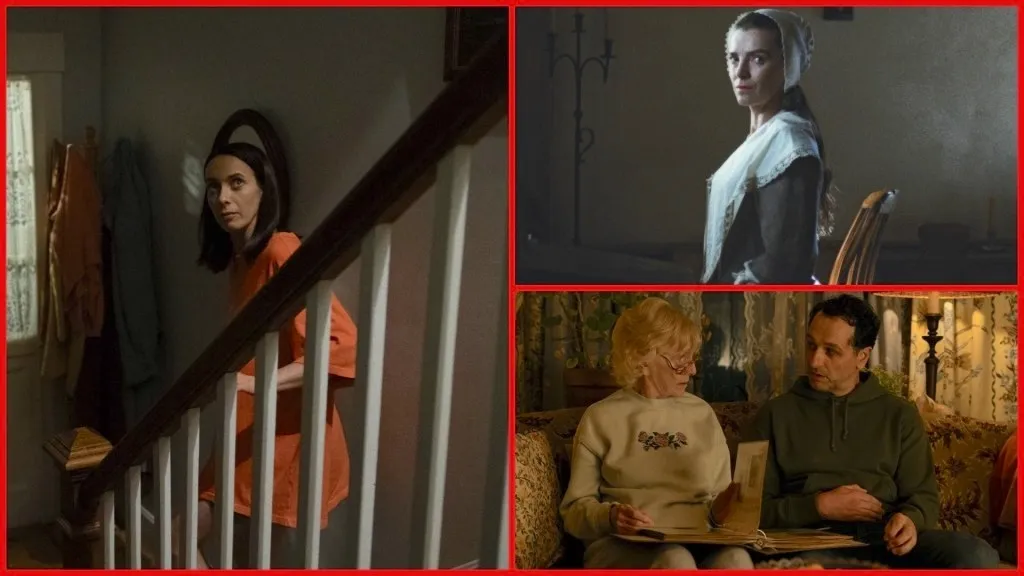
Apple TV’s horror-comedy series Widow’s Bay uses Patricia Moyer, Sarah Westcott, and Ruth Livingston to reframe who survives horror and why. For decision-makers, it’s a masterclass in incentives, narrative leverage, and ethical tradeoffs under pressure.
Widow’s Bay takes the classic horror question, “Who gets to live?” and changes the answer to something messier, more adult, and more ethical. In the finale, Tom Loftis and the town discover there is just one living descendant left to end a hereditary curse. The dilemma is blunt: is it okay to kill that one person to save an island full of people, and is it more okay if the target is 84, never married, and never had children? Patricia is the first to call out the unfairness of the implication, worrying about how she would feel if she were the descendant. Then Tom needs a one-on-one encounter with his secretary Ruth Livingston (K Callan) to make up his mind.
That’s the real punchline Widow’s Bay earns in season one. The show doesn’t treat “spinsterhood” as a joke costume. It uses three very specific women, played by Kate O’Flynn, Betty Gilpin, and K Callan, to prove that lived experience can outmatch both monsters and men who think they’re running the boardroom. Patricia is introduced as the high-strung assistant of Mayor Tom Loftis (Matthew Rhys) in the series premiere, mentally stuck in high school and still haunted by being stalked by a serial killer known as the Boogeyman. Tom’s line, “He murdered teenage girls. You’re in your 40s, you’d be fine,” lands like an insult and like a misread of incentives. Patricia storms out, and the episode structure immediately tells you this show is interested in how dismissals backfire.
From there, Widow’s Bay builds toward a clear thesis, episode by episode. It starts with comedy texture, like Patricia calling out local kook Wyck (Stephen Root) when he romanticizes historical love stories between 16-year-old girls and 53-year-old men, asking, “Are the older women dead in this scenario?” But then “Beach Reads” (episode four) puts her perspective front and center and reveals that her life is not just one-note banter. It’s the result of complicated small-town social dynamics that “just won’t shift no matter how desperately she tries to fit in.” The haunted self-help book is played for laughs, but it also becomes a mechanism for highlighting a serious mismatch: pop culture tends to render 40-something single women’s interior lives invisible. Widow’s Bay turns that invisibility into plot propulsion.
The show cashes in on that setup in episode eight, “Your Baggage,” where Patricia gets to relive her teenage slasher trauma. The episode makes an obvious but insightful point: slashers like Michael Myers, Jason Voorhees, and Freddy Krueger keep succeeding by targeting high schoolers. With two more decades under her belt, Patricia isn’t as easy to foil. The satisfaction is tactical, not sentimental. Like most women who live alone, she’s learned to be hypervigilant and hypercompetent. The show essentially gives viewers the survival checklist horror has always demanded, but it grants it to someone older, someone underestimated: pay attention to warning signs, get out of the house ASAP, outrun the slow-moving killer, improvise a creative weapon, and refuse to let her guard down until she’s sure (really sure) the guy is dead. The narrative implication is sharp: maybe the ultimate “final girl” isn’t a girl at all. It’s a final woman.
And it’s not only Patricia. Sarah Westcott (Betty Gilpin) arrives in a flashback episode, “Our History,” in 1702, described as a self-identified spinster suddenly tasked with marrying the island’s lord protector, Richard Warren (Hamish Linklater), and raising his five children. Widow’s Bay plays satirical fun with the idea that spinsterhood might not have been the worst indignity a woman could suffer in the 18th century. Gilpin makes Sarah’s panic and problem-solving feel like real work, not caricature, including stammered explanations to the local pastor such as “Perhaps the life of a childless woman without a husband, it is one I could come to bear. Enjoy! Enjoy thoroughly.” Even when the episode’s joke leans on her age being unclear, the competence is consistent: she observes, asks questions, knows when to speak up, and when to keep the peace. When she stumbles on a secret council meeting deciding what to do about her husband, she starts ordering people about, complete with “make haste” claps. When she chooses to try to save her stepkids, it’s not maternal feeling so much as adult judgment, “they’re kids, and it’s the right thing to do.”
Here’s where executives, boards, and anyone who makes consequential decisions should feel seen. Widow’s Bay treats ethics like a systems problem, not a morality play. The series explains the curse in the finale: Sarah’s husband imbued his bloodline with a hereditary curse that won’t end until his last descendant is killed. So when Tom and his crew discover there is just one living relative left, they face the hard tradeoff, “Is it okay to kill one person to save an island full of people?” And the show adds a second-order bias check: is it more okay if the victim is 84, never married, and never had children? The answer is complicated on purpose. Patricia scoffs at the fairness of the setup, saying, “Thank god I’m not a descendant or I guess my throat would already be slit,” and it’s not only a punchline. It’s a reminder that incentives can make cruelty feel like efficiency.
Ruth Livingston becomes the finale’s ethics engine. The path to season two requires revealing Ruth secretly gave birth to a child at 40 and gave her up for adoption. But the episode does not build its case for keeping her alive by leaning on that secret alone. Instead, it celebrates her as a vibrant, caring member of her community with an active social life and a fascinating inner world. She grows her own tea in her herb garden. She cross-stitches hilariously long Tennessee Williams quotes. She shares her writing in a story club. She is a caretaker, yes, but also a woman with a sexy, exciting, difficult, full life. Most importantly for the finale’s decision, she has opinions, not just utility. When Tom tries to ease his guilt by likening his choice to the trolley problem, Ruth doesn’t see it the same way. The script frames her as bringing decades of philosophical wisdom that can reframe his limited conception of her as a selfless little old lady. In other words, she challenges the core assumption behind his plan: that control equals responsibility.
Giving much of the finale’s screentime to a 90-year-old character actress, while larger series-altering events unfold miles away in the town’s storm shelter, is a bold swing. It also mirrors how real organizations fail: they either over-prioritize the loudest crisis or they default to the “available” decision-maker, the one everyone already thinks they understand. Widow’s Bay argues for a different model. Patricia, Sarah, and Ruth are each “past their prime” in somebody else’s framing, and each becomes the person who sees the warning signs, asks the real questions, and refuses to let the group’s story turn into self-fulfilling prophecy. If you’re a founder or investor watching strategy under stress, the season’s broader takeaway is brutally relevant: when incentives are mis-set, experience is not just character development, it’s governance.
This story's Key Insights and Take-aways are locked.
Create a free account to unlock Executive Actions for one credit.
Register to UnlockAlways free for Executives Club members. Join the Club
More in Entertainment

Russell Brand's accuser 'bewildered and confused' as he denies 7 sex charges
The criminal case against the comedian is a live test of how media companies manage talent risk when serious allegations go public.

'It's a Magic Trick': Ballet Experts Say Rosalía's SNL Pose Is Impossible
Three ballet experts tell Rolling Stone Rosalía's gravity-defying SNL stillness shouldn't be possible - and why the debate is now part of the show.

Activision CMO: GTA 6 Will Boost Call of Duty, Not Bury It
Activision's top marketer says Rockstar's blockbuster will drive players back to consoles and into Modern Warfare 4, even as the company admits its recent strategy failed.