

World Cup forces stadium “dark dates” from 20 days out through July 19
North American touring routes get rewritten in real time, and agents say it largely becomes a scheduling puzzle, not a slowdown.
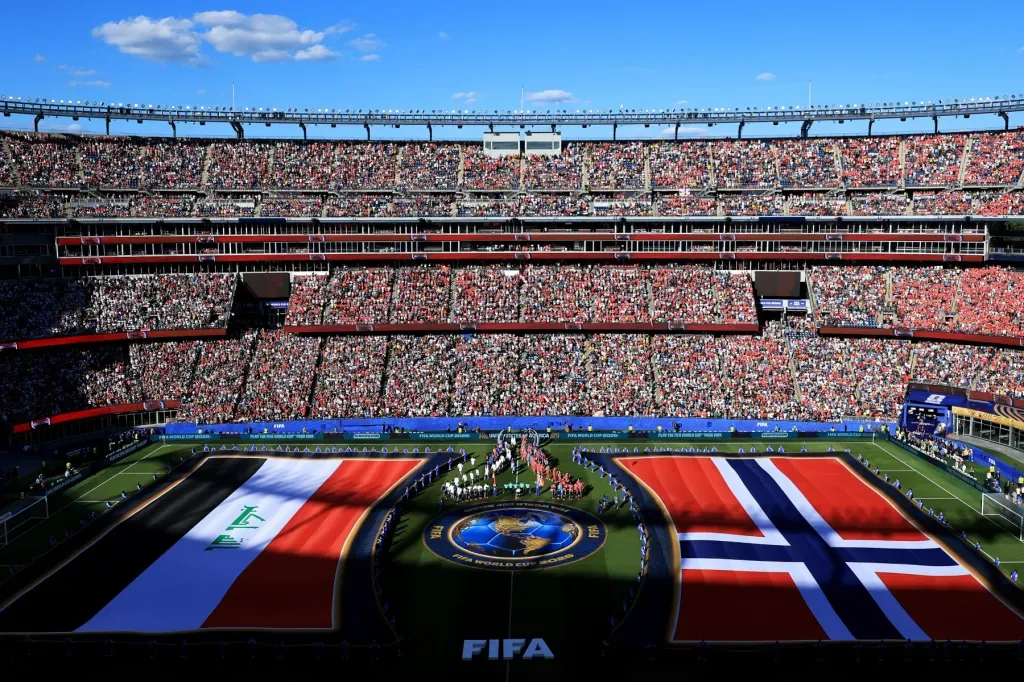
Billboard reports that from 20 days before the first FIFA World Cup games through July 19, North American stadiums hosting matches must go dark, reshaping summer touring. The consequence for decision-makers: bookings and routing windows matter as much as the artist lineup.
The FIFA World Cup is doing something most tour managers would never ask for: it is turning major stadium markets off, and it starts early. According to Billboard, stadiums across North America are forced to go dark from 20 days before the first World Cup games through to the end of the tournament on July 19. That timing matters because those same cities usually sit inside prime summer concert territory. The practical result is that venues in major markets including Toronto, Mexico City, Atlanta, Boston, Los Angeles, New York City and San Francisco cannot host concerts for about two months in the summer.
If you are a promoter, label operator, venue executive, or anyone building a year-of-shows spreadsheet, the headline is simple: summer touring routing becomes a constraint problem. But Billboard also notes the industry has been planning for it for long enough that the “constraint” does not necessarily translate into chaos. UTA’s Jbeau Lewis, who books Bad Bunny and Karol G, tells Billboard that early in the process there was “trepidation,” but “the reality is that it’s become one of the biggest - if not the biggest - stadium tour summers ever.” The World Cup is not only competing for calendar space, it is forcing the touring ecosystem to shift work into non-host cities and secondary venues.
This is happening in the context of a World Cup schedule that is unusually sticky for the U.S. and North America overall. In 1994, the U.S. hosted the men’s FIFA World Cup, and 3.5 million fans gathered to watch the tournament, which the article calls the most-attended FIFA World Cup ever. The U.S. is also set to become one of five nations to host a World Cup for a second time, with 2026 co-host Mexico holding its third. For this tournament, 16 stadiums are currently hosting games, and the key detail for tour planning is that artist teams have known since 2022 which specific venues would go dark.
Why that matters is how tours are built. Billboard frames it like this: “These days tours are plotted out years in advance,” so advance notice gives booking agents and promoters a real chance to prevent routing problems rather than scrambling midstream. Live Nation touring president Omar Al-joulani says Live Nation “worked closely with our partners to map out venue availability and routing well in advance,” and that approach is what allows the World Cup to avoid becoming a drag on the business. In his words to Billboard, “As a result, the World Cup hasn’t slowed the business down at all - in fact, we’re on pace for a record stadium year in spite of it.”
So what does “routing around the cities where the games are being held” look like when you are moving millions of dollars of talent and production? Billboard offers a few patterns. Some artists start their runs in Europe and avoid North America until the latter half of the summer. Others kick off in North American cities that are not hosting games. Sheeran’s upcoming tour takes the latter approach. The first half of his North American run lands in cities that are not hosting World Cup games: Nashville on June 20, Chicago on June 27, Denver on July 4, and Las Vegas on July 18. He then goes to Levi’s Stadium near San Francisco on July 25, which is just six days after the World Cup ends. Notably, the article says Levi’s Stadium’s final World Cup game takes place on July 1.
Other tours use the same logic but with different venue types. Noah Kahan’s tour uses baseball stadiums, including dates at Fenway Park, Wrigley Field, and Citi Field. Morgan Wallen’s stadium tour hits college football stadiums, with two dates at Michigan Stadium, a venue the article says had been used for a concert only once before, when Zach Bryan performed there with special guest John Mayer last September, plus two dates at Clemson Memorial Stadium. Meanwhile, Bruno Mars, Karol G, and Ed Sheeran are among artists performing in stadiums across North America this year. For Bruno Mars, Billboard notes his Live Nation-promoted The Romantic Tour began in Las Vegas on April 10 and rolled through markets including Atlanta, Nashville, Detroit, Chicago, and Toronto before May 28, described as the cutoff date for World Cup venues. His schedule then runs through Europe from June 18 through July 28, with a North American return from Aug. 21 through Oct. 17.
The second-order effect, and where venue executives get opportunistic, is that World Cup-blocked calendar windows can open space elsewhere nearby. Prudential Center in Newark, New Jersey is hosting Shakira on July 14. Billboard points out this lines up with Shakira performing during the World Cup Final halftime show at MetLife Stadium in East Rutherford, New Jersey on July 19. Sean Saadeh, Prudential Center’s chief programming officer, tells Billboard that it makes strategic sense for Shakira to route around the time frame when she is in the area and also do the halftime show, and he calls it “tremendous” that the routing brings her in front of an international audience that will already be in town.
This routing knock-on effect extends beyond big downtown arenas. Sports Illustrated Stadium in Harrison, New Jersey had not hosted a concert in 12 years until last summer, when Rüfüs du Sol performed two nights in July. Billboard says it hosted a bill with DJ Snake and Justice on June 16. That kind of “spillover” is basically what the industry does when one set of buildings goes dark. Billboard also provides a broader comparison: arena tours often compete with NBA and NHL schedules, and artists aiming to perform at Madison Square Garden have to balance bookings with the Knicks and Rangers. In other words, the World Cup is just the newest, highest-profile version of the same operational reality: calendars collide, and the best-run teams plan the collisions into the routing instead of reacting to them afterward.
For executives, the stake is not whether the World Cup creates friction. It does. The stake is whether that friction becomes financial opportunity or operational risk. Billboard’s core throughline is that since the specific stadiums were identified back in 2022, routing has been managed early enough that it can absorb the “dark dates” without massively changing tours. Lewis says he does not recall a situation where the World Cup forced a massive change, adding that for Karol G it “worked out nicely” that the start date happened to be right after the World Cup ended. Translating that into a decision framework for your own bookings: when a major external event carves out a predictable block, the winners are the teams that front-load routing work, place early legs in non-host cities, and treat the post-event window as a landing zone rather than a hope.
This story's Key Insights and Take-aways are locked.
Create a free account to unlock Executive Actions for one credit.
Register to UnlockAlways free for Executives Club members. Join the Club
More in Entertainment

Russell Brand's accuser 'bewildered and confused' as he denies 7 sex charges
The criminal case against the comedian is a live test of how media companies manage talent risk when serious allegations go public.

'It's a Magic Trick': Ballet Experts Say Rosalía's SNL Pose Is Impossible
Three ballet experts tell Rolling Stone Rosalía's gravity-defying SNL stillness shouldn't be possible - and why the debate is now part of the show.

Activision CMO: GTA 6 Will Boost Call of Duty, Not Bury It
Activision's top marketer says Rockstar's blockbuster will drive players back to consoles and into Modern Warfare 4, even as the company admits its recent strategy failed.