
World Cup VAR has more reviews than the Premier League. Why it feels reversed
BBC Sport data suggests one thing, fans feel another. Here is what drives the perception gap, and what it means.
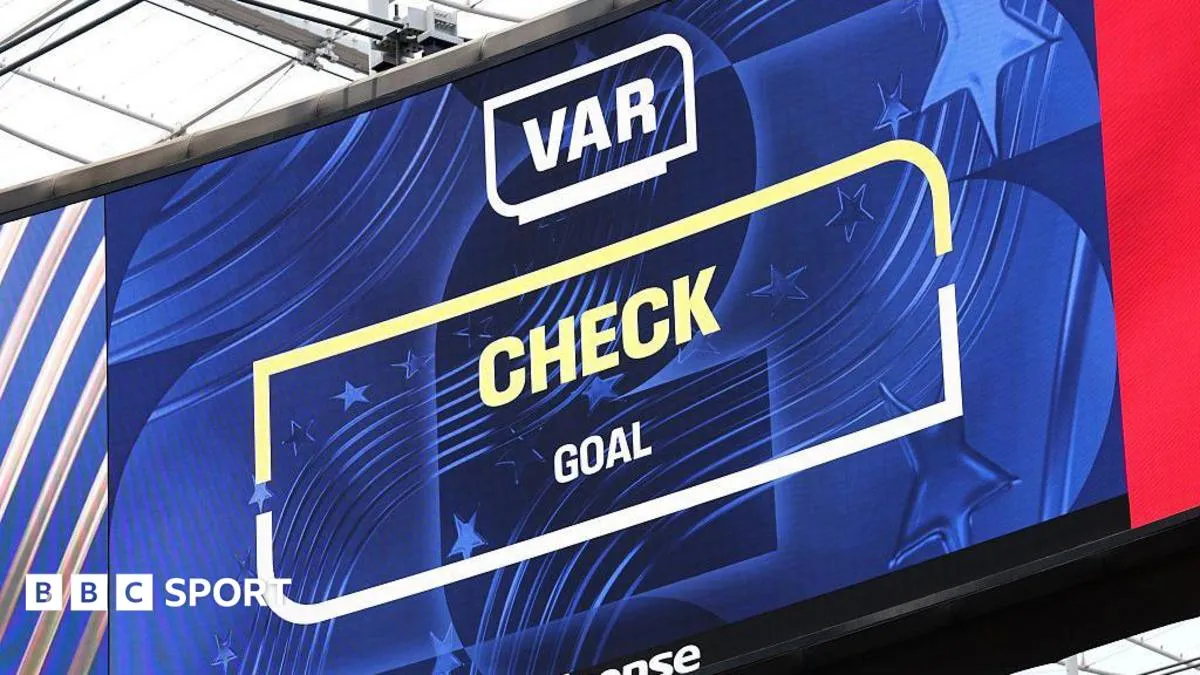
BBC Sport highlights that there have been more VAR reviews at the World Cup than in the Premier League. The mismatch between the numbers and public perception has consequences for broadcasters, clubs, and regulators trying to manage confidence in officiating.
BBC Sport points to a counterintuitive pattern: there have been more VAR reviews at the World Cup than in the Premier League. Yet perception often suggests the opposite, with many people feeling that VAR is used more aggressively in domestic league football than on the World Cup stage.
The key is that “more reviews” does not automatically translate to “more moments that feel like VAR is taking over.” A review is not the same thing as a visible decision swing. If your mental model is built from the loudest, most memorable calls, you may conclude that VAR is more frequent where the biggest controversies happen, even if the underlying review count is lower.
To understand why the stats and the vibe diverge, you have to separate two different signals. One signal is administrative: how many times officials check footage. The other is experiential: how often the match flow gets visibly interrupted and how dramatic the resulting change feels to viewers. At the World Cup, where the stakes are immediately legible to everyone watching, each VAR intervention tends to carry higher emotional weight. That can inflate the salience of a given call even if the total number of reviews is still higher than the Premier League.
Broadcasting also plays a huge role in shaping what “feels true.” League football is long season, with many games that look similar on paper. That familiarity can blunt the impact of repeated VAR checks. In contrast, World Cup matches are fewer, higher contrast, and more tightly watched by global audiences who may not have the same baseline expectations about how officiating is evolving. Even when the review process is technically consistent, the viewer’s context changes what stands out.
There is also an incentives angle. Clubs and leagues are under constant pressure to minimize uncertainty, because uncertainty is expensive. It affects player behavior, fan engagement, sponsorship value, and brand trust. Regulators and tournament organizers, meanwhile, are under pressure to demonstrate fairness and consistency. Those goals can pull the system in different directions. If you emphasize “getting it right,” you may accept more reviews. But if you emphasize “keeping the game moving” to satisfy audiences and commercial partners, you may calibrate how reviews are handled in practice.
VAR, by design, creates a new kind of accountability. Decisions that once rested on the referee’s immediate view can be revisited. That can lead to a period of adjustment where audiences struggle to adapt. Perception lags behind process. For example, if the Premier League has built a broader public narrative over time about VAR controversies, that narrative becomes sticky. The World Cup might show a different statistical picture, but the public’s story about domestic football can be harder to unlearn.
Then there is the matter of what people count as “VAR being used.” Some viewers interpret VAR usage as any form of review. Others interpret it as the final outcome, the goal that stands or the one that is overturned, the penalty that is awarded or rescinded. If the World Cup generates more reviews but the Premier League generates a higher share of emotionally charged outcome changes, you can get exactly the pattern BBC Sport describes: more reviews in one competition, but a stronger sense that VAR is being used more in the other.
Second-order implications for decision-makers flow from this perception gap. Broadcasters and content teams want viewers to feel that decisions are being handled fairly and predictably, not arbitrarily. Clubs want to protect competitive integrity and avoid players being put in a constant state of doubt. Regulators want legitimacy, not just accuracy, because legitimacy determines whether the system is sustainable under scrutiny. If fans believe VAR is overused in the Premier League, even when the data suggests otherwise, you can end up with mounting political pressure, rule tweaks, or calls for reforms that chase public confidence rather than operational reality.
In short, BBC Sport’s signal is simple but uncomfortable: World Cup VAR has more reviews than the Premier League, yet the public often experiences it as the reverse. For executives and board members overseeing sports operations, the lesson is not just to look at the review count. You also have to manage the “experience layer,” the broadcast story, and the outcome salience that ultimately drives trust. When those layers get out of sync with the numbers, perception becomes its own market force.
This story's Key Insights and Take-aways are locked.
Create a free account to unlock Executive Actions for one credit.
Register to UnlockAlways free for Executives Club members. Join the Club
More in Entertainment

Russell Brand's accuser 'bewildered and confused' as he denies 7 sex charges
The criminal case against the comedian is a live test of how media companies manage talent risk when serious allegations go public.

'It's a Magic Trick': Ballet Experts Say Rosalía's SNL Pose Is Impossible
Three ballet experts tell Rolling Stone Rosalía's gravity-defying SNL stillness shouldn't be possible - and why the debate is now part of the show.

Activision CMO: GTA 6 Will Boost Call of Duty, Not Bury It
Activision's top marketer says Rockstar's blockbuster will drive players back to consoles and into Modern Warfare 4, even as the company admits its recent strategy failed.