
Wyndham Clark silences New York jeers to win a second US Open title
Clark calls out the crowd dynamic, then proves he can win anyway in a high-pressure major environment.
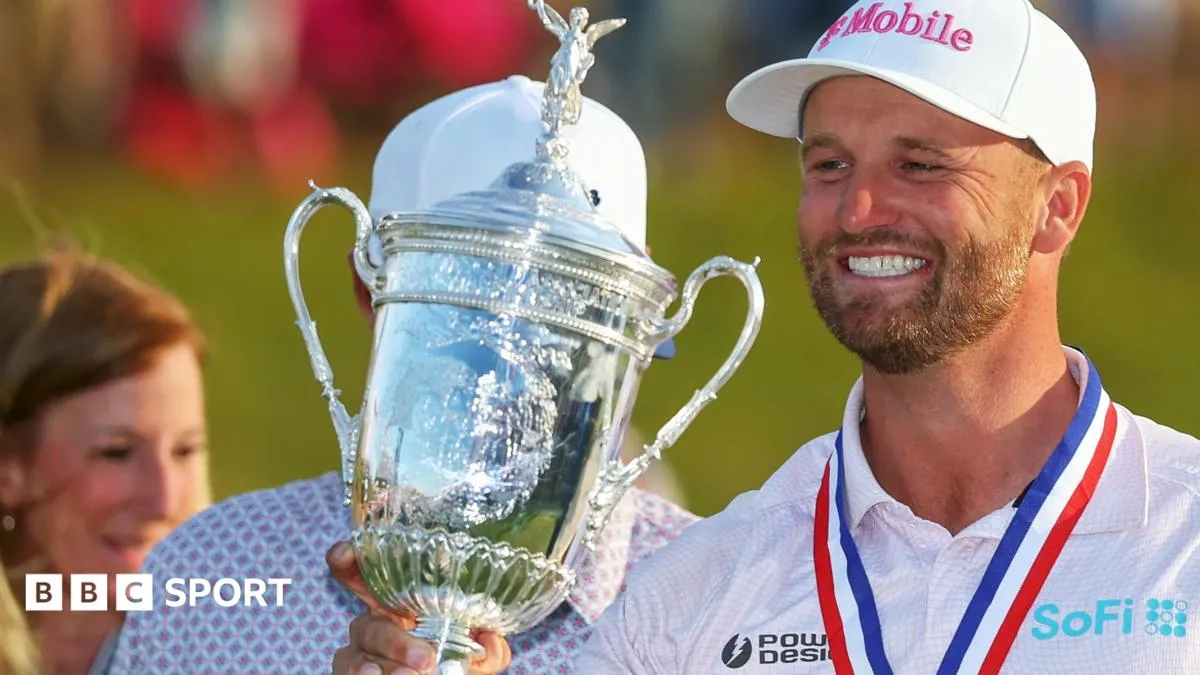
Wyndham Clark said New York did not “really like me” after he faced jeers from fans while winning his second US Open title. For decision-makers, it is a reminder that competitive performance under public scrutiny can matter as much as talent.
Wyndham Clark dealt with jeers from fans in New York, and afterward he put it plainly: “New York didn’t really like me.” Then he still won the US Open title, earning a second win in one of golf’s biggest tests of nerves, accuracy, and staying power.
That detail matters because it frames the entire moment as more than just a scorecard story. Clark did not treat the crowd as background noise. He treated it like an obstacle, a pressure system that could have thrown his focus off. The headline you clicked on is basically the thesis: a major championship is not only about what you do on the course. It is also about how you perform when an environment tries to get inside your head.
For executives and operators, this is the same psychological problem that shows up in workplaces, boardrooms, and markets. Public scrutiny can flip from motivation to friction fast. One person gets roasted online, a team gets dragged in the press, a new product launch becomes a referendum, and suddenly your “usual” operating rhythm stops working. Clark’s post-win framing suggests he noticed the jeering as a real factor, not a harmless soundtrack.
Now zoom out: golf majors are structured to amplify stress. They are not simply long tournaments, they are long attention spans. The public follows the leaders, the crowd noise rises and falls, and the spotlight can feel like it has mass. When fans boo or heckle, they are not changing the ball physics, but they can change the human behavior that decides how often someone plays safe versus aggressive, how often they recover after a mistake, and how quickly they reset their mental stack.
Clark’s “second US Open title” also carries an incentive story. A first major is an arrival. A second is a declaration. In performance sports, repeat success tends to shift how opponents prepare and how fans calibrate expectations. It also changes internal dynamics for the player, their coach, and their team, because the question becomes less “Can you do it?” and more “Can you do it again, under the same spotlight, with higher expectations?”
If you are thinking like a board or an investor, there is a parallel to how organizations behave after early wins. Early success often creates slack and optimism, but it can also harden narratives. After the first breakthrough, people expect the next one. The risk is that the team gets trapped trying to satisfy the storyline instead of managing the process. Clark’s comment about New York not really liking him points to the other risk: pressure does not always come with applause. Sometimes the crowd is actively pulling the pressure higher.
Regulatory context in golf is not the focus here, and the source does not add any new rules or penalties. But the broader point for decision-makers is that scrutiny is unavoidable in regulated settings too, even if the regulations are different. Compliance, risk, and governance frameworks are designed to keep outcomes fair. Yet the human experience of judgment is still real. Whether the arena is a championship course or a high-stakes corporate review, the test is how leaders maintain execution quality when the environment turns hostile.
Second-order implications for teams are also obvious. In sports, the player is the one being judged, but the whole support network is judged indirectly. If a golfer shows up focused despite jeers, it reflects on preparation and mental training. In businesses, resilient performance under hostile feedback reflects on operating discipline. It is not only about the final outcome, it is about how the system held up while the noise peaked.
Clark’s win and his explicit acknowledgment of the crowd dynamic closes the loop. He made it clear the jeers were part of the story, but he did not let them become the ending. For executives, founders, and investors who live in rooms where reputations can be questioned in real time, that is the transferable lesson: the environment can try to rewrite your priorities. The best performers manage their attention like it is a controllable resource, and then they produce the result anyway.
This story's Key Insights and Take-aways are locked.
Create a free account to unlock Executive Actions for one credit.
Register to UnlockAlways free for Executives Club members. Join the Club
More in Entertainment

Russell Brand's accuser 'bewildered and confused' as he denies 7 sex charges
The criminal case against the comedian is a live test of how media companies manage talent risk when serious allegations go public.

'It's a Magic Trick': Ballet Experts Say Rosalía's SNL Pose Is Impossible
Three ballet experts tell Rolling Stone Rosalía's gravity-defying SNL stillness shouldn't be possible - and why the debate is now part of the show.

Activision CMO: GTA 6 Will Boost Call of Duty, Not Bury It
Activision's top marketer says Rockstar's blockbuster will drive players back to consoles and into Modern Warfare 4, even as the company admits its recent strategy failed.