
Xbox CEO Asha Sharma says she is “resetting” the business, with exclusives and AI
Sharma’s near-term plan is a platform pivot: prioritize exclusivity, “reset the business,” and fold AI into Xbox’s next strategy.
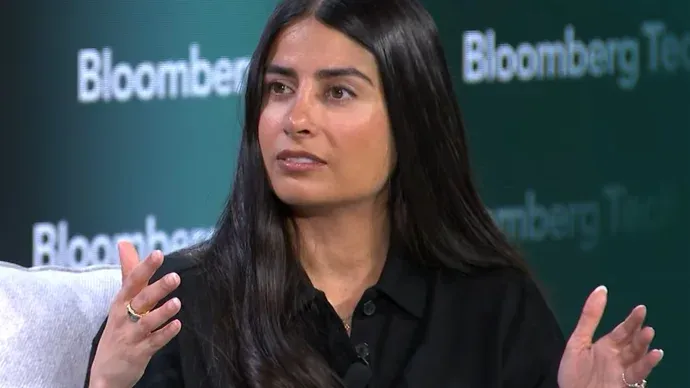
Xbox CEO Asha Sharma says her immediate priority is “resetting the business” and positioning Xbox as the “number one gaming and entertainment company.” Her strategy leans on exclusivity while also addressing AI in Xbox’s new approach.
Xbox CEO Asha Sharma has made her near-term intent brutally clear: she is “resetting” the business. In the same statement, she framed the end goal as making Xbox “the number one gaming and entertainment company.” For decision-makers, that combination matters, because it signals a tactical reset first, then a longer run at dominance, not incremental housekeeping.
So what does “resetting” mean in practice? Sharma’s emphasis points directly to two pillars: prioritizing exclusivity and addressing AI as part of the new strategy. In an industry where most platforms talk about “ecosystems” and “engagement,” those are sharper, more operational words. Exclusivity is about controlling supply. AI is about controlling production and discovery. Together they hint at a plan to regain leverage in both what players get and how players find it.
To understand why this is high stakes, look at how the Xbox conversation has evolved. Console makers used to compete primarily on hardware and first-party game pipelines. Now, competition is also shaped by subscription bundles, cross-platform releases, distribution deals, cloud capabilities, and how quickly studios can ship at scale. When an executive says “resetting the business,” they are effectively admitting that the existing balance of those levers has not produced the desired outcome, or at least not the desired certainty. The reset framing suggests a reallocation problem: which commitments get strengthened, which get reduced, and which get rewritten.
Exclusivity is the classic lever for that kind of reallocation. If Xbox prioritizes exclusivity, the underlying logic is simple: differentiation. When multiple platforms can access the same titles, players shop on convenience, community, and platform value. Exclusive content changes the equation, because it makes the platform itself the reason to buy or subscribe now. But exclusivity is also a budget and risk decision. It can require tighter studio focus, longer lead times, and tradeoffs on how and when games reach broader audiences. A “reset” implies Xbox is willing to revisit those tradeoffs to chase a more decisive strategic position.
Then there is AI, which adds a different kind of pressure. Addressing AI in the strategy is not just about future headlines. It touches near-term operations and competitive advantage. AI can influence how teams produce and test content, how experiences adapt to players, how search and recommendations work, and how games and services scale. It also raises governance questions, because AI use requires controls around quality, safety, and intellectual property. When Sharma puts AI into the plan explicitly, it signals that Xbox expects AI to be a real part of execution, not a vague R&D side quest.
Regulatory and governance context matters here too, especially for a major gaming and entertainment platform. While the source does not mention specific regulators, the broader environment is one where regulators pay attention to market power, acquisitions, data practices, and platform conduct. Exclusivity can be viewed through an antitrust lens when it meaningfully affects consumer choice. AI can also trigger scrutiny around data handling, transparency, and how systems shape user experiences. For executives, the practical implication is that strategy is not only about what you build, but how you justify it and how you document decisions when oversight arrives.
For boards and investors, Sharma’s message has a second-order effect: it reframes performance expectations. A “reset” often implies the company is changing its operating model, which can temporarily disrupt metrics even if the long-term direction is correct. That means decision-makers should watch how priorities translate into budgets, headcount, studio roadmaps, and partnerships. Are exclusives getting clearer funding and clearer timelines? Are AI initiatives getting product owners, not just innovation teams? The headline is a positioning statement, but the real test is whether internal execution aligns.
Peers in similar roles should take note because Xbox’s stated direction speaks to an industry-wide truth: differentiation still matters. In a world of subscriptions and multiplatform libraries, “number one” is not achieved by being present. It is achieved by creating reasons to choose you repeatedly. Sharma’s plan suggests Xbox believes those reasons will come from exclusivity and from AI-driven improvements to how games and entertainment are delivered and personalized. If she pulls it off, Xbox could redefine the value proposition for players and developers. If the reset misses, the cost is not just weaker product performance. It is losing momentum in a market that rewards speed, clarity, and decisive tradeoffs.
This story's Key Insights and Take-aways are locked.
Create a free account to unlock Executive Actions for one credit.
Register to UnlockAlways free for Executives Club members. Join the Club
More in Business

Anthropic’s Levant Alpöge cracks the Jacobian conjecture after 87 years
A Harvard valedictorian used Claude to hit a 1939 breakthrough, but the missing “why” is the real problem.

Uber buys Delivery Hero for nearly $15B, vaulting to top food delivery outside China
The deal doubles Uber's dual-services footprint and pushes a ride-and-eats bundling play into 50 more markets.

Epic and Google drop settlement bid, forcing rival Android app stores by July 22
Google told the court it is ready to carry third-party app stores starting Wednesday, July 22.