

Xtep’s first Saucony standalone store opens in Hong Kong, with K11 Art Mall as testbed
The premium runner gets its first directly operated HK location after Xtep’s buyout, setting up how expansion will split by brand.
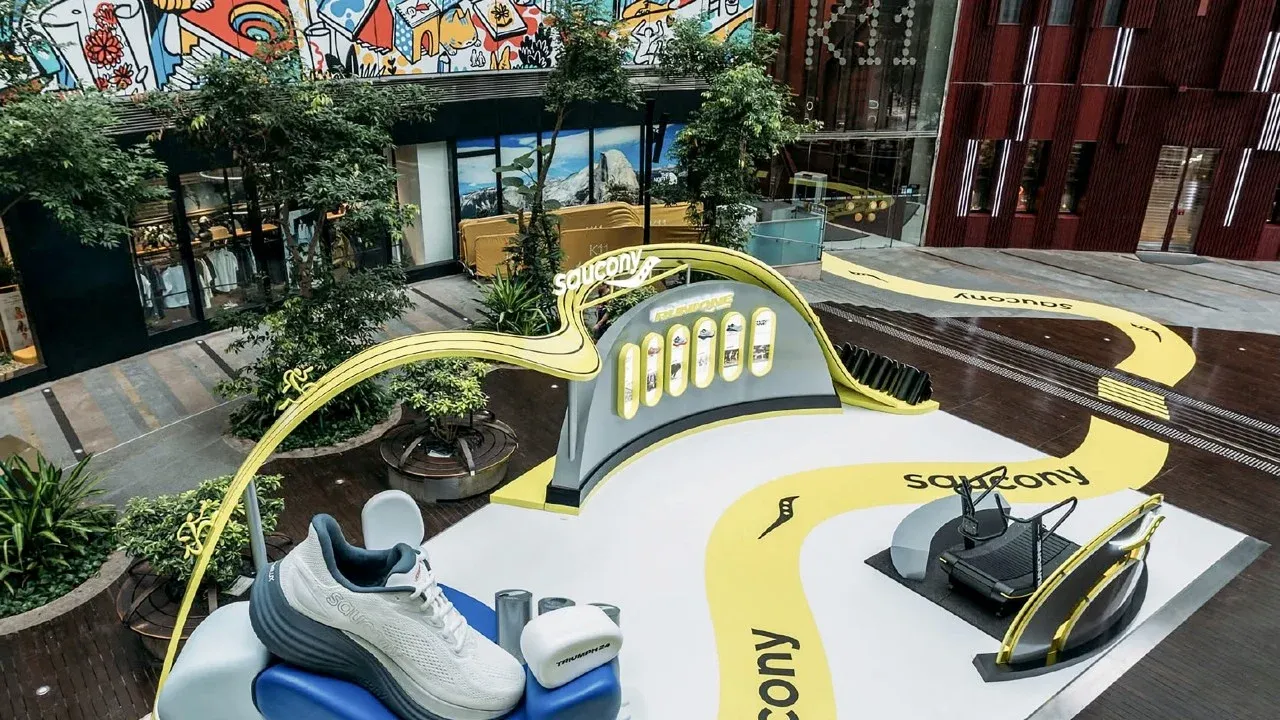
Xtep International has opened Saucony’s first standalone store in Hong Kong at K11 Art Mall in Tsim Sha Tsui. The move signals further premium expansion in the city while keeping Xtep’s core label focused on broader overseas growth.
Xtep International just opened Saucony’s first standalone store in Hong Kong, and it is not a pop-up. The outlet sits at K11 Art Mall in Tsim Sha Tsui, and it is Saucony’s first directly operated store in Hong Kong after Xtep took full control of the brand’s business across mainland China, Hong Kong, and Macau through a buyout of its joint venture.
For decision-makers, the important part is the sequencing. Xtep is using Hong Kong as a “showcase” market for Saucony, a premium running brand, while reserving Xtep’s core label for broader overseas growth. In other words: one city, one premium test, and a deliberate split in brand strategy rather than a one-size-fits-all rollout.
To understand why this matters, you have to zoom out on how sportswear retail expansion usually works. Premium running brands often rely on tight control of customer experience, merchandising, and pricing discipline. A directly operated store is an operational choice with financial implications. It typically means more direct costs, but also more control over how the brand is presented and how quickly it can learn what customers in a given market respond to. Hong Kong, with its high retail intensity and status as a consumer spotlight, becomes the kind of market where premium brands test whether demand is real enough to justify scaling.
The SCMP business report frames the store opening as a signal that Saucony will expand further. The store is the first standalone, and it is directly operated in Hong Kong. That combination is the giveaway: this is not merely a licensing arrangement or an embedded counter concept. Xtep is effectively building a foothold for Saucony that is closer to what you would expect from a premium brand going after brand heat, not just unit sales.
And the backstory is not vague. The report says Xtep took full control of Saucony’s business across mainland China, Hong Kong, and Macau by buying out its joint venture. That is the kind of structural shift that changes what a company can do next. When you control the brand’s business across key regions, you can align product flow, retail execution, and marketing strategy across markets. It also reduces the friction that can come from partner constraints, contract timelines, or split incentives.
At the same time, the report’s detail about brand allocation is where boards should pay attention. Xtep is not just expanding everything everywhere. It is positioning Hong Kong to spotlight Saucony, while keeping Xtep’s core label aimed at broader overseas growth. That implies management is thinking in portfolio terms: a premium sub-brand can be used to elevate perception and learn premium retail mechanics, while the main label pursues expansion in other regions that may fit its scale and economics.
For operators and investors, the second-order question is whether this Hong Kong move becomes a playbook for other premium brand pushes, or a one-off experiment. The store at K11 Art Mall in Tsim Sha Tsui suggests a deliberate location choice, not random. K11 Art Mall is the kind of high-visibility retail environment where premium brands can benefit from foot traffic and experiential retail expectations. If the rollout is working, you would expect the next phase to look like more directly operated stores, tighter merchandising, and continued consumer education around running footwear and related categories.
There is also a governance angle. After a buyout, companies often face pressure to convert ownership into tangible performance: greater brand control, clearer KPIs, and faster execution. A directly operated flagship-like store in a showcase market can function as a signal to customers and internal stakeholders that the company is done delegating and is ready to run the play. That is especially relevant for a company expanding across regions with different retail dynamics and different consumer expectations, even when the brand story is consistent.
Ultimately, this is not just a retail footnote. It is a strategic expansion marker that ties together the ownership change, the choice of Hong Kong as a showcase market, and the portfolio split between Saucony and Xtep’s core label. For peers watching premium sportswear positioning, the takeaway is simple: control the brand, choose a visible test market, then scale with the story you can execute. If Hong Kong is the next proving ground, the decisions that follow will tell you how serious Xtep is about turning a premium runner into a durable growth engine.
This story's Key Insights and Take-aways are locked.
Create a free account to unlock Executive Actions for one credit.
Register to UnlockAlways free for Executives Club members. Join the Club
More in Business

Anthropic’s Levant Alpöge cracks the Jacobian conjecture after 87 years
A Harvard valedictorian used Claude to hit a 1939 breakthrough, but the missing “why” is the real problem.

Uber buys Delivery Hero for nearly $15B, vaulting to top food delivery outside China
The deal doubles Uber's dual-services footprint and pushes a ride-and-eats bundling play into 50 more markets.

Epic and Google drop settlement bid, forcing rival Android app stores by July 22
Google told the court it is ready to carry third-party app stores starting Wednesday, July 22.