

ZA/UM will lay off up to 32 staff across all departments, again, Eurogamer reports
After years of fallout around Disco Elysium, the studio announces another round of reductions that reshapes risk for partners.
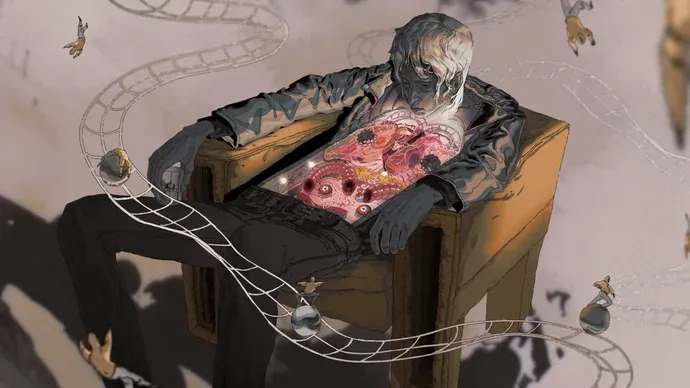
ZA/UM Studio, the developer behind 2019's Disco Elysium, says it will lay off up to 32 staff members across all departments. For decision-makers, it is another signal that even acclaimed games can become financial and operational hostage to long-running controversy.
ZA/UM Studio plans to lay off up to 32 staff members across all departments, Eurogamer reports. This is not a minor staffing tweak: it is a board-level kind of decision that typically follows when cash is tight, delivery timelines slip, or leadership concludes that headcount has to shrink to stabilize operations.
The companys announcement matters even more because ZA/UM has spent years at the center of bitter public and legal disputes since Disco Elysium launched in 2019. When a studio is simultaneously managing creative pressure and legal pressure, layoffs tend to land as a double hit. They reduce burn rate, but they also drain institutional knowledge at precisely the moment the organization has to be resilient, coordinated, and fast.
For executives and investors, the headline stake is simple: ZA/UM is effectively confirming that controversy-laden attention can spill into the balance sheet. Game development is already high-variance. Studios often hire ahead of certainty, relying on forecasts about sales, ongoing engagement, platform performance, and future projects. But legal fights and reputational turbulence can delay decisions, complicate partnerships, and increase the costs of operating in public. Even when a game is acclaimed, the studio can still face real-world constraints around cash flow and staffing because acclaim does not automatically translate into predictable operational freedom.
Eurogamer frames the situation as contentious, and the timeline is important. Disco Elysium released in 2019 and then became a magnet for ongoing disputes that have played out publicly and in legal venues. That kind of prolonged friction does not just live in headlines. It can affect how quickly a studio ships updates, how comfortable employees feel about staying through uncertainty, and how confident outside stakeholders feel about committing resources. In other words, what starts as a brand and legal fight can become a production and financing fight.
The specific phrasing in the announcement is also telling. ZA/UM says the layoffs are “across all departments,” which implies the company is not targeting a single function, like only marketing or only art. Cross-department cuts typically suggest a broader restructuring of cost base rather than a narrow correction. For leadership teams, that can mean fewer parallel tracks. When engineering, design, production, and other departments all shrink, fewer people are available to handle overlapping work, and projects can become more sequential, with heavier emphasis on triage and scope control.
There is also a second-order implication for anyone who works with studios like ZA/UM, including publishers, platform partners, contractors, and even talent networks. In the games industry, partner relationships are often built on expectations about continuity: who is still in charge, who owns key systems, how quickly issues get resolved, and whether future roadmaps remain credible. A reduction “across all departments” can shift negotiating power. Partners may ask for tighter milestones, additional reporting, or more direct oversight. Conversely, internal teams may seek more autonomy to keep shipping even as headcount drops.
Regulatory context matters too, even if the Eurogamer piece focuses on staffing and controversy rather than regulation itself. In any environment with legal disputes, corporate governance and record-keeping become more consequential. Studios can end up spending time and money on compliance-adjacent work, legal administration, and managing the operational impact of proceedings. That cost does not always show up as a line item that investors can easily isolate. It appears indirectly, as delays, reduced capacity, and leadership time diverted away from product. Layoffs are often the moment a studio chooses to convert uncertainty into a simpler math problem: spend less now, preserve survival, and rebuild later.
So what should decision-makers take from this? The broader lesson is that Disco Elysiums acclaim does not immunize a studio from hard operational tradeoffs when disputes drag on. For boards, CFOs, and operators at comparable studios, ZA/UM is a reminder to stress-test more than just creative throughput. Stress-test legal exposure and reputational risk as operational variables. The layoffs up to 32 staff members across all departments show that, in games, the business can be rerouted by controversy as decisively as by market downturn.
This story's Key Insights and Take-aways are locked.
Create a free account to unlock Executive Actions for one credit.
Register to UnlockAlways free for Executives Club members. Join the Club
More in Entertainment

12TB Steam 'teraleak' goes beyond Valve: GTA 3, Mafia 2 prototypes exposed
A 12-terabyte dump of Steam data reveals prototypes and builds of third-party classics like GTA 3 and Mafia 2, plus unreleased Valve content, rewriting game history.

LinkedIn's romance problem: 1 in 4 workers say dating on it is fair game
A new survey shows a quarter of U.S. employees treat the professional network as fair game for romance, even as LinkedIn bans it and removes hundreds of thousands of offending posts.

Enhypen's first No. 1 album breaks K-pop's Billboard 200 streak
The K-pop group's 98,000-unit debut tops the chart while Dolly Parton's catalog reentry shows how death reshapes streaming.