

Zara Larsson makes Pop Airplay history: two new No. 1s in back-to-back weeks
Her “Midnight Sun” hits No. 1 (June 27) the week after “Stateside” tops the chart, reshaping what dominance looks like.
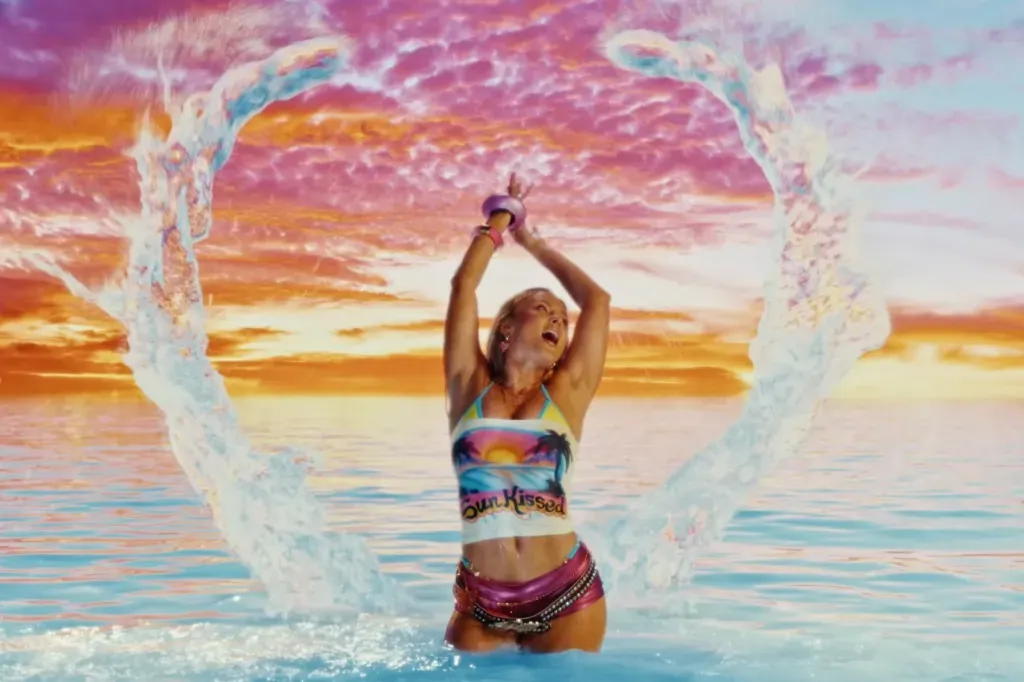
Zara Larsson’s “Midnight Sun” rises three places to No. 1 on Billboard’s Pop Airplay chart dated June 27, landing her second leader a week after “Stateside” with PinkPantheress. For decision-makers tracking radio impact and audience momentum, it signals a rare, repeatable chart surge that even the chart’s own history marks as exceptional.
Zara Larsson just did something the Billboard Pop Airplay chart has almost never seen: she’s become the first artist ever to notch two new No. 1s in consecutive weeks. Her “Midnight Sun” rises three places to No. 1 on the chart dated June 27, immediately following her and PinkPantheress’ “Stateside,” which reached the top spot a week earlier.
The scoreboard matters because it is not a long, slow climb. Larsson goes from No. 2 to the top with “Midnight Sun” while “Stateside” dips to No. 2, effectively swapping leadership in consecutive periods. The source also anchors why this is a big deal historically: it dates back to the Pop Airplay chart’s October 1992 start, and she is the first to post two initial No. 1s back-to-back overall.
If you work anywhere near music business strategy, radio is still a real lever. Pop Airplay is about distribution and discovery through broadcast, and repeat No. 1s within one month compress the usual lag between “a hit exists” and “a hit becomes the default.” Larsson’s run also lines up with a broader commercial resurgence described in the piece: her “Midnight Sun” is the title track from her fifth studio set, which peaked in the top five on Top Dance Albums and in the top 40 of the Billboard 200 in May.
Now zoom out to what the chart has seen before, because that is where the “how rare is this” answer becomes more than bragging rights. Billboard notes that only two acts previously claimed their first two Pop Airplay No. 1s back-to-back overall. In December 2003, OutKast’s “Hey Ya!” began a nine-week command, ending when the duo’s “The Way You Move,” featuring Sleepy Brown, took over the following February for three weeks. In June 2014, Iggy Azalea’s “Fancy,” featuring Charli xcx, hit No. 1 for three weeks. Directly after, Ariana Grande’s “Problem,” featuring Azalea, led for two weeks that July.
One more nuance: beyond first-two leader streaks, other artists have replaced themselves atop the chart with consecutive leaders. The source specifically names Mariah Carey, Halsey, Grande, and Doja Cat as artists who have done that. Unlike Larsson, though, the piece emphasizes that none of them notched two new No. 1s in a span of two weeks. That distinction is what makes her run “fresh” rather than merely “persistent.” It is not just one act winning with the same song and then swapping to another later. It is a quick succession of new chart arrivals, which is much harder to engineer by luck alone.
There is also a performance tail worth watching for operators and rights holders: Larsson charts four titles on Pop Airplay for a seventh week, and she is the only act to achieve the feat this year. The article ties this to specific tracks and movements. Alongside “Midnight Sun” and “Stateside,” Tyla’s “She Did It Again,” featuring Larsson, climbs 29-27 for a new best. Meanwhile 2016’s “Lush Life” holds at its No. 28 high. In plain terms, she is not only getting new peaks, she is pulling older catalog back into the active rotation while another current collaborator effort rises.
The story also provides a direct inside-the-music-business explanation for what changed. Larsson, identified as the 2026 Women in Music Breakthrough award winner, mused about returning to the Billboard charts after “a long time,” saying she is “reaching so many new heights 10 years into my career” and framing it as a testament to “never giving up.” She also ties the change to the creation of “Midnight Sun,” using a car metaphor: she says her career has felt like she’s been in the back seat, and with the album she feels like she “should drive.” While that is personal commentary, the business takeaway is structural: the piece describes an album era that is doing more than releasing songs. It is powering radio momentum, album commerce, and catalog visibility at the same time.
For executives, labels, promoters, and investor types watching attention markets, this kind of back-to-back No. 1 run becomes a benchmark. It suggests that when the right song meets the right moment, the chart can move fast enough to feel almost unfair to everyone else in the category. All charts dated June 27 will update on Billboard.com Tuesday, June 23, which means the industry will quickly see whether “Midnight Sun” holds, and whether Larsson’s multi-title presence keeps radio treating her as the default playlist choice. If you are managing an artist roster or making bets on release timing, this is the kind of evidence the board will ask for: rare acceleration, backed by chart history, not just first-week noise.
This story's Key Insights and Take-aways are locked.
Create a free account to unlock Executive Actions for one credit.
Register to UnlockAlways free for Executives Club members. Join the Club
More in Entertainment

Russell Brand's accuser 'bewildered and confused' as he denies 7 sex charges
The criminal case against the comedian is a live test of how media companies manage talent risk when serious allegations go public.

'It's a Magic Trick': Ballet Experts Say Rosalía's SNL Pose Is Impossible
Three ballet experts tell Rolling Stone Rosalía's gravity-defying SNL stillness shouldn't be possible - and why the debate is now part of the show.

Activision CMO: GTA 6 Will Boost Call of Duty, Not Bury It
Activision's top marketer says Rockstar's blockbuster will drive players back to consoles and into Modern Warfare 4, even as the company admits its recent strategy failed.