
ZeniMax says ESO returned to 2015-2018 headcount after Xbox layoffs, matching id’s claim
A developer says Elder Scrolls Online staffing is back to circa 2015-2018, even as layoffs and a cancelled MMO loom.
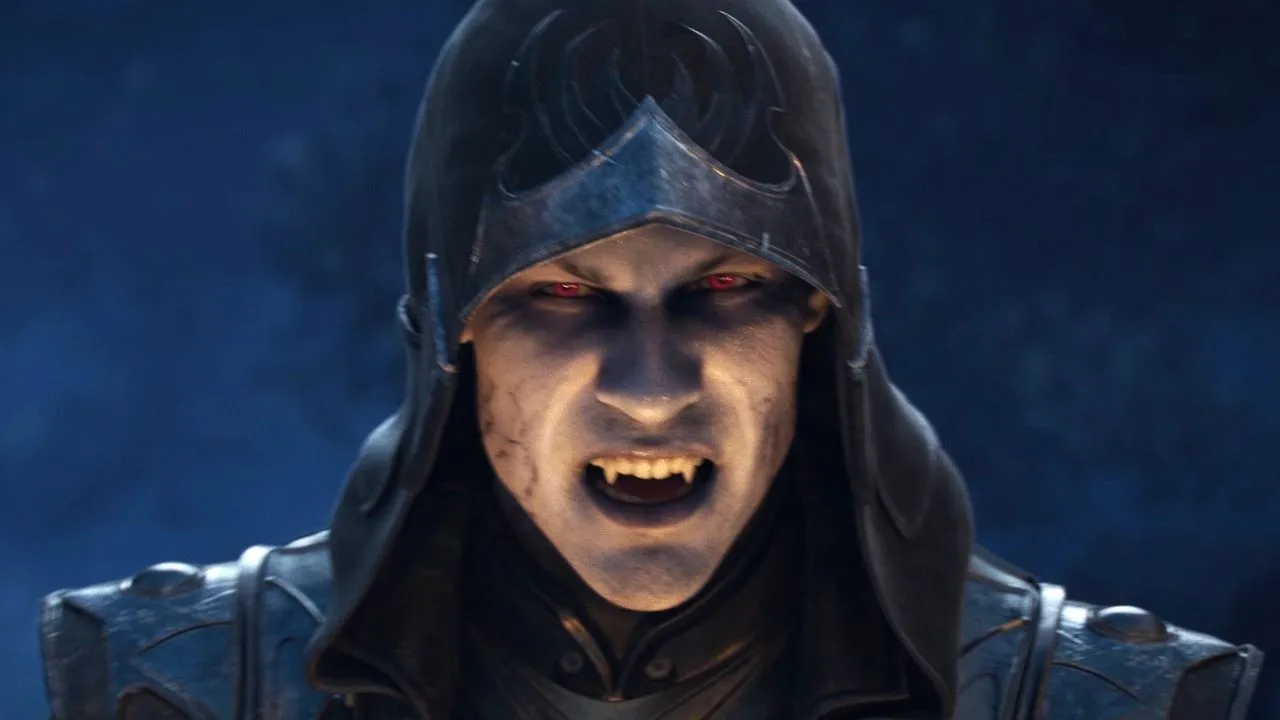
ZeniMax Online Studios developers said Elder Scrolls Online has returned to the same headcount as the 2015-2018 period, in a message relayed via the UESP Discord by Baratron from an ESO Tavern event in Hesse, Germany. The claim matters to decision-makers because it is being paired with id Software’s similar headcount framing amid WARN Act-backed layoffs and a cancelled MMO project.
ZeniMax Online Studios is claiming something very specific as a morale and narrative pivot: it says Elder Scrolls Online has returned to the same staffing size it had during the 2015 to 2018 window, the period when the game produced the Wrothgar and Summerset DLCs. The claim was relayed to the UESP Discord by Baratron from dev discussions at the Elder Scrolls Online Tavern event in Hesse, Germany. According to Baratron, Associate Design Director Jason Barnes and Associate Director of Community Management Jessica Folsom said the studio is “now at the same size as it was when they made both Wrothgar and Summerset.”
This matters because the headline hook here is not “the studio is doing fine.” It is the insistence that the studio is no longer smaller than its peak development era, despite a round of layoffs tied to broader corporate restructuring. The source frames it as a potential rebuttal to the idea that layoffs necessarily end new content or push the game into maintenance mode. For context that is baked into the story: Orsinium, the DLC containing the region of Wrothgar, released in 2015, and Summerset released in 2018. So the comparison is concrete, not vibes.
But this isn’t happening in a vacuum. The claim is echoed by id Software, another studio under the same corporate umbrella. In a statement on X, id Software wrote: “The team today is about the size we were when making Doom (2016).” That comes with the same pattern you are seeing across the industry in the 2020s: studios talk about regained headcount parity as if parity alone explains output, timelines, and the quality of what ships.
Now add the regulatory and paperwork layer. The source cites WARN Act filings for layoffs: ZeniMax Online and id Software laid off 213 and 136 employees respectively. It also says ZeniMax laid off 62 people in 2025 immediately following the cancellation of the MMO Blackbird. Those numbers are not the whole story of production, but they are the kind of hard constraint boards and executives care about, because they mark when teams are reduced, when roles are eliminated, and when momentum can be interrupted.
There is a subtle but important PR tension in the story. The source acknowledges that there is a “silver lining” angle. It also explicitly says layoffs are “extremely upsetting for everyone involved,” which includes players. That is a reminder that headcount comparisons can feel like HR accounting if they do not capture what actually happened to teams, workflows, leadership, and institutional memory. The text argues that returning to a similar number “on paper” is still an admission of reversing “a decade of growth and development” at these studios, even if the final effect is to stabilize the organization.
The second-order question for decision-makers is not whether the headcount number is real. The question is what it implies about the work the layoffs funded and the work the studio is now expected to perform. The source makes that point bluntly: the 136 fired from id and 213 from ZeniMax were “brought in for a reason.” In other words, even if the studios have since returned to a prior size, the intervening layoffs likely changed the kinds of projects that could be staffed, the pace at which teams could execute, and the internal bargaining power of teams making long-lead decisions.
For context on why executives should care about this kind of messaging: game development does not stand still. The source notes that “Game development has changed in the span of 10 years,” and it references examples of other studios that experienced wave after wave of layoffs without getting the promised productivity improvements. It specifically mentions Bungie and BioWare as examples that likely hit similar headcounts in their “golden ages,” yet the source says that did not improve output or efficiency, and it argues it did not recreate past blockbuster outcomes like Halo: Reach or Mass Effect 2.
So, the stakes for peers and boards are bigger than Elder Scrolls Online or even id Software. When leadership talks about headcount as a proxy for creative capability, it can become a template for justifying cuts and reframing them as “course correction.” The source warns that this can carry a tacit implication that the laid-off workers “did not matter,” and that it can feed the kind of “lazy devs” rhetoric that turns organizational decisions into a culture war. Whether or not you agree with that critique, it is a governance signal: how companies communicate in the aftermath of layoffs often shapes talent retention, player trust, and investor confidence.
The strategic takeaway is that “same headcount” is not the same as “same environment.” The source’s central skepticism is that a studio that was “on the upswing” differs from a studio that has been “gutted,” even if the numbers later resemble an earlier era. In an ecosystem where regulatory filings quantify job losses and cancelled projects like Blackbird linger as evidence of strategic churn, headcount claims become part of the story capital markets and customers read. If Microsoft or other parent companies choose to use this framing broadly, the burden will be on studios to prove that staffing levels translate into reliable delivery, not just an operational baseline.
This story's Key Insights and Take-aways are locked.
Create a free account to unlock Executive Actions for one credit.
Register to UnlockAlways free for Executives Club members. Join the Club
More in Entertainment
12TB Steam 'teraleak' goes beyond Valve: GTA 3, Mafia 2 prototypes exposed
A 12-terabyte dump of Steam data reveals prototypes and builds of third-party classics like GTA 3 and Mafia 2, plus unreleased Valve content, rewriting game history.

LinkedIn's romance problem: 1 in 4 workers say dating on it is fair game
A new survey shows a quarter of U.S. employees treat the professional network as fair game for romance, even as LinkedIn bans it and removes hundreds of thousands of offending posts.

Enhypen's first No. 1 album breaks K-pop's Billboard 200 streak
The K-pop group's 98,000-unit debut tops the chart while Dolly Parton's catalog reentry shows how death reshapes streaming.