
Zepto’s ad revenue surged 151%, but its operating growth was only 104%
The IPO filing shows ad monetization outpacing core revenue growth, while losses loom over the valuation question.

Zepto’s IPO filing, covered by TechCrunch, shows advertising revenue jumping 151% as operating revenue grew 104%. For decision-makers, the gap raises the question of whether monetization can offset bigger losses and justify the valuation investors will pay.
Zepto’s IPO filing is sending a very specific signal: the company is monetizing faster than it is growing its overall business. In the filing, Zepto’s advertising revenue jumped 151%, outpacing the company’s 104% growth in operating revenue, according to TechCrunch. That divergence is the headline number. It is also the start of the real debate investors will have as the offering moves through scrutiny.
Here is what the math implies, in plain English. Operating revenue grew 104%. Advertising revenue grew faster, at 151%. If advertising is growing faster than the rest of the topline, then it is becoming a bigger driver of revenue performance than Zepto’s broader operating engine. That can be a positive for a young growth company, because advertising often behaves like an overlay on top of existing traffic and engagement: you already have users, and you monetize attention. But it also means investors will ask whether the ad surge is scalable and durable, or whether it is a temporary boost tied to a particular market or product cycle.
Zoom out to how this plays in the IPO machine. Public-market investors typically want to see that a company can grow profitably, not just grow. When losses are “bigger,” as TechCrunch’s original framing suggests, then faster monetization becomes more than a nice-to-have. It turns into a pressure valve. The valuation question in an IPO is rarely about whether growth exists. It is about what growth is buying you: enough unit economics improvement to eventually cover operating burn. If advertising growth is accelerating faster than overall revenue, it can improve the revenue mix, and mix matters because margins and cost structure determine whether losses compress later or widen sooner.
This is where the filing numbers tend to matter as more than just bragging rights. The split between advertising growth (151%) and operating revenue growth (104%) suggests that Zepto’s go-to-market is evolving. Ads can reflect changes in product positioning, stronger ad products, better measurement, or simply more advertiser demand. Even without additional specifics from the source, the timing is critical. In IPO filings, companies are effectively telling markets what they think will drive future performance, and investors use that to pressure-test assumptions.
Now add the regulatory lens, because IPOs are not just a fundraising event. In most jurisdictions, offering documents are designed for transparency and accountability: regulators want to reduce the gap between marketing and reality. That is why the “valuation question” becomes unavoidable when losses are bigger. If regulators, auditors, or underwriters flag risk areas, the company’s narrative has to survive tighter questioning. Faster advertising growth does not automatically erase those risks, but it can alter how investors discount future cash burn. In other words, monetization speed can change the slope of the forecast, even if the forecast still starts in loss.
For executives and board members, this kind of divergence between ad growth and operating growth creates governance questions. Who is driving ad monetization? Is it centralized strategy or local execution? Are costs associated with ad growth scaling at the same rate? The board’s job in an IPO process is to ensure management is not just showing strong headline growth, but also showing a credible path to turning that growth into economics. When losses are bigger, governance must focus on discipline: what is being scaled, what is being subsidized, and what is being optimized.
There is also a competitive second-order effect. In fast-growing markets, the companies that can monetize attention sooner often gain a better negotiating position with advertisers and partners. If Zepto’s advertising is outperforming operating revenue growth, peers will treat that as a benchmark. Competitors may respond with their own monetization pushes, which can increase marketing pressure and ad inventory competition. That can be good for customers but tricky for profitability targets, because ad markets can move quickly and returns may not be linear.
Finally, investors will connect the dots to valuation. The original framing from TechCrunch highlights that the filing reveals “fast growth, bigger losses, and a valuation question nobody’s answered yet.” The 151% versus 104% split does not answer that question by itself. It does, however, narrow where the debate will concentrate. If advertising is accelerating faster than operating revenue, then the market will want to know whether that acceleration translates into margin improvement, whether it is repeatable, and whether it can offset bigger losses enough to justify the price. For decision-makers watching Zepto, the lesson is clear: in an IPO, the most important growth rate is often not the one with the biggest headline. It is the one that changes the trajectory of losses.
This story's Key Insights and Take-aways are locked.
Create a free account to unlock Executive Actions for one credit.
Register to UnlockAlways free for Executives Club members. Join the Club
More in Business

OpenAI files for an IPO at $852B, signaling it may list sooner than later
The ChatGPT maker’s filing joins Anthropic’s AI listing wave and turns “someday” into a real timing option.
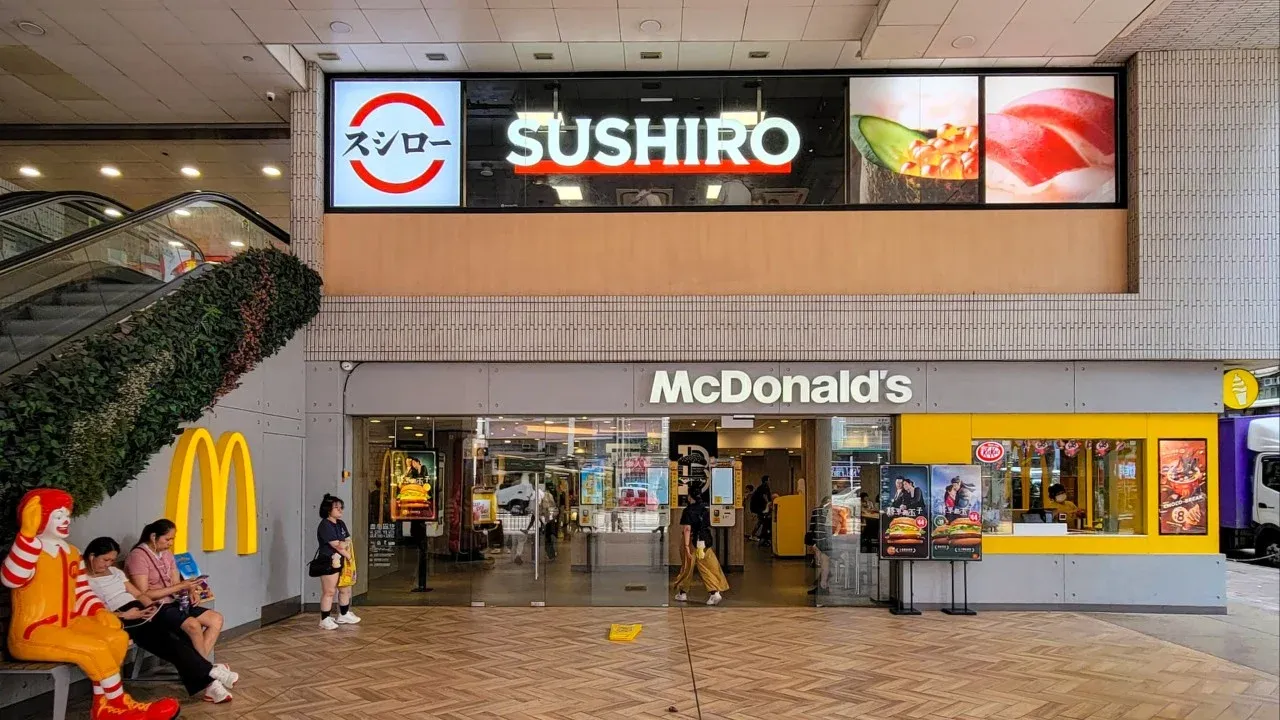
McDonald's sells HK$110 million Quarry Bay shop, continuing Hong Kong real-estate sell-down
What one HK$110 million retail sale signals about how McDonald's is re-monetizing long-held property across Hong Kong.

Niall Horan takes over UMusic Shop NY on June 9 for Dinner Party merch drop
A one-day Manhattan event, tied to the same-day Capitol Records release, gives fans a week-long window while stock lasts.