
Ziina launches UAE one-tap Pay by Bank under Open Finance with Lean Deposits
The UAE’s first One-Tap Pay by Bank lets users connect once and top up with a single tap, without credentials or redirects.
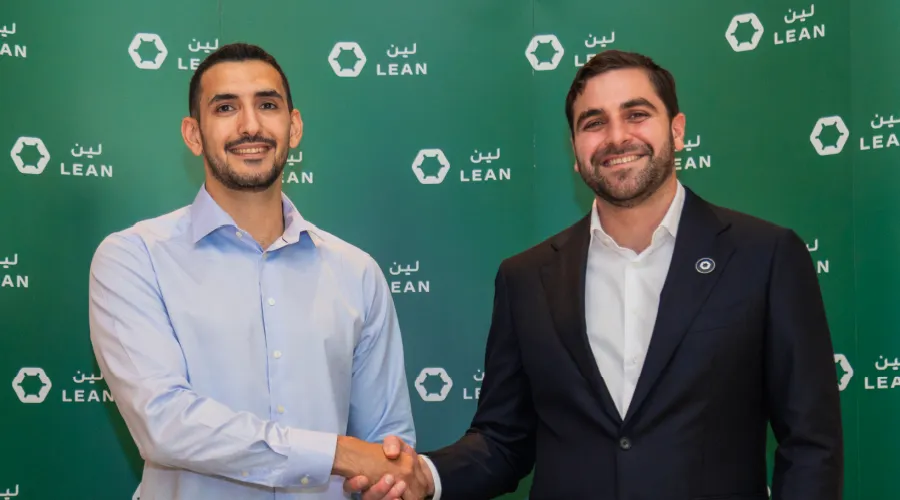
Lean Technologies and Ziina launched the UAE's first One-Tap Pay by Bank experience under the Open Finance framework. For decision-makers, it signals Pay by Bank is moving from one-off transfers to recurring, low-friction wallet funding.
On 25 June, 2026, Lean Technologies and Ziina unveiled what they call the UAE's first One-Tap Pay by Bank experience under the Open Finance framework. The promise is specific and product-shaped: Ziina users can securely connect their bank account once, then perform future wallet top-ups with a single tap, without re-entering credentials and without being redirected to a bank portal.
That detail matters because it attacks the biggest operational and user-friction problem in account-to-account payments. Pay by Bank has been live in the UAE for some time, but the launch positions itself as the step beyond “single instant payments” into something closer to recurring behavior. In other words, the industry is trying to stop treating payments like events and start treating them like habits.
Under the hood, the capability is built on Lean's Deposits solution and is described as combining Ziina's consumer payment experience with Lean's Open Finance infrastructure. The workflow is intentionally streamlined: connect once. Then top up later. That “connect once, tap later” model is a major shift for the user journey because it removes two moments that usually break flow. First, there is no need to re-enter credentials. Second, users are not bounced out of the experience and into a bank portal.
If you are an executive, board member, or investor watching payments adoption, this is the real test. Single transactions can go live on day one, and you can measure success in clean, short-term funnels. But recurring usage depends on whether the payment method feels as frictionless as the best consumer tech people already use every day. Lean's VP of Sales, Omar Hamada, put it directly in the press release: Pay by Bank had been available as single instant payments, but the companies “showed that the infrastructure is capable of supporting recurring, low-effort payment experiences,” the kind that makes a payment method part of how people pay every day.
Ziina’s side of the story is just as grounded in behavior. Talal Toukan, Co-Founder and Head of Engineering at Ziina, said funding a wallet is one of the most common actions within Ziina, and making that experience faster and more seamless was a “natural next step.” The underlying claim is about friction reduction, not just connectivity. The launch is framed as a way to make managing and moving money “feel more effortless” for users, which is essentially a bet on conversion and retention, not merely technical feasibility.
This is also a regulatory and infrastructure moment, which the release makes explicit. It describes the launch as “marking a significant step in the maturation of account-to-account payments” in the region, noting that the underlying infrastructure is in place and regulation is live. That combination is often the bottleneck in financial ecosystems: technology and onboarding flows are one thing, but once regulators greenlight the framework and define the rules of the road, providers can build the product patterns that require those rules to be stable.
The announcement was made at Pay by Bank: The Default Way to Pay, Lean's flagship industry event. The event brought together more than 150 leaders across banking, fintech, commerce, and regulation. That attendee mix is not a throwaway detail. It signals how account-to-account payments in the UAE are being treated as an industry coordination problem as much as a software problem. Banks want predictable rails and compliance paths. Fintechs want smooth user journeys and reliable APIs. Commerce and platforms want faster funding and fewer abandoned checkouts. When regulation is live, the winners are typically those who translate it into repeatable customer experiences.
The second-order implication for decision-makers is that “one-tap” is not just a UI upgrade. It is a distribution and cost-of-acquisition lever. Every time you avoid a redirect or a credentials re-entry moment, you reduce drop-off in wallet funding flows. Over time, that can change the economics of fintech onboarding and lifecycle engagement, particularly for apps where wallet top-ups are a routine action. It also sets a competitive benchmark for competitors building on Open Finance infrastructure: if One-Tap becomes the expectation, the question shifts from whether payments are enabled to whether they are meaningfully faster and easier in day-to-day usage.
Lean and Ziina are essentially arguing that the market is moving beyond the “it works” phase of Pay by Bank and into the “it sticks” phase. If you are a CFO, head of product, or board-level operator, the strategic takeaway is straightforward: recurring, low-friction funding experiences may become the defining differentiator for wallet and payments apps in the UAE, once the regulatory and infrastructure foundations are no longer the constraint.
This story's Key Insights and Take-aways are locked.
Create a free account to unlock Executive Actions for one credit.
Register to UnlockAlways free for Executives Club members. Join the Club
More in Business

Bungie cuts most Destiny 2 staff as Sony says Marathon still matters
Herman Hulst confirms layoffs affecting most Destiny and some Marathon teams after Bungie admits Destiny fell short.

SK Hynix jumps 11% after seeking up to $29.4B in Nasdaq listing
The chip giant filed for a Nasdaq listing plan that could raise $29.4 billion, instantly reshaping investor expectations.

Micron revenue hits nearly $42B as AI memory lifts gross margins above 81%
Fiscal Q3 results crush estimates, prove AI memory is rewriting Micron's margins, and change the momentum math for the whole chip stack.