
Zoox ramps to 100 refreshed robotaxis weekly after NHTSA temporary-exemption bid
Updated hardware, Hayward factory ramp, and a pending NHTSA petition shape when riders see the next fleet.
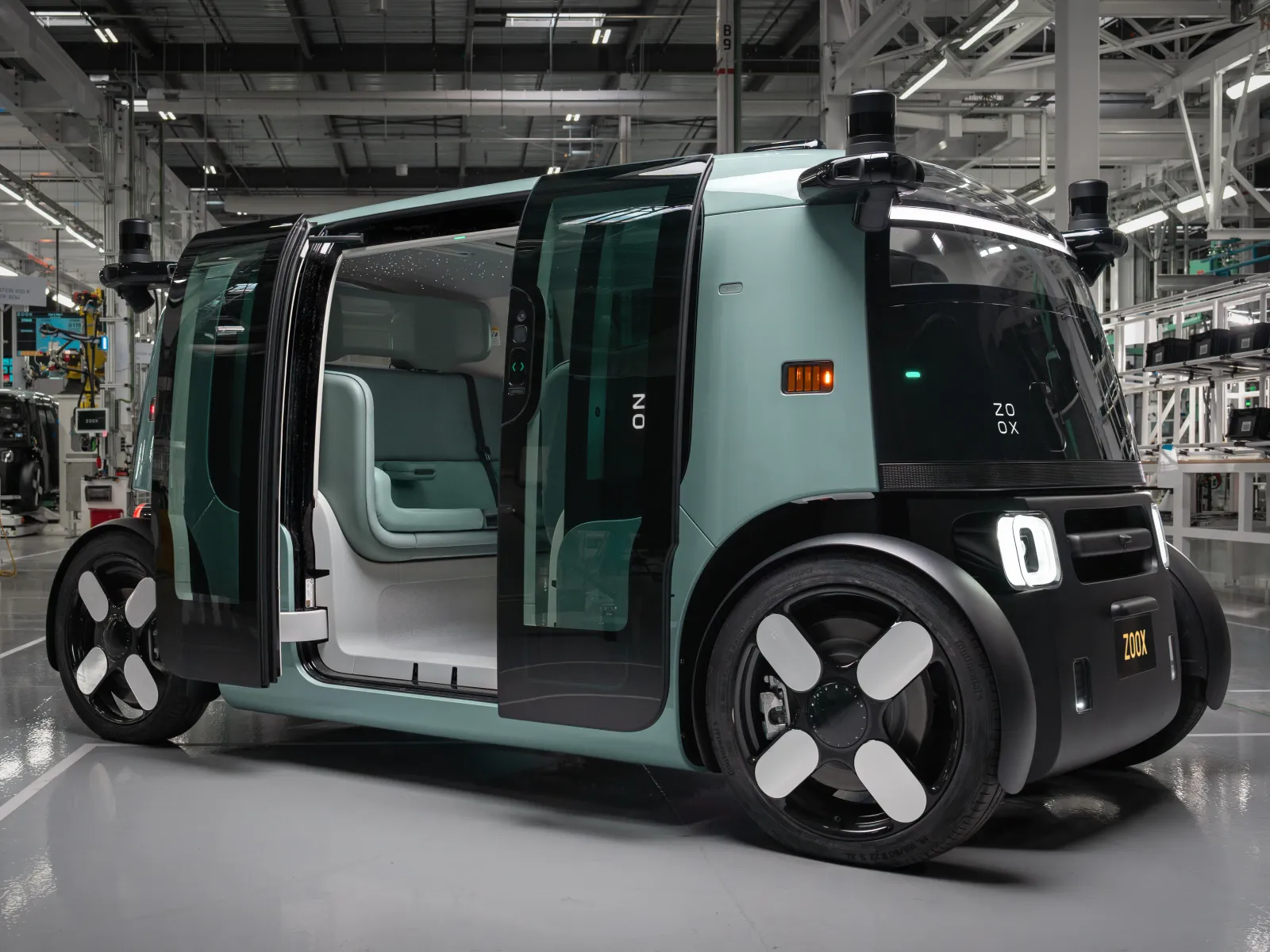
Zoox says it is preparing to produce up to 100 newly upgraded robotaxis a week using its Hayward, California factory, while unveiling a refreshed design aimed at improving the rider experience. The ramp depends on regulatory approval tied to a pending National Highway Traffic Safety Administration petition for a temporary exemption from certain federal safety standards.
Zoox is preparing to produce up to 100 newly upgraded robotaxis a week, but it will only matter once regulators clear the company’s temporary safety-standard exemption request. The update is not a marketing facelift. It is a production ramp with a schedule constraint, because Zoox said the figure is “pending regulatory approval,” and a Zoox spokesperson clarified that approval refers to a pending petition with the National Highway Traffic Safety Administration.
In other words: Zoox is not just rolling out a newer-looking robotaxi. It is asking the NHTSA for permission to temporarily treat parts of its purpose-built vehicle as if the assumptions in certain federal standards do not apply, since those standards assume a human driver and traditional driving controls. Zoox also told Business Insider that the “core robotaxi design remains unchanged,” so the ramp is about refining the rider environment and internal interfaces while it continues expanding service areas in the US.
The newly refreshed robotaxi includes several specific changes Zoox says will improve rider experience. The company pointed to updates such as a lighter interior color scheme, more ergonomic seats, larger cupholders, a more vivid touchscreen, and two-way audio capabilities designed to improve communication with riders and first responders. Zoox’s stated goal is that rides should feel calmer and more intuitive as more vehicles come onto the road. The lighter interior, Zoox said, is meant to reduce “visual distractions” and make it easier for riders to spot items left behind, such as phones or keys.
This is happening as Zoox prepares to ramp vehicle production at its Hayward factory. Business Insider previously reported that Zoox’s 220,000-square-foot factory can produce more than 10,000 vehicles a year, and the new article repeats the point that the facility has capacity to produce 10,000 robotaxis a year. But scaling production is not a simple switch from “prototype” to “fleet.” Even if the plant can build thousands, Zoox is signaling that it will expand in a deliberate, phased manner.
That matters because Zoox is currently offering free robotaxi rides to the public in limited parts of Las Vegas and San Francisco as it collects rider feedback. Zoox said it plans to expand to Austin and Miami later this year. So the production ramp is meant to feed those market expansions with vehicles that match a “production-intent” configuration, while still letting the company maintain regulatory and operational stability.
Zoom in on the regulatory angle and the stakes get sharper. The NHTSA petition seeks a temporary exemption from some federal safety standards that assume a vehicle has a human driver and traditional driving controls. That framing is important because it explains why a company with a strong engineering story still has to negotiate with regulators on what those standards imply in a driverless context. It also explains the language in Zoox’s update about the refreshed vehicle joining the fleet “as they come off the production line,” and becoming available to riders later this year as markets expand.
Zoox’s announcement also includes a production-intent signal: it said the updated vehicle is its production-intent robotaxi and will be built at its Hayward, California, factory. A Zoox spokesperson told Business Insider the company does not need to build 10,000 robotaxis at the moment. The spokesperson linked the ramp to “deliberate, phased” steps designed to “safely meet the strong consumer demand and regulatory requirements.” For executives, this is the operational version of risk management. It is also a reminder that manufacturing scale alone does not define launch pace. Regulatory timing and proof points do.
There is a broader second-order implication here for anyone building or investing in autonomy systems: rider experience and regulatory structure are becoming intertwined. Zoox is spending real effort on seats, cupholders, touchscreen vividness, and two-way audio, while simultaneously asking NHTSA for permission to temporarily deviate from certain driver-assumption standards. That is a useful blueprint for how companies can make progress on adoption without pretending that autonomy deployment is only a technical milestone. It is a user trust milestone, and trust is partially shaped by how clearly riders and even first responders can communicate with a vehicle.
For decision-makers, the near-term question is not whether Zoox can build robotaxis. It is whether the NHTSA petition timing aligns with Zoox’s plans to expand later this year, and whether the refreshed design meaningfully improves ride comfort and usability enough to support broader consumer demand. The “up to 100 a week” number is effectively a gating metric. If the regulatory approval arrives on schedule, Zoox can feed more vehicles into its markets with the updated production-intent configuration. If it slips, Zoox can still build, but the fleet roll-out and rider availability will remain constrained by the rules that govern driverless operations.
This story's Key Insights and Take-aways are locked.
Create a free account to unlock Executive Actions for one credit.
Register to UnlockAlways free for Executives Club members. Join the Club
More in Business

A flaw in PHP just forced governments to pull their own sites offline
European agencies from Belgium to Germany took websites dark to patch a critical weakness in the language behind almost 70% of the web, and the blast radius extends far beyond government portals.
BioWare shuts down, Mass Effect 5 dead after $55B EA buyout
The legendary RPG studio's closure lands months after a $55 billion investment group buyout of EA, raising tough questions for gaming's biggest acquirers.
Musk barred from the room as Tesla, SpaceX boards weigh $3.5 trillion merger
The CEO of both companies is a 'conflicted party' watching independent directors negotiate a tie-up that would create a $3.5 trillion giant he would own about a third of.