
Zuckerberg Ends Muse Delay as A.I. Rivals Force His Hand
Meta's safety-first pause on its A.I. agent app collapses under competitive pressure, signaling a speed-over-caution shift in the A.I. race.
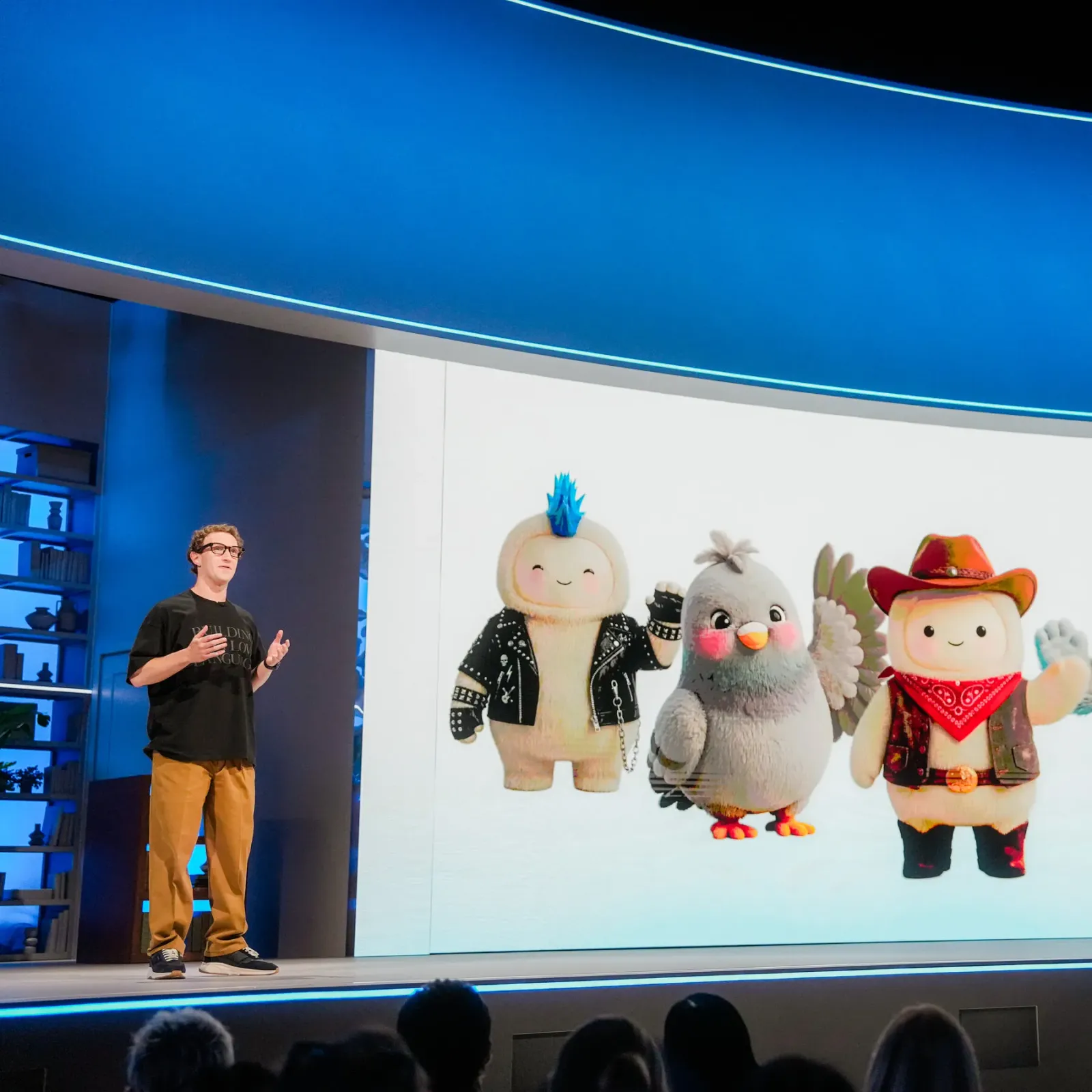
Mark Zuckerberg, Meta's CEO, finally released Muse, its A.I. agent app, after months of safety-related delays, with new competition forcing the decision. For decision-makers, this marks a shift in Meta's risk calculus and signals that speed-to-market is now trumping caution in the A.I. agent race.
Mark Zuckerberg, Meta's CEO, has finally pulled the trigger on Muse, the company's A.I. agent app, after months of delays rooted in safety concerns. According to the New York Times, the decision came only after new competition forced his hand, a reversal that underscores how quickly the A.I. landscape is reshaping even the most cautious corporate strategies. The app is now out, and the message to the market is unambiguous: Meta will no longer let safety reviews stand between it and the front of the A.I. pack.
The delay was not a matter of technical readiness. Meta had built Muse and held it back, weighing the risks of deploying an autonomous agent that could act on behalf of users. Safety concerns are legitimate in this category, because A.I. agents can execute tasks, spend money, and interact with other systems without direct human oversight. But while Meta deliberated, rivals kept shipping. OpenAI, Google, and a wave of startups have been rolling out agentic features and assistant products, each one capturing user attention and setting expectations. For Zuckerberg, the competitive pressure became impossible to ignore, and the calculus flipped from "when it's safe" to "before we lose the window."
This is not the first time Meta has had to balance caution against competitive urgency. The company has been burned before by moving too slowly in social features, and it has also faced regulatory and public backlash over privacy and content moderation. In A.I., Meta has tried to position itself as an open-source leader with its Llama models, but consumer-facing agents are a different game. Muse represents a direct bid for the everyday user, the kind of product that can become a default habit if it lands early. The longer Meta waited, the more ground it ceded to rivals who were already embedding A.I. agents into search, productivity tools, and operating systems.
The competitive trigger is worth examining closely. The source does not specify which competitor or product finally forced the decision, but the broader context is clear: the A.I. agent space is moving from demo to deployment. OpenAI's GPT-4o, Google's Gemini, and Anthropic's Claude have all pushed toward more autonomous, tool-using capabilities. Meanwhile, startups like Rabbit and Humane have tried to make dedicated A.I. hardware, and every major platform is adding agentic features to existing apps. For Meta, which owns some of the largest distribution channels in the world through WhatsApp, Instagram, and Facebook, the cost of delay was not just lost users but lost mindshare. An A.I. agent that becomes synonymous with a platform could be a generational lock-in, and Zuckerberg clearly decided that the risk of missing that opportunity outweighed the risk of shipping early.
Regulatory dynamics add another layer. Governments on both sides of the Atlantic are scrutinizing A.I. safety, and the European Union's A.I. Act is creating new compliance obligations. Meta has been a frequent target of regulators, so its initial caution around Muse was not just ethical; it was also legal and reputational. But the competitive landscape does not wait for regulators. By holding back, Meta risked being defined as the safe but slow player, while faster rivals set the norms for what A.I. agents can do. The decision to release Muse suggests that Meta believes it can manage the safety and regulatory risks in real time, rather than preemptively. That is a bet many executives will recognize: the market rewards speed, and safety frameworks that are too rigid become competitive liabilities.
For decision-makers across industries, the Muse release is a case study in how competitive pressure can override internal risk controls. It is easy to build a safety review process that is thorough, but if it takes months while competitors ship, the process itself becomes the risk. Zuckerberg's move does not mean safety is abandoned; it means safety is being recalibrated to the pace of the market. Companies building A.I. products, or any product in a fast-moving category, should ask themselves whether their review cycles are aligned with the speed of competitive threat. A delay that protects the brand can also destroy it if the market moves on.
The strategic stakes extend beyond Meta. Every CEO launching an A.I. agent, chatbot, or autonomous feature is watching how the biggest players handle the tension between caution and speed. Zuckerberg's decision sends a signal that even the most safety-conscious companies will blink when the competitive gap widens. For boards, the lesson is to build safety frameworks that are dynamic, with clear triggers for expedited review when market conditions change. For founders, the lesson is that a differentiated safety stance is only valuable if it does not become an excuse for indecision. The A.I. agent race is now officially a sprint, and Muse is the proof that Meta intends to run it at full speed, even if that means learning some lessons in public.
In the end, the Muse release is a bellwether for the entire A.I. industry. It shows that the window for cautious deliberation is closing, and that competitive reality is the ultimate arbiter of when products ship. Zuckerberg's hand was forced, but he chose to move decisively. The question now is whether the safety concerns that delayed Muse for months will resurface as bugs, misuse, or regulatory action, and whether the speed of release will prove to be a strategic advantage or a costly mistake. For now, the market has its answer: Meta is in the game, and it is playing to win.
This story's Key Insights and Take-aways are locked.
Create a free account to unlock Executive Actions for one credit.
Register to UnlockAlways free for Executives Club members. Join the Club
More in Technology

A Chinese rocket deorbited over Minnesota and landed in a farmer's cornfield
Experts tied the fragment to LandSpace's Zhuque-2E, which launched on September 15 and shed debris over the American Midwest after deploying 10 satellites.

JPMorgan Chase deploys first $5B into defense tech and hypersonic missiles
The bank is moving off its balance sheet to back robot factories, hypersonic missiles, and supply chains, signaling a new era of bank-backed military innovation.

Cop fired after sharing Flock login with ICE husband: 983 searches
A Savannah officer's shared credential let an ICE agent run hundreds of plate searches on Hispanic drivers, exposing a surveillance backdoor.