

Zuckerberg reportedly buys a $150M-$200M Indian Creek mansion behind one guarded bridge
Miami’s “Billionaire Bunker” sells privacy as infrastructure, and California’s proposed 5% billionaire wealth tax could accelerate it.
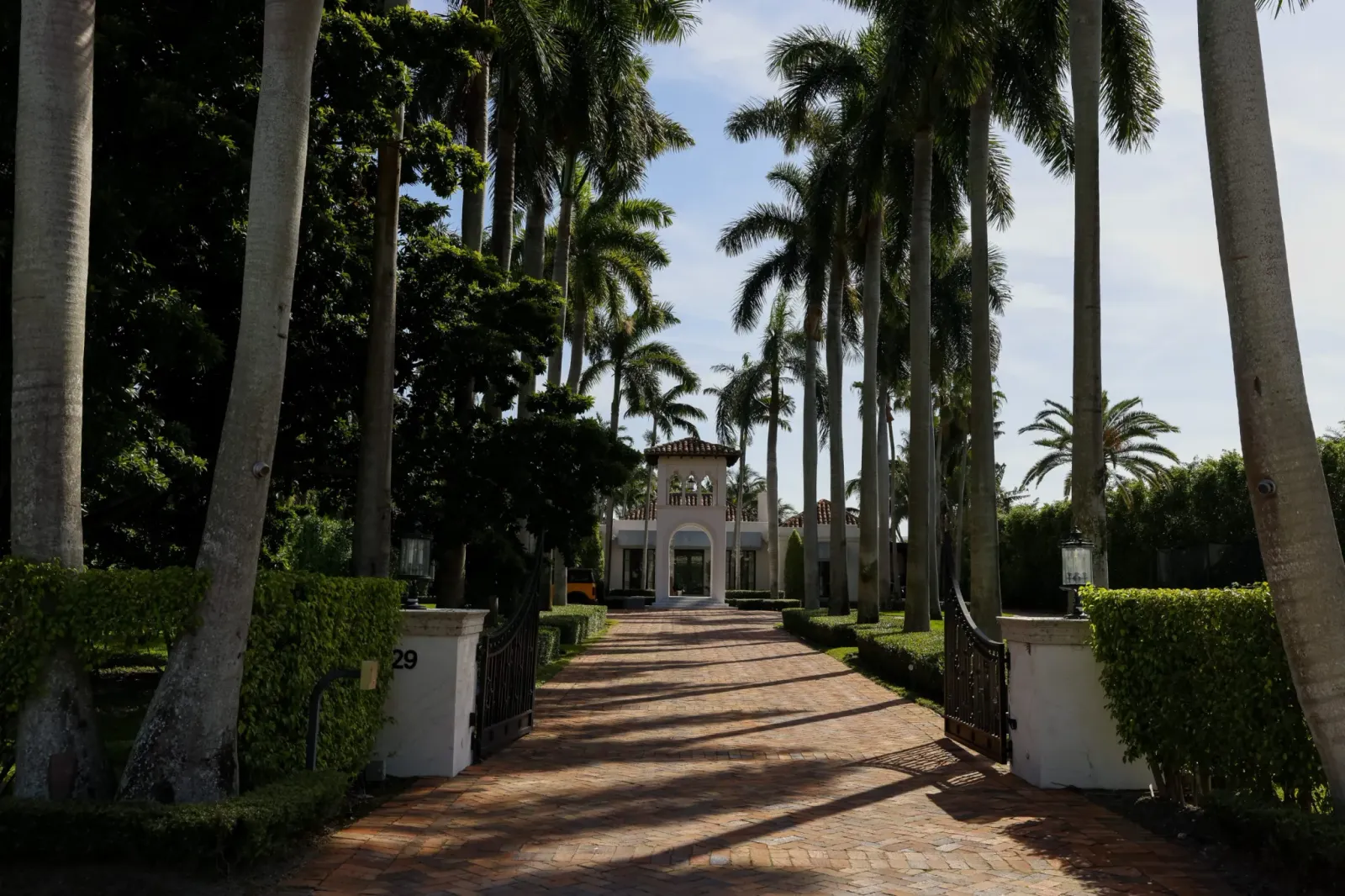
Meta CEO Mark Zuckerberg reportedly bought a newly completed Indian Creek mansion for an estimated $150 million to $200 million, joining a roster that includes Jeff Bezos and others. For dealmakers, this highlights how regulatory pressure and ultra-high-end security turns into real estate demand and off-market capital flows.
Mark Zuckerberg is the latest billionaire reportedly to move into Miami’s “Billionaire Bunker,” Indian Creek Island, by buying a newly completed mansion for an estimated $150 million to $200 million. That price range matters, because Indian Creek is not just expensive. It is designed to make access extremely difficult, with a single guarded bridge and 24/7 policing.
Indian Creek Island, also known as “the Billionaire Bunker,” is a 300-acre, man-made strip of land in Biscayne Bay just north of Miami Beach. It contains 41 waterfront lots on the main island, plus the Indian Creek Country Club and its private 18-hole golf course, where would-be social participants reportedly face a $500,000 initiation fee and a lengthy admissions process. In other words, Zuckerberg’s rumored $150M-$200M purchase is only the surface. The real product is controlled entry.
The island is an independent municipality with its own government and a police force that patrols 24/7, including by sea. A single guarded bridge connects it to the mainland, and visitors must show their ID and may even undergo vehicle inspection. Michael Martirena, cofounder of the Ivan and Mike Team at Compass, describes it as a closed loop: “It’s a bubble, and no one can get on and off, unless you have a reason.” Martirena, who has toured properties there with clients, frames the appeal in terms of safety and being left alone, saying people “feel safe and not bothered.”
This security architecture is also reinforced by geography and sightlines. Because of Indian Creek’s location and strategic landscaping, very few nearby areas such as Bay Harbor Islands or Surfside have clear views into the island. Martirena contrasted this with nearby South Beach celebrity enclaves such as Palm, Star, and Hibiscus Islands, where boat tours often pass by waterfront mansions. For ultrawealthy residents, the difference is not subtle. It is whether attention can physically reach you.
But privacy is not only enforced by guards and patrols. It is managed by how deals are done. Listings on the island are conducted “off market,” meaning a buyer’s agent has to work directly through property owner representatives and contact them multiple times if the buyer is not fully ready to sell. Martirena said the community keeps “chatter at a low level” by handling it internally and privately. That structure turns the island into a small, low-transparency market, where relationship and timing can matter as much as money.
The western side is even more secluded, according to Mick Duchon, a Miami Beach-based real estate agent with the Corcoran Group. Lots on that side border the intracoastal waterway that separates the island from the mainland. Duchon previously told Fortune that western lots are about 80,000 square feet, compared with 50,000 square feet as the norm elsewhere on the island. This is also where two of the five richest people in the world reportedly have holdings: Zuckerberg and Jeff Bezos.
Bezos, who announced his move from Seattle to Florida in 2023, reportedly snapped up three properties on Indian Creek for more than $230 million combined. The plan, as described in the source, is to turn two western lots into a compound, while living in a Mediterranean-style house on a third lot across the way. And, as with many deals in ultra-luxury markets, teardown risk and build-out churn is part of the business model. Martirena said when high-end buyers can afford these homes, they often tear down existing structures to build new ones. So the island’s economics are not just purchase prices. They are also construction demand, contractor pipelines, and the capital intensity of “upgrade now” behavior.
This billionaire migration is happening alongside broader momentum in South Florida luxury real estate, which Martirena described as “COVID 2.0.” One driver is Florida’s lack of a state income tax, which has helped interest from high-end buyers increase even as activity at the lower end of the housing market slows. Then there is the regulatory tailwind that could turn curiosity into urgency: California’s Proposition 40, a one-time billionaire wealth tax, qualified for the state’s November ballot. If voters approve it, the measure would impose a 5% tax on the net worth of billionaires who were California residents on Jan. 1, 2026.
The source notes that Google cofounder Larry Page is among the wealthy Californians who has reportedly begun shifting assets, including his family office, out of California. It also mentions Page recently paid $173 million for two waterfront mansions in Miami’s Coconut Grove neighborhood. Martirena said his own business has picked up, with several inquiries he attributed directly to the potential wealth tax. “They’re kind of preplanning ahead of time,” he said, adding that some buyers want to stay in the state of California because they love where they are, but still respond to the possibility of the tax. The net effect is a time-shift in real estate decision-making: even when buyers are not ready to relocate immediately, they start moving financial and lifestyle assets earlier than usual.
For executives and board members watching capital allocation, the Indian Creek story is a case study in how regulation, tax geography, and security infrastructure combine into demand. Zuckerberg’s reported $150 million to $200 million mansion purchase is not only a headline on wealth. It is a signal that, when the rules change in a major state, ultrawealthy households can respond quickly, and they do it through tightly controlled marketplaces like Indian Creek, where privacy is operationalized and access is engineered.
This story's Key Insights and Take-aways are locked.
Create a free account to unlock Executive Actions for one credit.
Register to UnlockAlways free for Executives Club members. Join the Club
More in Business

Leopold Aschenbrenner’s $45B AI hedge fund plunged, losing most value in days
Former OpenAI researcher Leopold Aschenbrenner watched Situational Awareness unravel quickly, forcing AI fund managers to ask what risk they missed.

Anthropic’s Levant Alpöge cracks the Jacobian conjecture after 87 years
A Harvard valedictorian used Claude to hit a 1939 breakthrough, but the missing “why” is the real problem.

Uber buys Delivery Hero for nearly $15B, vaulting to top food delivery outside China
The deal doubles Uber's dual-services footprint and pushes a ride-and-eats bundling play into 50 more markets.