
Zuckerberg's Muse Charm: Meta's unproven bet to beat OpenAI and Google
The Meta CEO is betting a consumer AI device can leapfrog rivals in AI agents and hardware, but the strategy has yet to prove itself.
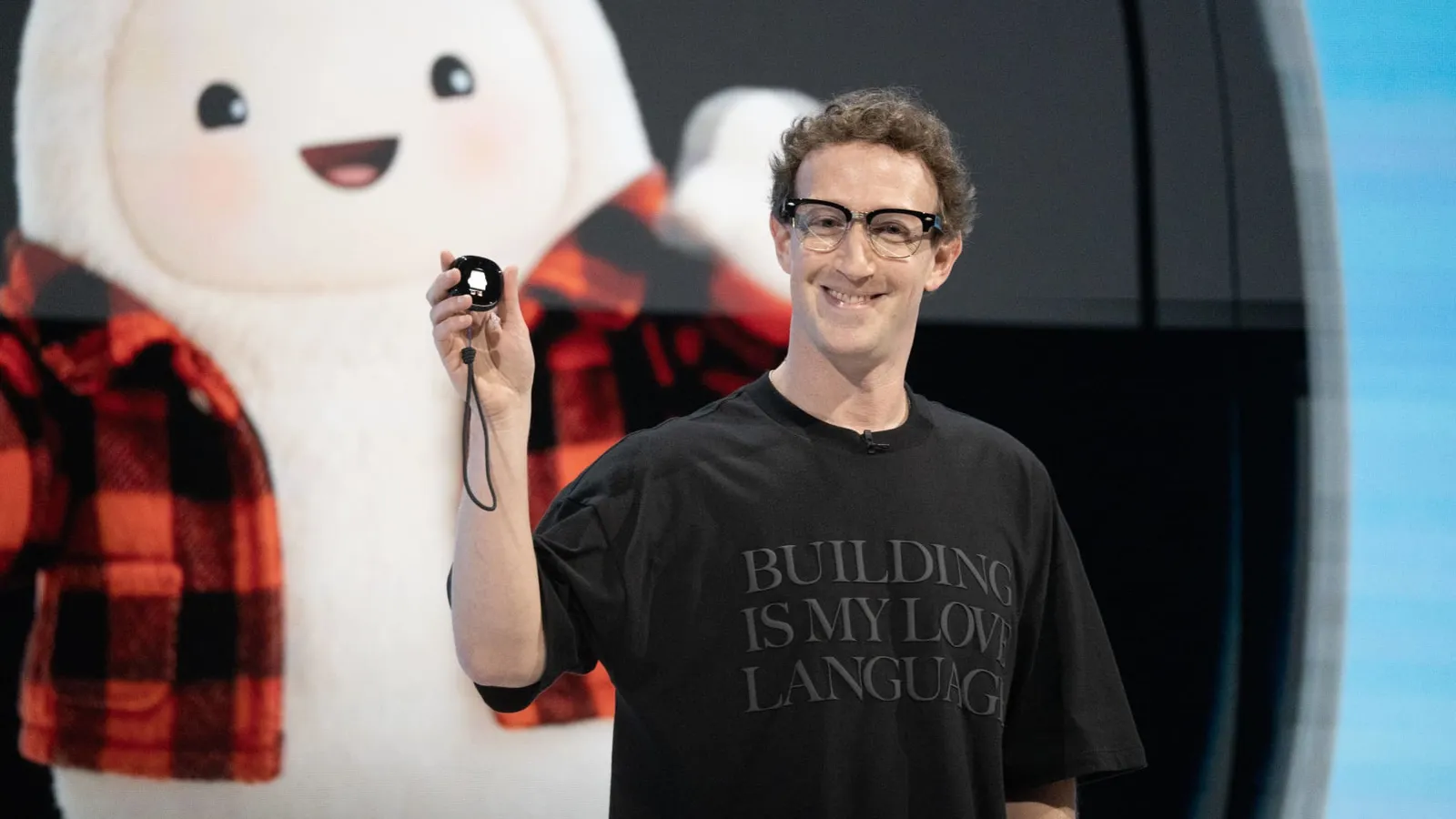
Mark Zuckerberg's Meta is launching the Muse Charm, a consumer AI device aimed at beating OpenAI and Google in AI agents and hardware. For executives, the move signals that the AI race is moving from software to physical products, with unproven payoff.
Mark Zuckerberg is taking Meta where OpenAI and Google have been slow to go: the physical world. The company's new Muse Charm device is designed to put Meta ahead of its rivals in both AI agents and consumer hardware, according to CNBC. But the strategy remains unproven, and the stakes are enormous.
The device lands at a moment when the AI race is shifting from chatbots and models to agents that can take actions for users. OpenAI and Google have focused on software agents that live in the cloud or on phones. Zuckerberg's bet is that the next frontier is a wearable device that users interact with constantly. Whether consumers want that device is the open question.
Meta has been here before. The company has spent years and billions of dollars on hardware bets, from the Quest virtual reality headsets to the Ray-Ban smart glasses. Those products have found niches but have not become the mass-market platforms Zuckerberg has described. The Muse Charm is another attempt to own the interface between users and AI, rather than renting it from Apple or Google.
The competitive context is brutal. OpenAI has reportedly been exploring its own hardware efforts, and Google has deep experience in both AI and consumer devices through its Pixel line and Nest products. But neither has shipped a dedicated AI agent device at scale. Meta's advantage is distribution: billions of users across its apps, and a proven ability to move quickly. Its disadvantage is trust and execution: hardware is hard, margins are thin, and consumers are skeptical of new gadgets.
The "unproven" label is not just about the device itself. It is about the entire category. AI agents are still in their infancy, and the business models around them are unclear. Will users pay for a dedicated device when their smartphone already has AI assistants? Can Meta build a developer ecosystem around a new form factor? These questions have no answers yet, which is why the strategy is a bet, not a sure thing.
For investors and executives, the Muse Charm is a signal about where Meta thinks the AI value chain is heading. If AI agents become the primary way people interact with digital services, the company that controls the hardware and the agent has enormous leverage. Zuckerberg is trying to claim that position before OpenAI or Google can. The risk is that he is early, or that the device fails to resonate, leaving Meta with another expensive hardware division.
The broader lesson for decision-makers is that the AI race is no longer just about models and data centers. It is about the physical products that deliver AI to users. Companies that ignore hardware may find themselves locked out of the most important distribution channels. But companies that rush into hardware without a clear use case may burn capital and credibility. Meta's Muse Charm is a test case for both.
For now, the device is a statement of intent. Zuckerberg is willing to bet that the next big AI platform is something you wear, not something you type into. If he is right, Meta could leapfrog its rivals. If he is wrong, the company will have learned another expensive lesson. Either way, the rest of the industry is watching.
This story's Key Insights and Take-aways are locked.
Create a free account to unlock Executive Actions for one credit.
Register to UnlockAlways free for Executives Club members. Join the Club
More in Technology

A Chinese rocket deorbited over Minnesota and landed in a farmer's cornfield
Experts tied the fragment to LandSpace's Zhuque-2E, which launched on September 15 and shed debris over the American Midwest after deploying 10 satellites.

JPMorgan Chase deploys first $5B into defense tech and hypersonic missiles
The bank is moving off its balance sheet to back robot factories, hypersonic missiles, and supply chains, signaling a new era of bank-backed military innovation.

Cop fired after sharing Flock login with ICE husband: 983 searches
A Savannah officer's shared credential let an ICE agent run hundreds of plate searches on Hispanic drivers, exposing a surveillance backdoor.