
185M SpaceX shares shorted, about 29% of float, as stock dips under IPO price
S3 says short sellers piled in after SpaceX traded below its IPO price, shifting risk calculus for investors.

SpaceX is facing a short-selling wave, with about 185 million SpaceX shares sold short, about 29% of its publicly tradable float, according to S3. For decision-makers, the move signals rising bearish positioning right after the stock slipped below IPO price.
SpaceX is getting crowded on the other side of the trade. According to S3, about 185 million SpaceX shares are now sold short, representing roughly 29% of the company's publicly tradable float. The timing matters: the stock is dropping below its IPO price, and that is when short sellers tend to get aggressive, betting that the market will reprice the company lower than the initial offering.
If you are tracking the implications for corporate finance or board-level risk, this is not a background detail. The short interest level S3 cites is massive relative to what is publicly tradable, meaning a large portion of the shares available for trading are paired with bets that the price will fall. With nearly 29% of the float sold short, the market structure becomes more than a story about sentiment. It becomes a mechanics story about supply, demand, and volatility, especially during moments when price action is already moving against the company.
To understand why this kind of number grabs attention, you have to remember what “publicly tradable float” means. A float is the portion of shares that can actually change hands in the open market, excluding locked-up or otherwise non-tradable shares. When a large chunk of that tradable pool is shorted, short sellers are essentially saying, “We want to own the right to sell shares we do not currently hold, then buy them back later at a lower price.” If their expectation is wrong and the stock rallies, the cost of being wrong can rise quickly, because short positions need to be covered, which can amplify buying pressure.
CNBC reports the buildup in short selling in the context of SpaceX’s stock trading below its IPO price. IPO price is a benchmark that matters to both public-market participants and private-market expectations. The first day or two of trading set a reference point, but once the stock breaks below that number, it can force different stakeholders into different behavioral modes. Long holders may feel pressure to reassess valuation, while traders who work off near-term catalysts may treat the IPO price as a line in the sand for their models. Short sellers, in turn, often view breakouts above IPO price as late, and breakdowns below IPO price as confirmation that the market is resetting.
This is also where second-order effects start to show up for people running companies in similar positions, like high-profile private-to-public transitions. When a stock is under pressure and a high percentage of float is shorted, the narrative can become self-reinforcing: negative price momentum attracts more scrutiny, which can attract more bearish positioning, which can keep pressure on the stock. Even if the underlying business fundamentals do not change overnight, the market’s interpretation of risk can move faster than the business can respond. That gap between “operations” and “pricing” is where short interest becomes a real governance and communication issue, not just a trading statistic.
For boards and executive teams, the question becomes less about whether the market can be wrong and more about how you manage visibility. Short sellers do not need to be right immediately, but they do need liquidity and time. In markets where short interest is high, management teams often need to be extra crisp about what matters and what has not changed, because unclear messaging can leave room for the market to fill the void with speculation.
There is also the capital markets angle. Once a stock is trading below IPO price, it can influence how investors think about future fundraising, dilution risk, and the durability of the valuation implied by the offering. While CNBC’s report centers on the short-selling figure, the strategic context is that pricing below IPO can reshape how institutions behave in the secondary market. Institutions may become more selective, traders may reduce exposure until volatility calms, and anyone with a longer horizon may demand more certainty about trajectory.
SpaceX’s situation, as described by S3 through CNBC, is a clear example of how quickly public-market dynamics can turn. About 185 million shares shorted, roughly 29% of publicly tradable float, and a stock performance that has moved under the IPO price together create a setup where price action can matter more than usual. If you are an executive or investor in a similarly positioned company, the takeaway is straightforward: when the market’s hedge becomes crowded, it can turn uncertainty into a feedback loop, and you need to be ready for what that does to sentiment, volatility, and strategic decision-making.
This story's Key Insights and Take-aways are locked.
Create a free account to unlock Executive Actions for one credit.
Register to UnlockAlways free for Executives Club members. Join the Club
More in Business

Uber buys Delivery Hero for nearly $15B, vaulting to top food delivery outside China
The deal doubles Uber's dual-services footprint and pushes a ride-and-eats bundling play into 50 more markets.

Epic and Google drop settlement bid, forcing rival Android app stores by July 22
Google told the court it is ready to carry third-party app stores starting Wednesday, July 22.
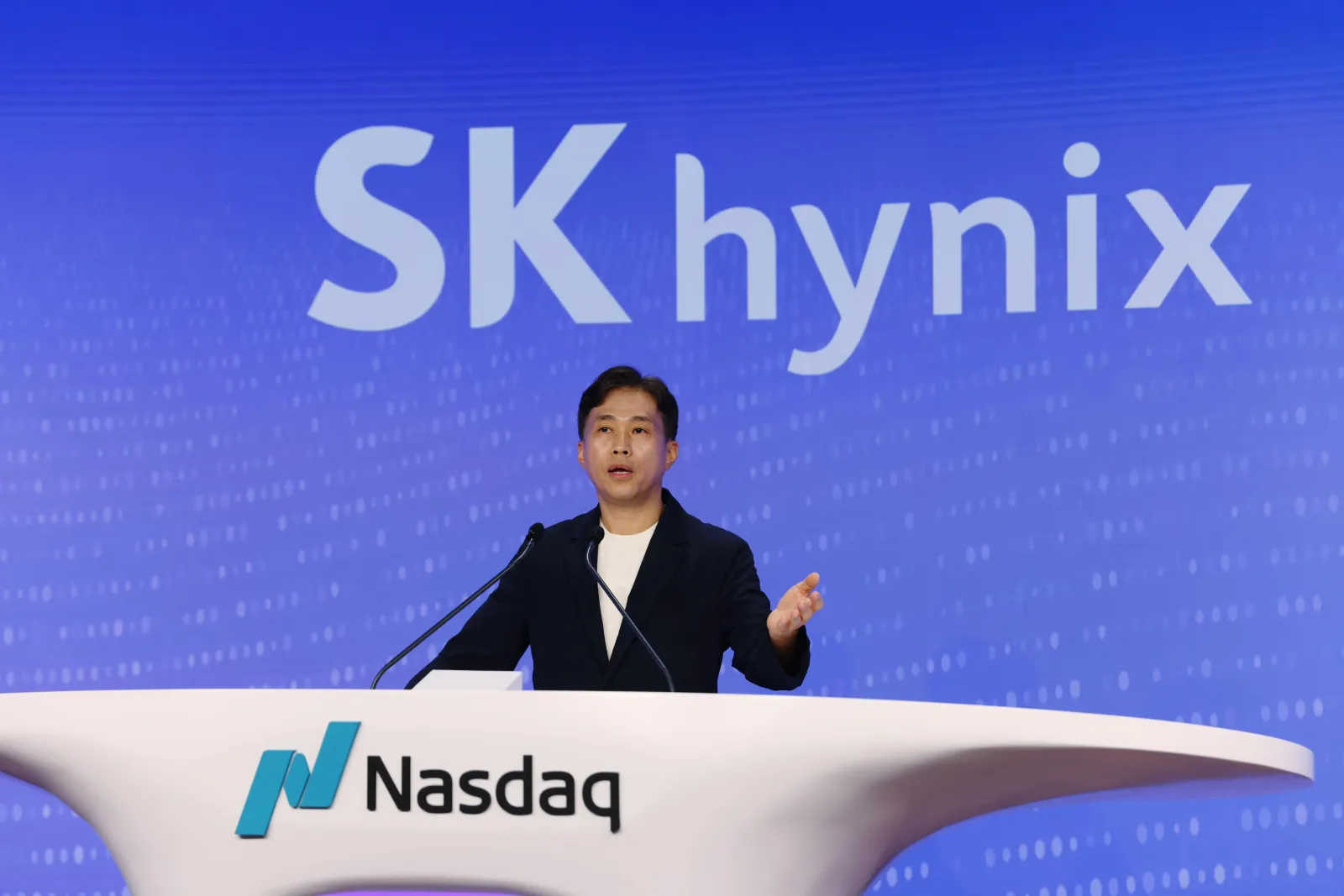
SK Hynix opens at $170, raises $26.5B, and tops foreign IPO records
In Friday's Wall Street debut, SK Hynix turns AI RAM demand into a $26.5B fundraising moment that rewrites comps.