

SK Hynix opens at $170, raises $26.5B, and tops foreign IPO records
In Friday's Wall Street debut, SK Hynix turns AI RAM demand into a $26.5B fundraising moment that rewrites comps.
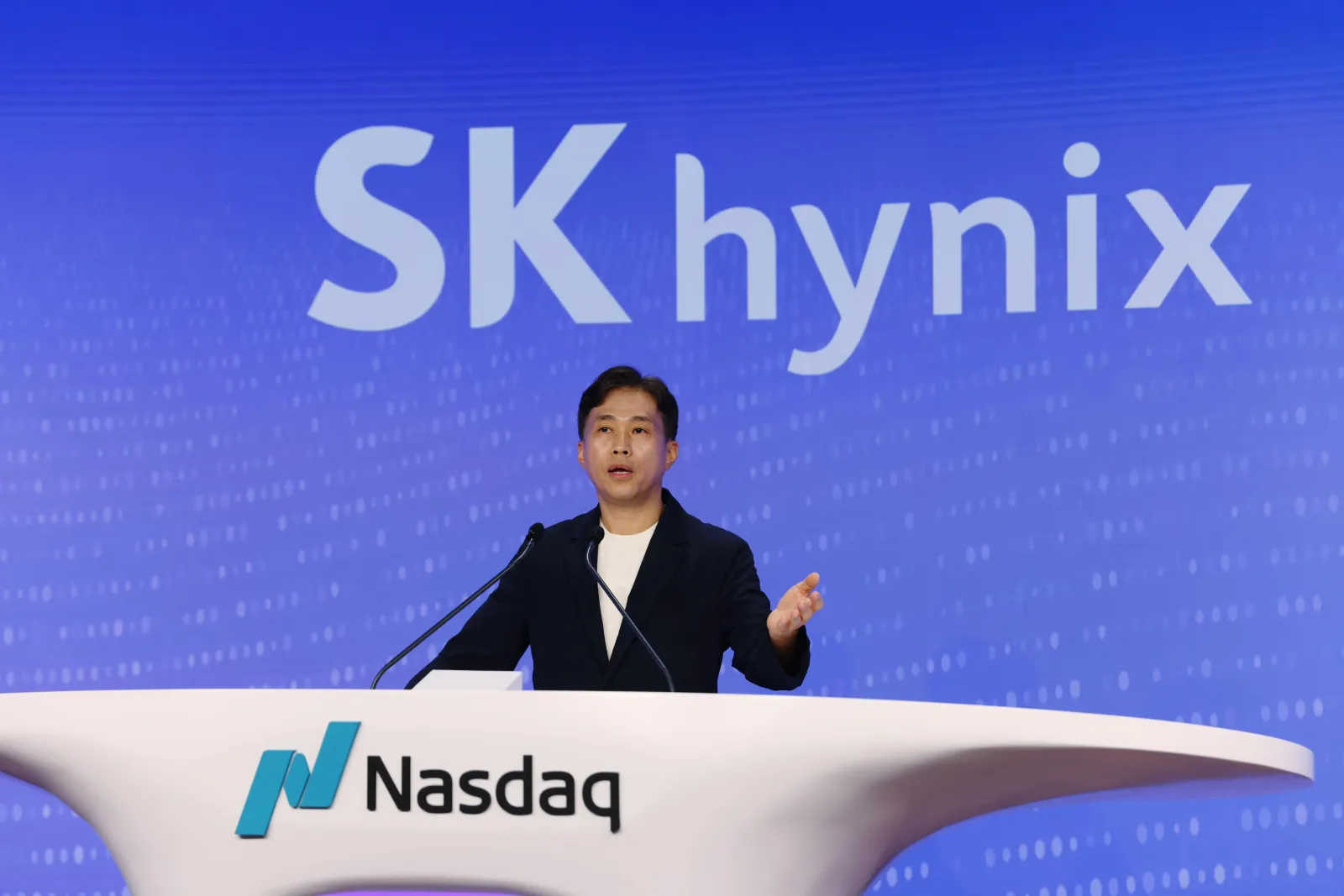
SK Hynix, a major memory-chip supplier, launched on Wall Street Friday after the AI-driven surge in DRAM and HBM demand. The company opened at $170 per share, raised $26.5 billion, and surpassed Alibaba’s record for the largest debut of a foreign company.
SK Hynix just made a Wall Street debut that is hard to ignore: it opened at $170 per share and raised $26.5 billion on Friday. The listing also surpassed Alibaba's record as the largest debut of a foreign company, according to reports from The Associated Press and CNN.
That matters for more than scoreboard bragging rights. The moment lands right in the middle of the AI boom that has boosted demand for RAM. SK Hynix is one of the world’s biggest memory-chip suppliers, and its debut is essentially a public market confirmation that investors are willing to pay up for the parts that power AI infrastructure, not just the headline-grabbing GPUs.
To understand why this IPO is so consequential, you have to zoom out to what DRAM and high-bandwidth memory (HBM) actually do. DRAM is a core type of memory used across computing systems. HBM is designed to move data quickly and efficiently, and it has become essential for the widespread buildout of AI systems that need high memory bandwidth alongside heavy compute. When AI adoption accelerates, memory demand typically follows, and suppliers that can scale supply become strategic players.
SK Hynix is one of three major companies benefitting from that surge in demand for DRAM and HBM. In May, SK Hynix reached a $1 trillion valuation, and it briefly overtook Samsung as South Korea’s most valuable company. That background helps explain why this IPO was positioned as more than a routine capital raise. It is a continuation of a valuation and demand story that moved from private balance sheets into public market expectations.
The capital raised, $26.5 billion, also signals something about timing. IPO windows can open and close quickly, but the AI trade has been one of the few that stayed consistently “bid” across multiple market moods. For executives and boards, that creates a rare combination: an asset with urgent end-market demand and a market ready to reward it. In that context, a big debut is not just funding. It becomes a negotiating lever for future expansion, capacity commitments, and supply chain moves, especially in memory where production scaling and yield improvements can be decisive.
There is also an investor-relations and market-structure angle. When a foreign company lands with record-scale fundraising, it can reset how other cross-border tech and semiconductor debuts are priced. Comparables matter for future issuers: bankers, CFOs, and board members watch what investors accept at the open, what they keep buying afterward, and how quickly the valuation story gets absorbed. A debut that surpasses Alibaba’s foreign IPO record does not just crown one company. It changes the benchmark other issuers are implicitly compared against, including those in semiconductors and hardware.
Finally, for peers in the ecosystem, SK Hynix’s public timing and scale tighten the feedback loop between AI demand and memory supply. If AI workloads continue to expand, the bottleneck logic becomes sharper: compute without sufficient memory throughput is less valuable, and memory without enough supply or performance is a limiter. The market is now watching a key supplier with a public valuation narrative that tracks those bottlenecks in real time. For boards and C-suites at other infrastructure suppliers, that means scrutiny increases, because investors will increasingly treat memory capacity, technology roadmaps, and production scaling as first-class drivers of growth, not supporting details.
In short: SK Hynix is not just another chip stock hitting the tape. Its $170 opening price, $26.5 billion fundraising, and record-setting foreign IPO debut are a direct financial expression of DRAM and HBM demand tied to AI buildout. And if you are an executive trying to plan capacity, financing, or partnerships in the semiconductor world, this is a reminder that the “boring” components can become the center of gravity when the industry’s demand curve spikes.
This story's Key Insights and Take-aways are locked.
Create a free account to unlock Executive Actions for one credit.
Register to UnlockAlways free for Executives Club members. Join the Club
More in Business

Elon Musk unveils a flying car, and SpaceX helped build it
The Tesla CEO's showcase at a SpaceX facility signals a future where road and rocket engineering converge.

Apple's $2,000 iPhone Duo opens preorders, taking on Samsung and Google
Apple's first foldable hits the market at a premium price, reshaping a category Samsung and Google have led.

Pope Leo XIV, first American pope, diagnosed with lung cancer
The 71-year-old Chicago-born pontiff underwent successful surgery on his right lung, and his diagnosis raises new questions about his AI-focused papacy and the Vatican's future.