

216 Capital puts six figures into RoboCare on June 23 for MENA precision agriculture scale-up
Tunisia's RoboCare lands a six-figure investment to expand its AI agronomy platform across African and Middle Eastern markets.
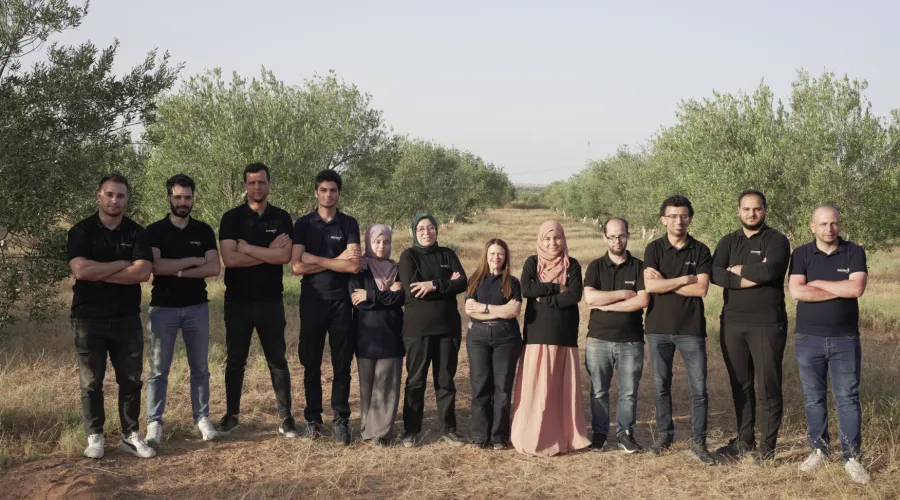
On June 23, 2026, 216 Capital announced its entry into the capital of RoboCare, a Sfax-based startup using AI and precision agriculture. The six-figure investment is designed to fund RoboCare's next growth phase, including expansion into African and Middle Eastern markets.
Precision agriculture in the MENA region just got a new backer. On 23 June, 2026, 216 Capital announced it is entering the capital of RoboCare, a Tunisian startup specializing in precision agriculture and artificial intelligence applied to agriculture, via a six-figure investment. The stated goal is to support the startup's next growth phase and expand into African and Middle Eastern markets.
The reason decision-makers should care is simple: climate change, water stress, and rising agricultural production costs are not abstract worries in farming economies. RoboCare positions its platform as an operational lever for farmers and agribusiness players, using intelligent aggregation of multiple data sources and AI models to enable earlier intervention on crops. In its current approach, it uses satellite imagery, drone data, IoT sensors, weather data, and field expertise. The system then aims to detect crop diseases and stress earlier, optimize resource usage, and improve farm performance.
Now zoom out to the capital and market logic. Precision technology is moving from experimental to strategic because agriculture has a dual constraint: farms need higher yields and resilience, but they also face pressure to reduce environmental impact. RoboCare's pitch, as reflected in the announcement, is that it combines artificial intelligence, agronomy, and data analysis so farmers can improve productivity while lowering their environmental footprint. This matters because buyers of “digital agriculture” do not just want dashboards. They want decisions that change inputs, timing, and outcomes.
RoboCare also emphasizes that it is not trying to be a generic agricultural platform dropped into any geography. The startup was founded in Sfax and builds its models from local data to reflect soil and climate conditions in North Africa and the Middle East. The company highlights strategic regional crops, especially olive trees, cereals, and processing tomatoes. For executives evaluating this type of investment, the non-obvious point is that model localization is often the hidden cost in agtech. Training on local conditions, getting enough ground truth, and converting alerts into actionable agronomy can be slower than building something broadly similar elsewhere. RoboCare says it has already progressed past “prototype” territory by monitoring several thousand hectares under intelligent surveillance and generating thousands of agronomic alerts, enabling operators to respond faster and more effectively.
There is also a partnership and ecosystem angle. The announcement states that RoboCare has established partnerships with several institutional players and is gaining growing visibility within international AgriTech ecosystems. That matters because agronomy solutions rarely scale by software distribution alone. In practice, scaling can depend on whether institutions, operators, and agribusiness networks adopt the workflow, share data, and help convert recommendations into field-level action.
From 216 Capital's perspective, the investment is framed as aligned with its strategy of supporting high-potential tech startups with concrete answers to major economic, social, and environmental challenges across the continent. While the announcement does not list a specific check amount beyond “six-figure,” it does make the investment thesis clear: agriculture is described as a key sector for food security and economic growth across many African and MENA countries, and RoboCare is positioned as aiming to become a leading player in agricultural digital transformation at the regional scale.
The strategic stakes for executives and board members are about more than one company. If precision agriculture using AI can expand into African and Middle Eastern markets with enough field evidence, it can shift procurement and operational norms across the value chain. That could reshape competitive landscapes, because it would favor providers who can prove outcomes tied to earlier detection of crop diseases and stress, better resource optimization, and measurable farm performance. It may also raise expectations from institutional partners: once you have pilots generating thousands of agronomic alerts, “digital agriculture” stops being a novelty and starts becoming baseline infrastructure for risk management.
For leaders in adjacent sectors, the second-order implication is that investments like this can accelerate data-driven agriculture as a region-wide capability. When AI models are built on local data and deployed across real hectares, the resulting operational knowledge becomes harder to replicate quickly. That puts pressure on competitors to match localization depth, alert-to-action workflows, and partner networks, not just to launch another agriculture app.
This story's Key Insights and Take-aways are locked.
Create a free account to unlock Executive Actions for one credit.
Register to UnlockAlways free for Executives Club members. Join the Club
More in Technology

Nvidia's $89B data center quarter: the 9 companies cashing in
The AI buildout is minting fortunes beyond GPUs, and memory, cloud, and cooling suppliers are riding the same wave.

Google quietly links your phone number to every Android account on your SIM
Adding a SIM now ties your phone number to all Google accounts - and future accounts inherit it. Here's the security and privacy stakes.

Hijacker AI 'Skynet mode' runs 100,000 attack steps against exposed models
Symantec caught a criminal AI agent that borrows other models, steals data, and mines crypto; the only relief is no confirmed victims yet.