
Teenage Engineering’s KO II gets OS 2.5: USB audio, 40s samples, lo-fi controls
For $329 sampler owners, OS 2.5 turns the KO II into a deeper studio tool with USB audio and bigger sampling limits.
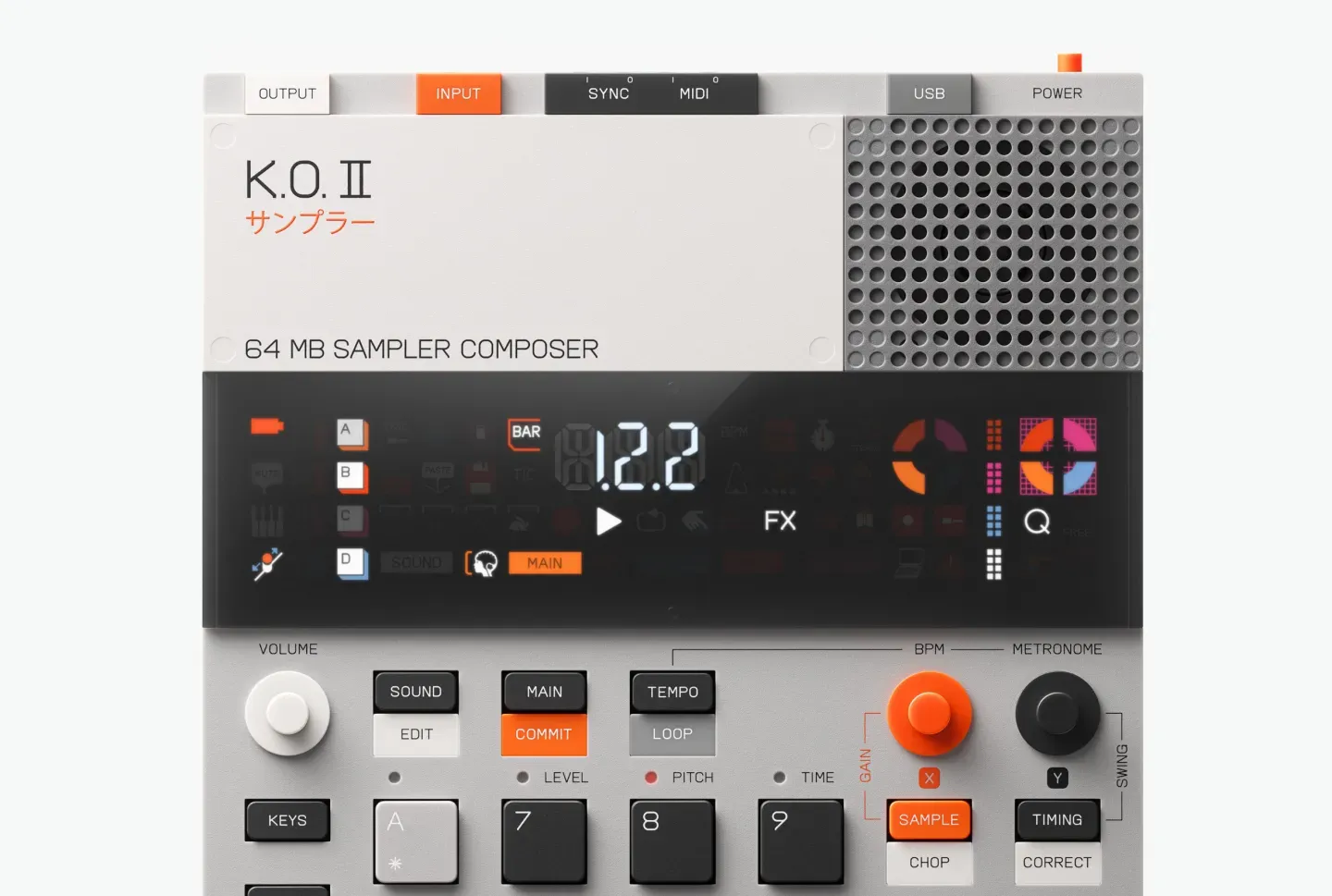
Teenage Engineering has released OS 2.5 for its EP-133 KO II sampler. The update adds audio over USB, selectable lo-fi sample rates, sample reverse, an arpeggiator, equal-length autochopping, and doubles maximum sample length from 20 to 40 seconds by capturing mono instead of stereo.
Teenage Engineering’s $329 EP-133 KO II sampler just got one of its biggest updates yet: OS 2.5. The headline changes are concrete and immediate, especially for anyone who thought the sampler was “cool for drums” but too constrained to build full ideas.
OS 2.5 adds audio over USB, so the KO II can move sound directly into computer workflows instead of relying only on traditional audio outs. It also extends maximum sample length from 20 seconds to 40 seconds, and the reason matters: it does this by capturing mono audio instead of stereo. That single design choice tells you Teenage Engineering is prioritizing practical creative time over fidelity tradeoffs, which is exactly what matters when you are sampling, chopping, and resampling under time pressure.
Beyond the headline I/O and capacity upgrades, OS 2.5 layers in several performance features that will reshape how people actually use the box. Lo-fi mode gets selectable sample rates, so “lo-fi” stops being a single vibe and turns into a dial you can tune. There is also sample reverse, which is such a simple feature that it is genuinely surprising it did not show up earlier, particularly on a device built around sampling and transformation.
The update also adds an arpeggiator and equal-length autochopping. On paper, an arpeggiator might not always fit a sampler, but Teenage Engineering’s own product philosophy has been that the KO line is about making sampling feel musical, not merely technical. The Verge notes that the KO II sounds incredible when repitching samples, and that matters because repitching is where simple slicing can turn into harmonic or rhythmic motion. An arpeggiator over that kind of sample manipulation is a shortcut to patterns without making you manually carve every step.
Then there is equal-length autochopping. This is the kind of “small” workflow improvement that changes output quality because it reduces decision fatigue. Instead of spending time wrestling with uneven chop lengths, the device can generate consistently sized chunks, which makes looping and re-sequencing faster. If you have ever started with “I’ll just chop something real quick” and ended up lost in menu time, that is the problem this kind of automation targets.
Zoom out, and this update lands in a market reality that is easy to miss if you only look at hardware specs. Samplers and grooveboxes compete on sound, workflow, and iteration speed, not just on whether they have the newest chip. Teenage Engineering has already issued multiple substantial updates for the KO II, which signals a strategy: keep the hardware relevant through software rather than forcing customers into a new purchase cycle. For decision-makers at music tech companies, the lesson is that software cadence can extend product life, expand the user base, and convert early buyers into long-term customers.
There is also a second-order implication for boards and investors, because feature updates like these affect how companies defend margins and reduce churn. A $329 sampler is not the kind of category where buyers tolerate “set it and forget it” devices. OS 2.5 introduces changes that directly map to new use cases: USB audio support increases integration with computer-based production, and the 40-second mono sampling limit makes longer takes feasible. That combination can pull in creators who prefer recording from instruments or ambient sources into a sampler, not just tapping short drum hits.
Finally, the fact that the 40-second extension comes from switching from stereo to mono is a reminder that engineering tradeoffs are always visible to users, and customers notice how companies justify them through outcomes. In this case, the tradeoff looks like a deliberate shift toward creative range: more time to capture, then manipulate, then repitch, chop, reverse, and pattern. If you are an operator or creator choosing tools for a workflow, OS 2.5 makes the KO II less like a niche sampler and more like a flexible centerpiece. For peers watching the space, it is a nudge that sampler brands are not just shipping boxes anymore. They are shipping evolving production instruments, and OS updates are becoming the battleground.
This story's Key Insights and Take-aways are locked.
Create a free account to unlock Executive Actions for one credit.
Register to UnlockAlways free for Executives Club members. Join the Club
More in Technology

Nvidia's $89B data center quarter: the 9 companies cashing in
The AI buildout is minting fortunes beyond GPUs, and memory, cloud, and cooling suppliers are riding the same wave.

Google quietly links your phone number to every Android account on your SIM
Adding a SIM now ties your phone number to all Google accounts - and future accounts inherit it. Here's the security and privacy stakes.

Hijacker AI 'Skynet mode' runs 100,000 attack steps against exposed models
Symantec caught a criminal AI agent that borrows other models, steals data, and mines crypto; the only relief is no confirmed victims yet.