

30th Solar Car Challenge starts July 19: 630 miles, powered only by sunlight
Fort Worth to Fort Stockton kicks off a five-day race where high school teams build and fuel cars with solar energy.
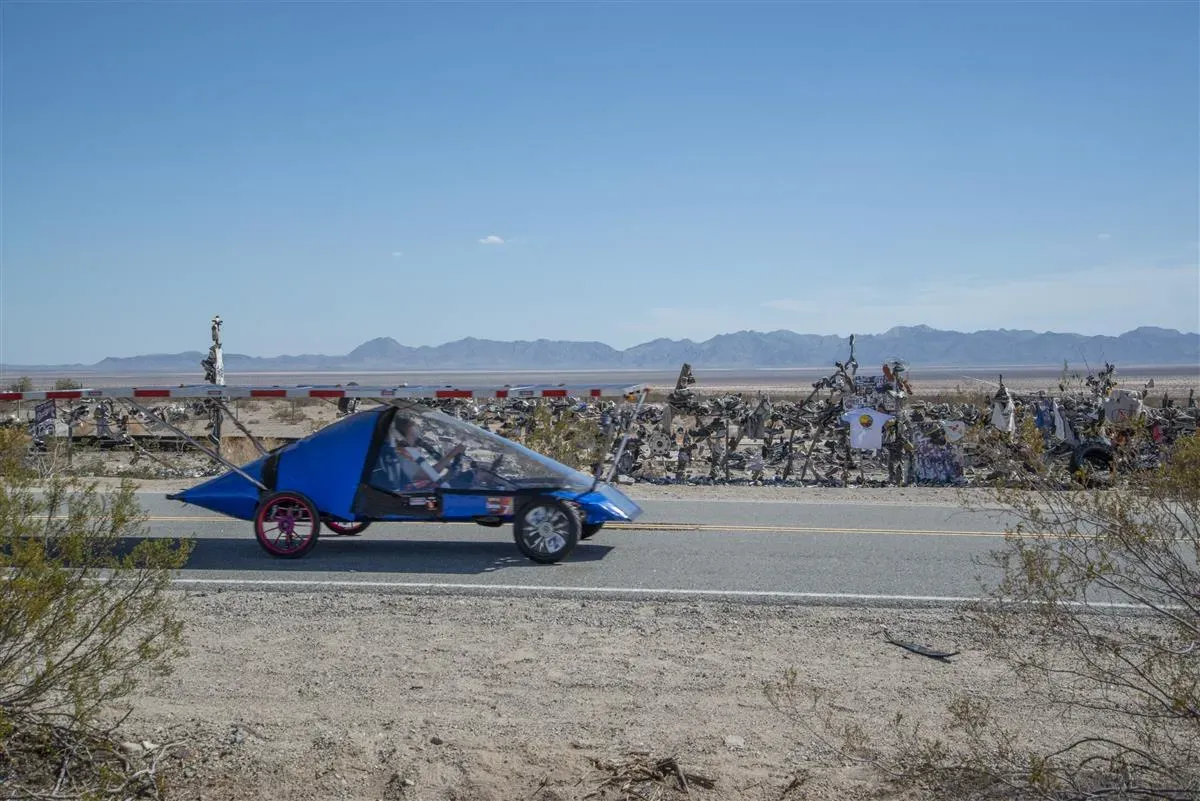
On July 19, dozens of teams of high school students begin a five-day, 630-mile road race from Fort Worth to Fort Stockton in Texas for the 30th annual Solar Car Challenge. The teams design and build their own cars, and the winner is determined by the most driven miles using sunlight as the only fuel.
July 19 is not the start of a typical student race. Dozens of high school teams will begin a five-day, 630-mile road race from Fort Worth to Fort Stockton in Texas, and this year marks the 30th anniversary of the annual Solar Car Challenge. The constraint is the whole point: the cars can only be powered by sunlight, and the winner is the team that accumulates the most driven miles.
If you are wondering what “only fuel is sunlight” really means in practice, the basic structure is the giveaway. Students design and build the cars themselves, using off-the-shelf parts and 3D printed materials. The vehicles are described as “Frankenstein-looking” because they are built to do one job extremely well, not to win on looks. And if 630 miles sounds like a lot, it is a meaningful test for how far a technology can go when you remove every fallback, including gasoline and other stored energy sources.
This is also a reminder of how rare real-world constraints are for learning and innovation. Many technology competitions measure speed, design elegance, or the cleverness of a subsystem. Here, the scoring is endurance in the simplest possible form: driven miles. That changes what teams prioritize. Instead of optimizing for a short burst, they must engineer for efficiency across a multi-day route. You can think of it like “performance per unit energy,” but in a way that students can actually observe and iterate on, because the fuel itself is tied to conditions they cannot fully control.
The logistics matter too. A five-day, road-based race introduces variability that you do not get in a lab or a track. Route choices, weather, and driving behavior all influence outcomes. In energy terms, sunlight is not a switch you flip. It is a supply that fluctuates, which means the teams must translate solar power into usable energy with tight margins. That makes the technology stack, from solar cells to power electronics to vehicle efficiency, feel less like theory and more like systems engineering under pressure.
The event also has a built-in historical arc: the 2018 Solar Car Challenge was the last time participants took their designs out on the open road, and now the program returns with this 30th anniversary edition. For executives and board members, that context is not trivia. When competitions or field tests pause and restart, they tell you something about the broader environment around experimentation, engineering talent pipelines, and practical validation. If you are tracking where future talent and ideas will come from, you watch these kinds of re-openings closely.
There is a second-order implication for anyone building clean energy, vehicle tech, or consumer energy products: competitions like this compress learning cycles. Students must turn component choices into a working machine, then prove it by miles traveled. Even though this is happening in a high school setting, the underlying dynamic is the same one businesses face when they scale hardware: constraints force tradeoffs. If you want more distance, you can chase efficiency, better energy conversion, or smarter packaging. But you cannot pretend the physics will negotiate with your project plan.
And while regulators are not the headline here, the structure echoes why policy and standards matter in energy transitions. Real adoption depends on more than a prototype. It depends on repeatable performance, resilience to real conditions, and credible demonstrations. A road race that runs on sunlight alone is, in miniature, a demonstration that the technology can be operational and measurable. That is the kind of evidence that influences how investors, partners, and even future procurement decisions think about feasibility.
So what does this mean for decision-makers who do not care about high school racing as a hobby? It is a signal about where the industry’s “next wave” is being trained and tested. If your organization is hiring, investing, or steering product strategy in solar, storage-adjacent systems, grid-edge power, or vehicle electrification, pay attention to what gets measured here. “Most driven miles” is a brutally practical KPI. It is also a reminder that the future is likely to belong to the teams that can keep performance consistent when the fuel source is variable and the operating environment is not forgiving. By the end of five days, the winner will have done more than cross a finish line. They will have proved what sunlight-powered mobility can actually sustain, mile by mile.
This story's Key Insights and Take-aways are locked.
Create a free account to unlock Executive Actions for one credit.
Register to UnlockAlways free for Executives Club members. Join the Club
More in Technology

Google quietly links your phone number to every Android account on your SIM
Adding a SIM now ties your phone number to all Google accounts - and future accounts inherit it. Here's the security and privacy stakes.

Hijacker AI 'Skynet mode' runs 100,000 attack steps against exposed models
Symantec caught a criminal AI agent that borrows other models, steals data, and mines crypto; the only relief is no confirmed victims yet.

Nvidia's AI-financier shift faces its first big test as neoclouds stumble
A rout in neocloud stocks is forcing investors to weigh Nvidia's hidden exposure as both supplier and lender to the AI buildout.