
4,500+ Google workers demand layoff protections after petition is met with “closed doors”
A union-led push asks for severance guarantees and earlier buyouts, challenging how Alphabet manages AI-driven cuts.

More than 4,500 Google workers, led through the Alphabet Workers Union, have signed a petition for layoff protections amid workforce cuts across the tech sector. The petition was delivered to CEO Sundar Pichai’s office and union president Parul Koul says it was largely met with closed doors and no response.
More than 4,500 Google workers have signed a petition calling for layoff protections, and the way the company responded is now part of the story. According to The Guardian, the union-led petition was reportedly greeted with closed doors and no response for the most part, after the workers handed it to the office of CEO Sundar Pichai.
The workers are not asking for vague reassurance. The petition calls for guaranteed severance, buyouts before mandatory layoffs, and an option to take severance as extended paid leave. At a Thursday press conference, employees chanted “Google, Google, you can't hide, we can see your greedy side,” framing the issue as a values and incentives problem: Alphabet and Google are making cuts while still benefiting from what employees describe as outsized success.
Parul Koul, president of the Alphabet Workers Union, delivered the petition and tied the demand directly to Alphabet’s recent record. Koul said, “This is a company enjoying massive, unprecedented success... these layoffs and cuts are not difficult decisions, but simply profit being put over the people that make this company run.” The petition was left with a staff member at Pichai’s office, and Koul says the group was “greeted with closed doors and no response for the most part.” Koul also claims the staff member said they would deliver the petition to the Google and Alphabet chief, and that it was “the largest piece of employee feedback that Google had received about job security.”
That last phrase matters, because it signals a potential escalation from internal grievance to a formal, visible pressure campaign. In these moments, communications are not just PR. They are an execution risk. If employee feedback about job security is becoming a major factor inside the company, that can shape attrition, hiring, and the cost of risk to teams that still expect to grow. The petition’s goals also go after the mechanics of layoffs, not the optics: buyouts before mandatory cuts, a severance path that can be extended as paid leave, and severance guarantees. That suggests employees want more control over timing and outcomes, and less “surprise” in the way workforce reductions play out.
The petition also takes aim at performance management. It calls for an end to performance ratings of employees, with workers arguing that the system relies on quotas hit rather than being based on individual merit. Whether you agree with their assessment or not, this is a second-order issue executives should notice. When companies tie headcount decisions to performance processes that employees view as quota-driven, it can create a sense that job security is not stable even when the company’s market story sounds strong. It also changes how employees experience day-to-day work. People stop optimizing for long-term value and start optimizing for whatever the ratings system measures.
This is happening in a wider layoff environment that has already reshaped the industry’s expectations. Mass layoffs at Microsoft saw 3,200 employees announced to be put out of work, including 1,600 at the time of announcement and 1,600 set to follow over the next financial year. Meta laid off 8,000 employees earlier this year. Oracle laid off 21,000 of its staff over a 12-month period. Many job cuts across tech are attributed to gains in efficiency from AI, and Oracle’s annual report stated that “deployment of AI technologies across our operations [has] resulted, and may continue to result, in reductions to our workforce.” In that context, Google is not alone. But the petition is implicitly asking: if AI is the driver of efficiency, who benefits, and who absorbs the cost.
There is also a capital backdrop that changes how employee narratives land. Google’s market cap valuation has quadrupled over the past six years, and currently sits at an estimated $4.3 trillion. When the company’s financial trajectory looks so strong, layoffs become harder to justify purely as survival moves, even if leaders describe them as efficiency. That is why the petition is framed as profit over people. And it helps explain why employee outreach appears to have met friction at the top, with Koul describing closed doors and limited response.
Finally, the story is not just about cuts. It’s also about belief, particularly around whether AI requires headcount shrinkage. Demis Hassabis, CEO of Google DeepMind, previously criticized companies that aim to replace engineers with AI, saying, “From my point of view, from DeepMind and Google's point of view, if engineers are becoming three or four times more productive, then we just [want to] do three or four times more stuff.” He added that companies with that replacement approach have “a lack of imagination.” Hassabis’ argument suggests a path where productivity increases translate into more output, not fewer jobs. But the petition indicates employees think the current reality is different, and that the company needs layoff protections now.
For executives and boards at other tech companies, the strategic stakes are clear. Workforce cuts can be rationalized as efficiency, but employee perception of fairness and transparency can become a compounding liability. The Alphabet Workers Union is taking no chances, and it is trying to force a more explicit deal about severance, timing, and performance accountability. In a sector where AI is rewriting how work gets done, the next board-level question is not only how many people to keep, but how to make the rules feel legitimate when the market is rewarding growth and shareholders are expecting momentum.
This story's Key Insights and Take-aways are locked.
Create a free account to unlock Executive Actions for one credit.
Register to UnlockAlways free for Executives Club members. Join the Club
More in Business

Uber buys Delivery Hero for nearly $15B, vaulting to top food delivery outside China
The deal doubles Uber's dual-services footprint and pushes a ride-and-eats bundling play into 50 more markets.

Epic and Google drop settlement bid, forcing rival Android app stores by July 22
Google told the court it is ready to carry third-party app stores starting Wednesday, July 22.
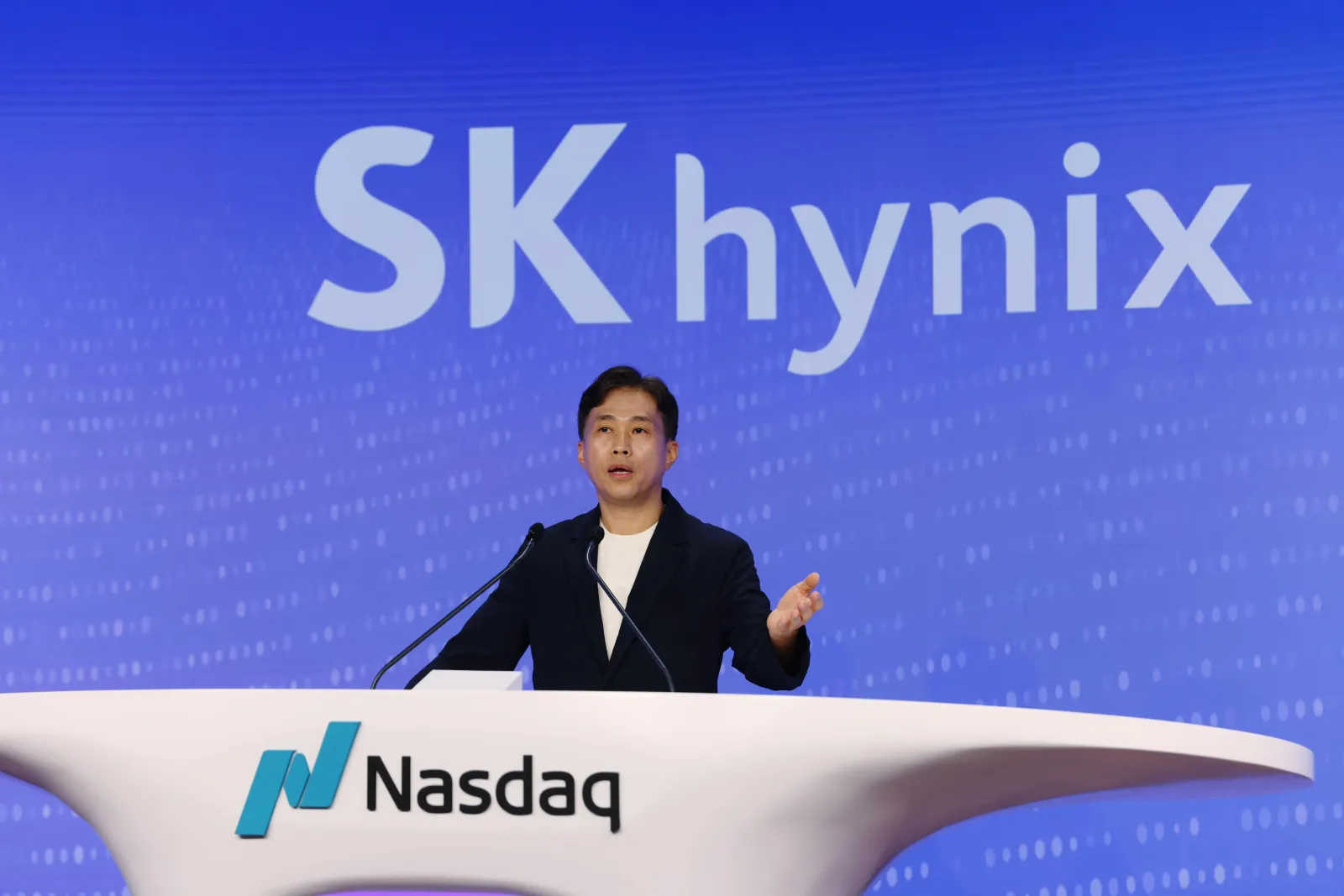
SK Hynix opens at $170, raises $26.5B, and tops foreign IPO records
In Friday's Wall Street debut, SK Hynix turns AI RAM demand into a $26.5B fundraising moment that rewrites comps.