
40 of 69 competitive House districts have data centers, and neither party has a plan
AI power, water, and zoning backlash are hijacking campaigns, while lawmakers race to write rules that voters trust.
Data Center Map analysis of competitive House districts shows data centers either planned or under construction in 40 of 69 districts, affecting races shaping which party controls the House. The consequence: both parties are stuck between backing AI infrastructure and avoiding higher electricity bills and local environmental fallout.
The midterms are getting an unlikely new protagonist: data centers. According to an analysis of Data Center Map data by POLITICO, 40 out of 69 competitive House districts have data centers either planned or under construction. That means the issue is not lurking on the edges of politics. It is sitting in the exact districts that can flip control of the House, with both parties struggling to craft a coherent message fast enough to matter.
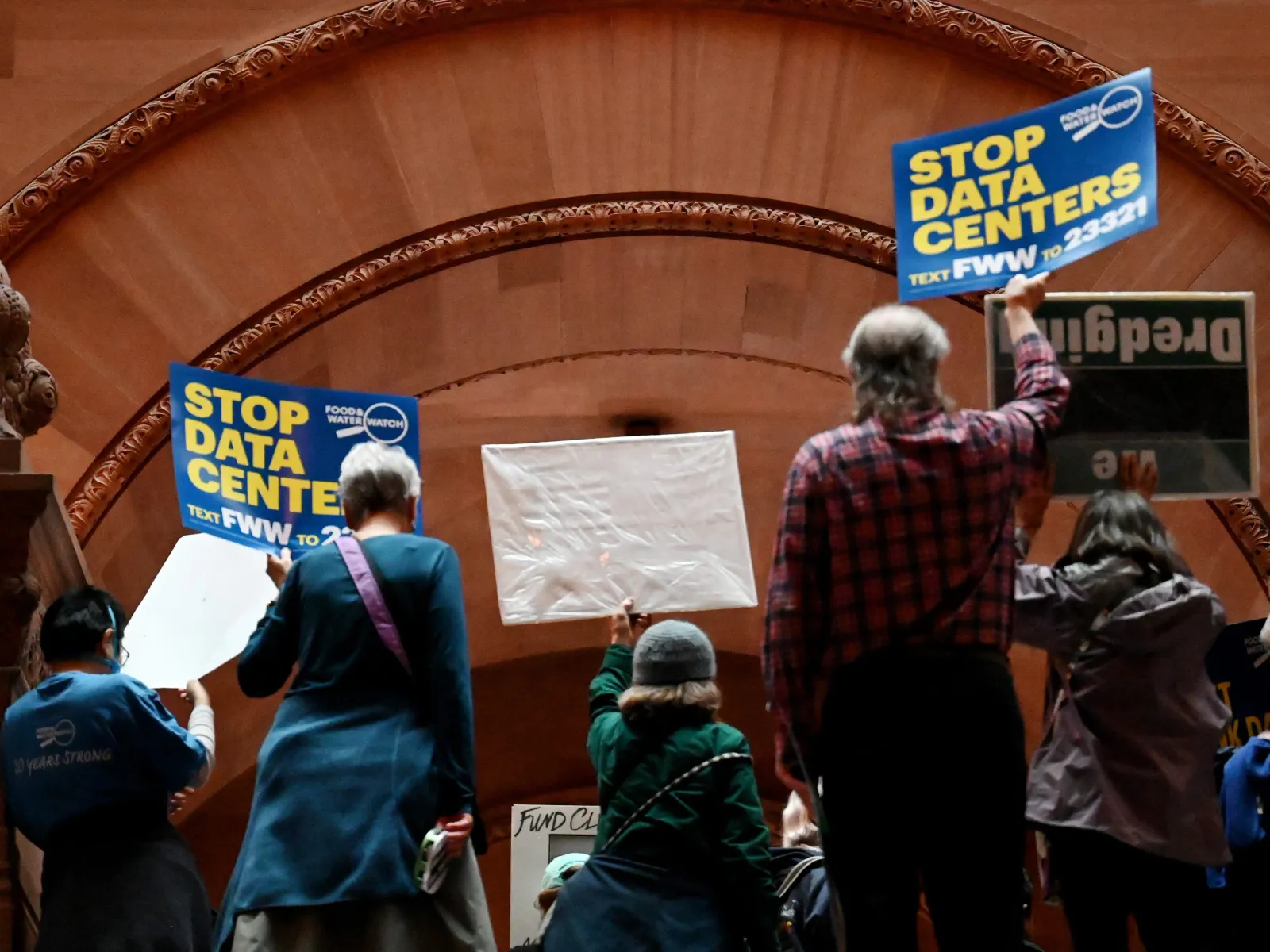
This is not a generic culture-war storyline. The problem has a bill-folding, thermostat-touching impact: the energy-hungry computing infrastructure being built to meet explosive demand for artificial intelligence has sparked opposition over rising electric bills, water consumption, use of farmland, and the influence of the tech industry. In other words, voters are not just hearing “AI is coming.” They are getting hit with local externalities, and those externalities are showing up in campaign ads. And in some places, it is toppled local elected leaders.
That backlash is turning data centers into a yearslong political slog for both parties, not a one-off headline. The analysis also points to scale that makes politicians nervous: some 1,500 data centers are planned or being built in 232 congressional districts, with a nearly even partisan split. Meanwhile, data centers have been steadily growing for decades alongside the growth of the internet, and POLITICO’s analysis says more than 2,500 U.S. data center facilities are operating across 373 congressional districts. In a country where “local” often becomes political only when it gets expensive, the map is already wide enough that lawmakers from dense Virginia suburbs to the industrial Midwest are exposed.
The regulatory and political confusion is part of why this is sticking. Lawmakers are taking scattershot approaches, ranging from opposing data centers altogether to embracing them for economic development and national security. Some are trying to frame it as strictly local zoning. Others are pushing for federal guardrails while the White House and Congress grapple with how to regulate the buildout. One specific example from March: the White House announced a non-binding agreement with technology executives who pledged that their companies would provide their own power for data centers as a way of limiting the economic blow to everyday consumers. The word “non-binding” matters here because it signals a gap between public expectations and enforceable policy.
Inside the political sausage-making, the lack of a unified message is visible. Interviews with and statements from more than 20 congressional candidates, political strategists, and activists make clear that while individual campaigns are trying to shape their positions, broader party messaging is essentially nonexistent. Democratic Rep. Marcy Kaptur, fighting to keep her seat in Ohio’s 9th District where Aligned Data Centers is building a data center used for AI, cloud computing and more, described it as “spontaneous combustion coming up from the grassroots” during a hearing this spring. Another strategist put it bluntly: there is “more political signs against AI in our region than for candidates in the upcoming races.”
If you are a decision-maker, that means the political ground is being occupied by community opposition more quickly than party platforms can react. And when you cannot control the narrative, you cannot easily control the votes. In races where 40 out of 69 competitive districts already have data center projects in the pipeline, the “AI boom” pitch meets a very different audience reality: higher utility bills, water concerns, and farmland questions.
The policy debate is also splintering into competing proposals. On the GOP side, Missouri Sen. Josh Hawley’s GRID Act is on the table. On the Democratic side, Virginia Rep. Suhas Subramanyam’s Data Infrastructure Risk Reduction Act is another named effort. Progressives have pushed for a federal moratorium on data center construction, including a plan backed by Vermont Sen. Bernie Sanders and New York Rep. Alexandria Ocasio-Cortez. That spectrum tells you the parties are not aligned on even the basic question of whether the buildout should be slowed, redirected, or simply made less painful for consumers.
Then there is the “who should decide?” argument, which is politically combustible because it touches sovereignty and legitimacy. Rep. Tom Barrett, a Republican whose Michigan district both parties’ congressional arms are targeting, argued in opposition to letting members of Congress decide local zoning decisions: “People should not want their member of Congress deciding local zoning decisions,” he said, adding it would be “a dangerous precedent.” Barrett’s district is illustrative of the stakes on the ground: there are six data centers operating and six more planned.
For executives, boards, and policy-adjacent leaders, the second-order implication is brutal but clear: even companies that believe the demand is inevitable face political and permitting risk that can move faster than business plans. Just the announcement of a data center can pressure elected officials to act. In Wisconsin, for example, four proposals have been canceled and one paused following local pushback, according to Healthy Climate Wisconsin, a nonpartisan public health nonprofit whose work includes raising awareness of data centers’ environmental health risks. Abby Novinska-Lois, its executive director, said policymakers across the state report data centers as the top issue they hear from their community, and that it is already a factor for officeholders in decisions.
So what happens next is not just about energy grids and cooling systems. It is about elections and messaging capacity. If party messaging is “essentially nonexistent,” local campaigns will write the narrative through grassroots anger, zoning battles, and ballot measure campaigns to ban construction. That includes residents pushing to put a constitutional amendment on the ballot in November in Ohio. For leaders in the data center ecosystem, the strategic stakes are immediate: your projects will not be evaluated solely on cost, capacity, or AI readiness. They will be evaluated on whether communities believe the tradeoffs are fair, and whether lawmakers can sell a compromise without getting blamed for the fallout.
For companies in hyperscale and beyond, this means the political calendar is now part of the infrastructure calendar. The industry’s explosive growth is driving massive electric grid upgrades, and those expenses can be passed to everyone who consumes power. Hyperscale facilities owned by major tech companies demand the most power, and while hyperscalers make up a relatively small portion of facilities now operating, the number in development would increase their count by 74%. When the political map overlaps with that growth, the midterms become a forcing function for how quickly the sector learns to operationalize consent, not just construction.
This story's Key Insights and Take-aways are locked.
Create a free account to unlock Executive Actions for one credit.
Register to UnlockAlways free for Executives Club members. Join the Club
More in Technology

OpenAI says 10,000 agents cracked a 90-year math problem in 88 hours
The company's claim is audacious, but one mathematician is pushing back. Here's what it means for AI-driven discovery.

Meta still serves child sexual abuse ads on Instagram in India - BBC report
A new report following the BBC Eye investigation says the ads are still there - what it signals for every platform with a self-serve ad engine.

White House yanks 'Build the Wall' game after Tetris Company copyright warning
The administration's arcade game vanished in hours - and the takedown playbook every brand can learn from.